
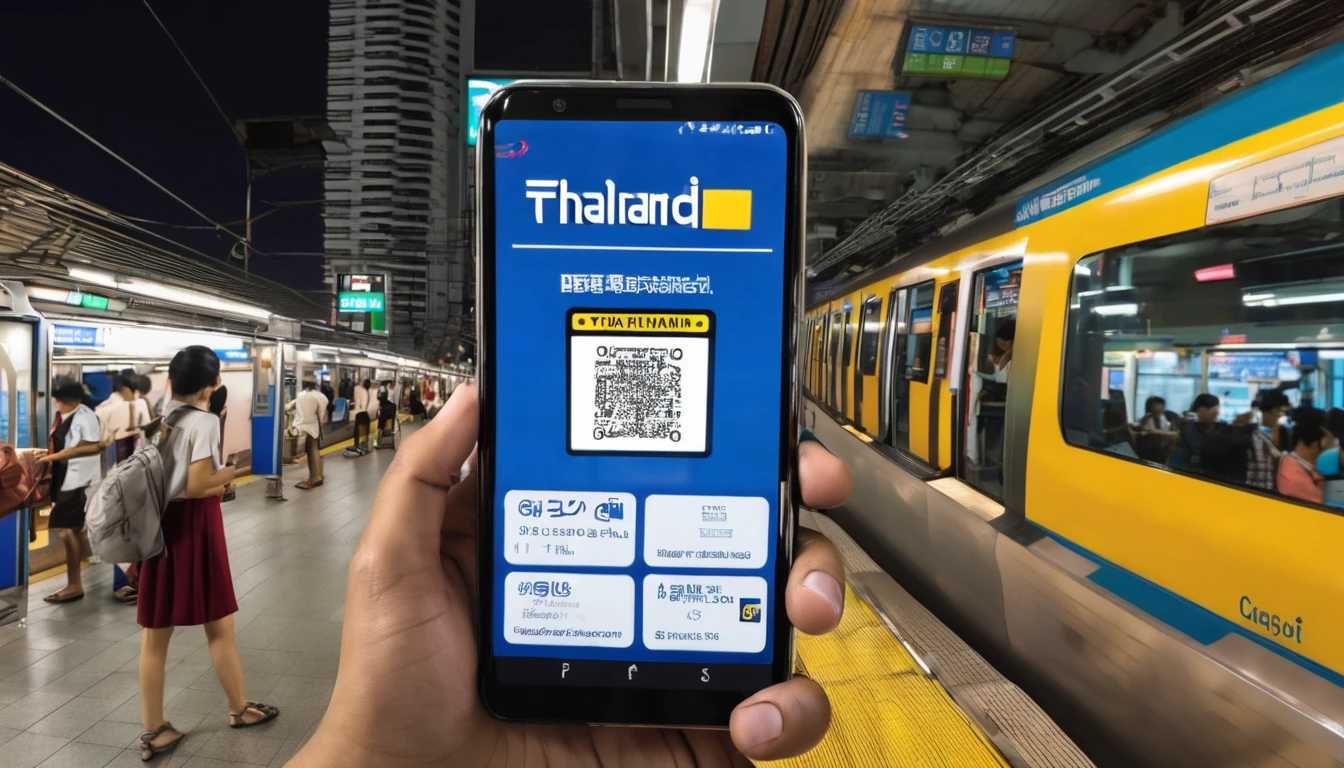
Why Thailand Is One of the Best Countries for Mobile Data
Thailand consistently ranks among the world's most affordable and well-connected mobile markets. According to the GSMA Mobile Economy Asia Pacific 2024 report, smartphone penetration in Thailand exceeds 90%, and the country's mobile infrastructure investment has accelerated 5G rollout in major urban centers. For travelers, that translates to fast, reliable data almost everywhere you'll want to go — from Bangkok's street food markets to the limestone cliffs of Krabi.
Here's a number worth bookmarking: Thailand's average 4G download speed sits at approximately 30–40 Mbps according to Ookla Speedtest data, comfortably above the global average and more than enough for streaming, video calls, and navigation. If you're planning a trip and wondering whether a travel eSIM will actually keep up with your itinerary, the short answer is yes — with a few island-specific caveats covered below.
Whether you're a first-time visitor overwhelmed by airport SIM counters, a digital nomad hunting for the best remote-work setup in Chiang Mai, or a beach-hopper island-hopping through the Gulf of Thailand, this guide covers everything you need to know about eSIM coverage, speeds, and setup in Thailand for 2026.
Does an eSIM Work in Thailand?
Yes — Thailand has excellent eSIM support for international travelers. The country's three major mobile networks all support eSIM-compatible devices, and the tourist infrastructure (airports, ferry terminals, hotels) is well set up for travelers arriving with pre-installed eSIM profiles. You don't need to hunt down a SIM card shop or fumble with a SIM tray on arrival.
Travel eSIMs for Thailand typically run on the major local networks, giving you access to 4G LTE nationwide and emerging 5G in Bangkok, Chiang Mai, and Pattaya. Activation is done via QR code before departure, so your phone connects automatically the moment it detects a Thai cell tower — no manual APN configuration needed in most cases.
One important note: Thailand's National Broadcasting and Telecommunications Commission (NBTC) requires SIM registration for all users, including tourists. Travel eSIM providers handle this compliance on your behalf, so you don't need to register individually — but it's worth confirming with your provider that their SIM registration is NBTC-compliant before you buy.
What Network Speeds Can You Expect in Thailand?
Network speeds in Thailand vary by location and time of day, but the baseline is strong. In Bangkok, Chiang Mai, and Pattaya, you can routinely hit 25–60 Mbps download on 4G LTE, with 5G-capable devices seeing 100–300 Mbps in covered zones. Rural areas and mountainous regions in the north (think trekking routes near Pai or Doi Inthanon) drop to 5–15 Mbps or edge 3G, but coverage gaps are rare in populated areas.
Bangkok & Major Cities
Urban Thailand is extremely well-covered. Bangkok's BTS Skytrain stations, shopping malls, and most streets have strong 4G LTE signal. The city's 5G rollout — led by the major carriers on the 700 MHz, 2600 MHz, and 26 GHz bands — means that if you have a 5G-capable handset, you'll often see speeds that rival home broadband. For digital nomads using Thailand as a base, Bangkok's connectivity is genuinely impressive; co-working spaces in areas like Silom, Ari, and Ekkamai consistently deliver fast mobile data as a backup.
Chiang Mai & Northern Thailand
Chiang Mai city center has solid 4G coverage, and most guesthouses and cafes in the Old City area have good signal. As you head into the mountains — toward Doi Inthanon, the Mae Hong Son loop, or remote hill tribe villages — coverage thins out. Expect 3G or no signal on winding mountain roads. Download your offline maps (Google Maps, Maps.me) and any essential documents before heading into the highlands.
Southern Thailand & Beach Resorts
The main resort towns on Phuket, Koh Samui, and Krabi all have strong 4G coverage in tourist areas. Patong Beach, Kata, and Karon on Phuket have near-city-level signal. Koh Samui's Chaweng and Lamai beaches are similarly well-served. The coverage story gets more nuanced on smaller islands, which we cover in detail below.
How Is the Island Coverage — Koh Tao, Koh Phangan, Koh Lanta?
Island coverage is the most common concern travelers raise before visiting Thailand, and it's worth addressing honestly. The short version: the big tourist islands have solid 4G, the smaller or less-developed ones have patchy 3G/4G, and a handful of very remote spots have no signal at all. Here's a breakdown by island:
Koh Samui
Koh Samui is Thailand's second-largest island and one of its most developed. The main tourist strips — Chaweng, Lamai, Bophut (Fisherman's Village), and Mae Nam — all have reliable 4G LTE. The interior of the island and some northern beaches can drop to 3G, but for most travelers, connectivity on Koh Samui is a non-issue.
Koh Phangan
Famous for the Full Moon Party, Koh Phangan has improved dramatically in recent years. Haad Rin (Full Moon Party beach), Thong Sala (the main town), and most west-coast beaches have 4G coverage. The northeast coast and jungle interior are patchier — expect 3G or intermittent signal if you're staying at a remote wellness retreat. During the Full Moon Party, network congestion can slow speeds significantly, so download anything important beforehand.
Koh Tao
Koh Tao is small and primarily dive-focused, but coverage has improved considerably. Sairee Beach and Mae Haad (the main pier area) have usable 4G, though speeds are slower than the mainland — expect 5–15 Mbps. The island's eastern coast (Shark Bay, Tanote Bay) can drop to 3G. If you're doing a dive course and need to upload GoPro footage, use your guesthouse WiFi rather than relying on mobile data.
Koh Lanta
Koh Lanta (specifically Koh Lanta Yai) has 4G coverage along the west coast where most resorts are located. The southern tip around Mu Ko Lanta National Park and the east coast are more limited. For a beach holiday with occasional Instagram uploads and Google Maps navigation, Koh Lanta's coverage is adequate.
Koh Chang & Eastern Gulf Islands
Koh Chang, near the Cambodian border, has solid 4G in White Sand Beach (Hat Sai Khao) and Lonely Beach areas. Smaller neighboring islands like Koh Wai and Koh Kood have minimal or no coverage — plan accordingly if you're island-hopping in this region.
Koh Lipe & Far South Islands
Koh Lipe, near the Malaysian border, has limited but improving coverage — expect 3G to weak 4G. It's worth noting that some eSIM plans with roaming into Malaysia may actually give you a stronger signal on Koh Lipe due to its proximity to Malaysian towers. Check your plan's roaming terms before heading there.
What Are the Best eSIM Plans for Thailand in 2026?
Travel eSIM plans for Thailand in 2026 are more affordable and flexible than ever. Most providers offer both country-specific Thailand plans and broader Asia regional plans — the right choice depends on whether Thailand is your only stop or part of a wider Southeast Asia trip.
Thailand-Only Plans
For a dedicated Thailand trip, a country-specific plan gives you the best value per gigabyte. Typical 2026 pricing looks like this:
| Data | Duration | Approx. Price (USD) | Speed |
|---|---|---|---|
| 1 GB | 7 days | $3–$5 | 4G LTE |
| 5 GB | 15 days | $6–$10 | 4G LTE |
| 10 GB | 30 days | $10–$16 | 4G LTE |
| 20 GB | 30 days | $18–$25 | 4G LTE |
| Unlimited* | 30 days | $20–$35 | 4G LTE (throttled after FUP) |
*Unlimited plans typically throttle to 1–3 Mbps after a daily or total fair-use threshold (often 1–2 GB/day at full speed).
For a two-week beach holiday with moderate use (maps, social media, occasional streaming), a 10 GB / 30-day plan is the sweet spot for most travelers. Heavy streamers or remote workers should consider 20 GB or an unlimited plan.
Asia Regional Plans
If you're combining Thailand with neighboring countries — Cambodia, Vietnam, Malaysia, Singapore, Indonesia — a regional Asia eSIM can be more economical than buying separate country plans. Check out Asia eSIM options from Simology for multi-country coverage that includes Thailand. Regional plans typically offer 1–3 GB per country with the ability to use data across the region, which is ideal for multi-stop itineraries.
You can also compare how Thailand's pricing stacks up against similar Southeast Asian destinations — for instance, Vietnam eSIM plans and Cambodia eSIM plans tend to be similarly priced, making a regional bundle attractive for circuit travelers.
Unlimited vs. Data-Capped Plans: Which Should You Choose?
The answer depends on how you use data. Here's a quick comparison:
| Use Case | Recommended Plan |
|---|---|
| Casual tourist (maps, WhatsApp, Instagram) | 5–10 GB / 15–30 days |
| Beach holiday with streaming | 10–20 GB / 30 days |
| Digital nomad / remote worker | Unlimited or 20 GB+ |
| Short city break (3–5 days) | 3–5 GB / 7 days |
| Multi-country Southeast Asia trip | Regional Asia plan |
Is Thailand eSIM Compatible With My Phone?
Most flagship smartphones sold since 2020 support eSIM, but it's worth double-checking before you buy a plan. iPhones from the XS (2018) onwards are eSIM-compatible, as are most Samsung Galaxy S and A series from 2019 onwards, Google Pixel 3 and later, and many recent devices from OnePlus, Motorola, and Huawei (though Huawei support varies by model). For a full breakdown of Android compatibility, the Android eSIM support guide covers device-by-device compatibility in detail.
One important caveat: some phones purchased from US carriers are sold locked to a single eSIM profile, meaning you can only have one eSIM active at a time. This affects certain Verizon and AT&T locked devices. If you bought your phone outright or from Apple/Google directly, you're almost certainly fine. When in doubt, check your phone's Settings > General > About (iOS) or Settings > Connections > SIM Manager (Android) to see if eSIM is listed.
Dual SIM / Dual eSIM Setup
Most modern iPhones (iPhone 13 and later in the US) and many Android flagships support dual eSIM — meaning you can keep your home SIM active for calls and texts while running a Thai data eSIM simultaneously. This is the ideal setup for travelers: your home number stays reachable for two-factor authentication codes and family calls, while all your data runs through the local Thai network at local rates.
How Do You Set Up a Thailand eSIM?
Setting up a Thailand eSIM is genuinely straightforward — most travelers complete the process in under five minutes. The key is to install the eSIM profile before you leave home, while you still have reliable WiFi.
Step-by-Step Setup (iOS)
- Purchase your Thailand eSIM plan and receive a QR code by email.
- On your iPhone, go to Settings > Cellular > Add eSIM.
- Select Use QR Code and scan the QR code from your email.
- Label the new plan (e.g., "Thailand Data") and set it as your data line.
- Keep your home carrier SIM as your default for calls and SMS.
- When you land in Thailand, toggle on the Thailand eSIM under Settings > Cellular.
Step-by-Step Setup (Android)
- Go to Settings > Connections > SIM Manager > Add eSIM (exact path varies by manufacturer).
- Select Scan QR code and scan the code from your email.
- Follow the prompts to activate and label the eSIM.
- Set it as your preferred data SIM while keeping your home SIM for calls.
APN Settings
Most travel eSIMs auto-configure APN settings upon activation. If your data doesn't connect automatically after landing, check your provider's documentation for the correct APN name and enter it manually under Settings > Cellular > Cellular Data Network (iOS) or Settings > Connections > Mobile Networks > Access Point Names (Android).
When to Activate
Install the eSIM profile before departure, but you don't need to activate data until you land. Many plans start the validity countdown from first use rather than installation — check your specific plan's terms. If you're transiting through a hub like Singapore or Hong Kong, be aware that activating your Thai eSIM early might start the clock before you've arrived.
How Does a Thailand eSIM Compare to a Local SIM Card?
This is the most common question travelers ask, and the honest answer is: both options work well in Thailand, but they suit different traveler types. Local SIM cards from airport counters are cheap and reliable; travel eSIMs offer convenience and flexibility. Here's a direct comparison:
| Factor | Travel eSIM | Local SIM Card (Airport) |
|---|---|---|
| Setup | Before departure, via QR code | On arrival at airport counter |
| Price (10 GB / 30 days) | ~$10–$16 | ~$8–$12 (THB 280–420) |
| Keeps home number active | Yes (dual SIM) | No (replaces physical SIM) |
| Requires physical SIM swap | No | Yes |
| Works on arrival (no queue) | Yes | Requires 10–30 min queue |
| Registration required | Provider handles it | Done at counter |
| Flexibility for multi-country | Regional plans available | Thailand only |
| Device requirement | eSIM-compatible phone | Any unlocked phone |
Bottom line: If your phone supports eSIM and you value convenience, a travel eSIM wins on ease. If you're on a very tight budget or your phone doesn't support eSIM, a local SIM from the airport is a perfectly solid choice — Thailand's airport SIM counters at Suvarnabhumi (BKK) and Don Mueang (DMK) are well-staffed and efficient.
What About Data Roaming — Should You Just Use Your Home Plan?
For most travelers, data roaming with your home carrier in Thailand is the most expensive option and should be avoided unless your plan includes free international roaming. US carriers like T-Mobile and Google Fi include Thailand in their international data plans, but speeds are often throttled to 128–256 Kbps on lower-tier plans — fine for WhatsApp, frustrating for anything else.
According to the GSMA's Roaming Policy tracker, standard out-of-bundle roaming rates in Southeast Asia can reach $10–$15 per day from major Western carriers. A 10-day Thailand trip on pay-per-use roaming could cost $100–$150 in data charges alone — versus $10–$15 for a dedicated travel eSIM.
If you're curious how roaming costs compare in other popular destinations, the Spain eSIM and mobile internet guide and the France eSIM guide both break down the roaming vs. eSIM math in detail — the conclusion is similar across destinations.
Tips for Staying Connected on Thai Islands
A few practical tips that make a real difference when you're island-hopping:
Download offline maps before you leave the mainland. Google Maps and Maps.me both allow offline downloads. Download the entire southern Thailand or northern Thailand region before you get on the ferry — you'll thank yourself when you're navigating a dark road on Koh Phangan.
Use WiFi calling for voice. Most modern smartphones support WiFi calling, which lets you make and receive calls on your home number over any WiFi connection — useful when you're at a resort with good WiFi but patchy mobile signal.
Ferry crossings have no signal. The Surat Thani–Koh Samui and Donsak–Koh Phangan ferry routes take 1–2 hours and have no reliable signal mid-crossing. Download your entertainment beforehand.
Charge your phone before island excursions. Day trips to Ang Thong National Marine Park, snorkeling trips, and jungle hikes often take you away from charging points for 6–8 hours. A portable power bank is essential.
Check your plan's hotspot/tethering policy. Some travel eSIM plans restrict mobile hotspot use. If you need to tether a laptop for remote work, confirm tethering is included before purchasing. This is especially relevant for digital nomads using Thailand as a base.
FAQ
Does a travel eSIM work on all Thai islands?
A travel eSIM works on the major tourist islands — Phuket, Koh Samui, Koh Phangan, Koh Lanta, and Koh Chang all have 4G LTE coverage in their main tourist areas. Smaller or less-developed islands like Koh Wai, Koh Kood, and parts of Koh Tao's east coast may have limited 3G or no signal. Always download offline maps before taking a ferry to a smaller island.
How much does a Thailand eSIM cost in 2026?
Thailand eSIM plans in 2026 start from around $3–$5 for 1 GB (7 days) and range up to $20–$35 for unlimited data (30 days). A 10 GB / 30-day plan — the most popular choice for a two-week holiday — typically costs $10–$16 USD. Regional Asia plans covering Thailand plus neighboring countries are available from around $15–$25 for multi-country coverage.
Can I keep my home phone number active while using a Thailand eSIM?
Yes — this is one of the main advantages of eSIM over a physical SIM swap. Most modern smartphones support dual SIM (physical + eSIM or dual eSIM), so you can keep your home carrier active for calls and texts while routing all data through your Thai eSIM. You'll receive SMS verification codes and calls on your home number without paying roaming rates for data.
Do I need to register my eSIM in Thailand?
Thailand's NBTC (National Broadcasting and Telecommunications Commission) requires SIM registration for all mobile users, including tourists. Reputable travel eSIM providers handle this registration on your behalf as part of their compliance process — you don't need to visit a store or fill out forms yourself. Always purchase from a provider that explicitly states NBTC compliance.
What speed can I expect from a Thailand eSIM?
In Bangkok and major cities, expect 25–60 Mbps download on 4G LTE, with 5G speeds of 100–300 Mbps in covered zones. On popular islands like Koh Samui and Phuket, speeds typically range from 10–30 Mbps. Smaller islands and rural mountain areas may see 5–15 Mbps or 3G speeds. For streaming, navigation, and video calls, 4G LTE speeds in Thailand are more than sufficient.
Can I use a Thailand eSIM for remote work?
Yes, Thailand is a popular destination for digital nomads, and a travel eSIM provides a solid data backup to co-working space WiFi. For reliable remote work, choose a 20 GB or unlimited plan and confirm that mobile hotspot/tethering is permitted. Bangkok, Chiang Mai, and Koh Samui all have strong enough 4G coverage for video conferencing and cloud work. Check out the digital nomad eSIM guide for more remote-work connectivity tips.
When should I install my Thailand eSIM — before or after arrival?
Install the eSIM profile before departure while you have reliable WiFi at home. You can delay activating data until you land — many plans start the validity countdown from first use, not installation. This means you'll have instant connectivity the moment your plane lands at Suvarnabhumi or Don Mueang, without needing to queue at an airport SIM counter or connect to airport WiFi first.
Is a Thailand eSIM better than buying a SIM card at the airport?
It depends on your priorities. A travel eSIM is more convenient (no queue, no SIM swap, keeps your home number active) and is ideal if your phone supports it. Airport SIM cards are slightly cheaper for the same data volume and work on any unlocked phone. For eSIM-compatible phones, the convenience advantage is significant — especially for early-morning arrivals when you need maps and a taxi app immediately.
The Bottom Line: Is a Thailand eSIM Worth It?
Thailand is one of the easiest countries in the world to stay connected in — affordable data, good coverage, and a well-developed tourist infrastructure all work in your favor. A travel eSIM takes that a step further by removing the airport SIM counter queue entirely and keeping your home number active throughout your trip.
For most travelers visiting in 2026, a 10 GB / 30-day Thailand eSIM plan at $10–$16 hits the sweet spot of value and convenience. Island-hoppers should factor in the coverage notes above — download offline maps, use WiFi calling, and don't expect full 4G on the smallest islands. But for the vast majority of Thailand's tourist circuit, you'll have fast, reliable data wherever you need it.
Ready to get connected? Check out Simology's Thailand eSIM plans and activate your plan before you board. Your first Grab ride from Suvarnabhumi will thank you.