
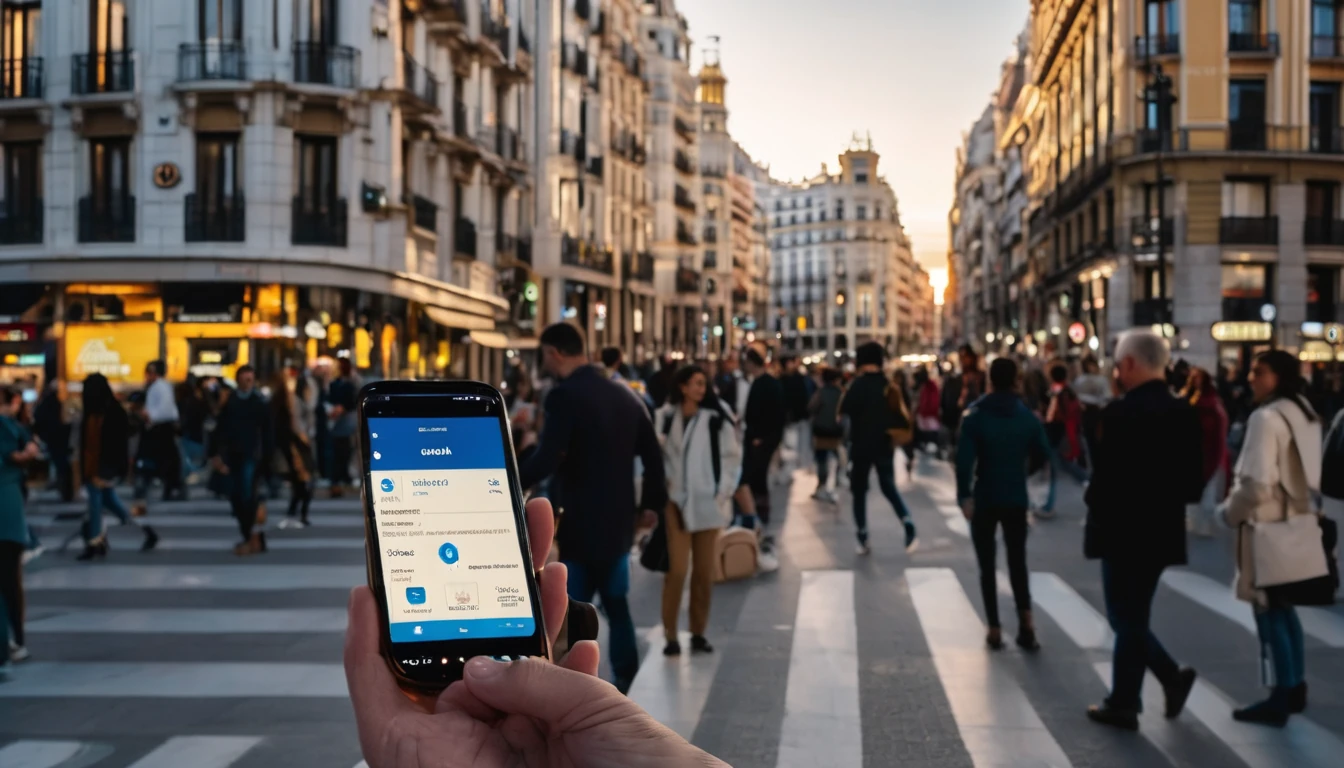
What's the best way to get mobile data in Spain as a tourist?
The two main options are a travel eSIM loaded before departure and a local tourist SIM bought at the airport or a phone shop after you land. Both work well in Spain, but they suit different travelers. An eSIM wins on convenience — no physical card, instant activation, and your home number stays active in parallel. A local SIM can occasionally offer more raw data for the price, but it requires an unlocked phone, a physical swap, and sometimes ID registration.
Spain is one of the best-connected countries in Europe. According to Ookla's Speedtest Global Index, Spain consistently ranks among the top five European countries for median mobile download speeds, with national averages regularly exceeding 90 Mbps on 4G LTE. That means whichever option you choose, the underlying network is fast.
The rest of this guide walks you through everything you need to know: network speeds, eSIM compatibility, plan comparisons, setup steps, and the few edge cases where a physical SIM still makes sense.
How fast is mobile internet in Spain in 2026?
Spain's mobile infrastructure is genuinely excellent. The country's 4G LTE network reaches more than 99% of the population, and 5G has expanded rapidly — the European Commission's Digital Economy and Society Index (DESI) reports that Spain is among the EU leaders in 5G rollout, with coverage now spanning all provincial capitals and most major tourist corridors including the Costa del Sol, the Balearic Islands, and the Canary Islands.
Here's what you can realistically expect by network generation:
| Network | Typical Download Speed | Where You'll Find It |
|---|---|---|
| 5G | 200–600 Mbps | Madrid, Barcelona, Valencia, Seville, Málaga, Bilbao, tourist hotspots |
| 4G LTE | 30–120 Mbps | Nationwide — cities, towns, main roads, beaches |
| 3G/H+ | 2–10 Mbps | Rural mountain areas, small inland villages |
| 2G/EDGE | <1 Mbps | Very remote areas only |
For most travel use cases — Google Maps, Instagram, WhatsApp calls, streaming, and video calls home — 4G LTE is more than sufficient. If you're a digital nomad uploading large files or joining video conferences, look for a plan that explicitly supports 5G or at least guarantees full-speed 4G without aggressive throttling.
What about the islands?
The Balearic Islands (Mallorca, Ibiza, Menorca, Formentera) and the Canary Islands (Tenerife, Gran Canaria, Lanzarote, etc.) are all covered by Spain's national networks. 4G is solid on all the main islands. 5G is available in the larger resorts and city centers. Remote hiking trails and boat trips are the only times you'll notice signal drop off — the same as anywhere in Europe.
eSIM vs. Tourist SIM in Spain: Which Should You Choose?
For the majority of travelers visiting Spain in 2026, an eSIM is the better choice — it's faster to set up, requires no physical handling, and lets you keep your home number active. A local tourist SIM still makes sense if you need a local Spanish number, plan a very long stay, or want the absolute maximum data for the lowest possible price.
Use this table to decide at a glance:
| Factor | Travel eSIM | Local Tourist SIM |
|---|---|---|
| Setup | Before departure, online | At airport, phone shop, or newsstand |
| Activation time | Instant (QR scan) | 15–30 minutes |
| ID registration required | No (for most travel eSIMs) | Yes (Spanish law requires ID for prepaid SIMs) |
| Keep home number active | ✅ Yes (dual SIM) | ❌ No (replaces physical SIM) |
| Works on locked phones | Sometimes (carrier-dependent) | No — phone must be unlocked |
| Typical 7-day data cost | $8–$25 (5–15 GB) | €5–€20 (3–30 GB) |
| Best for | Short trips, convenience travelers, business travelers | Long stays, budget maximizers with unlocked phones |
The EU roaming angle (and why it still matters)
If you're a UK or US traveler, EU roaming rules don't automatically help you — those regulations protect EU residents using their home EU plans abroad. However, since Spain is an EU member, any EU-based eSIM or SIM plan that covers the EU will work seamlessly in Spain. If you're already planning to visit France, Italy, or Portugal on the same trip, a Western Europe eSIM covering multiple countries can be significantly more economical than buying country-specific plans.
Does your phone support eSIM in Spain?
Almost all flagship smartphones released after 2018 support eSIM, but there are a few important caveats. Your phone must be (1) eSIM-capable and (2) unlocked from your home carrier. Carrier-locked phones — common with US carriers on installment plans — may not accept a third-party eSIM until the lock is removed.
eSIM-compatible devices (2026 confirmed)
Apple: iPhone XS and all later models (including the entire iPhone 16 and 17 series). Note: iPhone 14 and later models sold in the US are eSIM-only (no physical SIM tray).
Samsung: Galaxy S20 and later, Galaxy Z Fold/Flip series, Galaxy A54 and newer A-series models.
Google: Pixel 3 and later (all Pixel 7, 8, and 9 series are fully eSIM-compatible).
Other brands: Motorola Razr+, many recent Huawei models (check your specific model), and most 2024–2026 flagship devices from Sony and OnePlus.
Quick check: Go to Settings → General → About (iPhone) or Settings → Connections → SIM Manager (Android). If you see an "Add eSIM" or "Add Mobile Plan" option, you're good to go.
What if my phone isn't eSIM compatible?
You'll need a physical SIM. Spain has no shortage of options — airport kiosks, phone shops (look for Vodafone, Orange, and Movistar stores in every major city), and convenience stores all sell prepaid SIMs. Spanish law requires ID verification for prepaid SIM registration, so bring your passport.
How much does a Spain eSIM cost in 2026?
Spain eSIM pricing has become very competitive. As a rough benchmark, a 5 GB / 7-day plan typically costs $8–$12, while a 15 GB / 30-day plan runs $18–$28 depending on the provider. Prices have trended downward over the past two years as more travel eSIM providers entered the market.
Here's a representative breakdown of plan tiers to help you budget:
| Plan Size | Duration | Typical Price Range | Best For |
|---|---|---|---|
| 1–3 GB | 7 days | $4–$8 | Light users, short city breaks |
| 5–10 GB | 7–15 days | $8–$18 | Most tourists (maps, social, streaming) |
| 15–20 GB | 15–30 days | $18–$28 | Heavy users, remote workers |
| Unlimited* | 7–30 days | $25–$45 | Digital nomads, video-heavy users |
*"Unlimited" plans typically throttle speeds after a high-speed data threshold (often 20–50 GB). Always check the Fair Use Policy (FUP) before buying.
A Simology Spain eSIM gives you flexible plan options across these tiers, with instant QR-code activation and no hidden fees.
Are there any hidden costs to watch for?
- Throttling thresholds: Plans advertised as "unlimited" almost always throttle to 1–3 Mbps after the high-speed allowance. Fine for browsing; frustrating for video calls.
- Tethering/hotspot restrictions: Some budget plans prohibit using your phone as a hotspot. If you need to connect a laptop, check the plan terms.
- Validity from activation vs. purchase: Some plans start counting down the moment you buy, not when you first use data. Buy your eSIM close to your departure date.
How do you set up an eSIM for Spain?
Setting up a Spain eSIM takes about five minutes and can be done entirely from your couch before you leave home. The process is the same whether you're on an iPhone or Android device.
Step-by-step setup
- Purchase your plan — Choose a Spain or Western Europe eSIM plan online. You'll receive a QR code by email (usually within minutes).
- Scan the QR code — On iPhone: Settings → Cellular → Add eSIM → Use QR Code. On Android: Settings → Connections → SIM Manager → Add eSIM. Point your camera at the QR code.
- Label your lines — Your phone will ask you to name the new eSIM (e.g., "Spain Travel"). This helps you switch between your home plan and the travel eSIM easily.
- Set data preferences — Go to Cellular Data settings and select your travel eSIM as the default data line. Keep your home SIM active for calls and texts if you want.
- Enable data roaming — Toggle on "Data Roaming" for the travel eSIM line. This is required even though the eSIM is designed for roaming — it's a phone-level setting.
- Land in Spain, connect — Your phone will automatically connect to the local network. No airport kiosk, no waiting.
Can I install the eSIM before I travel?
Yes — and you should. Installing the eSIM profile in advance means you're connected the second your plane lands. You don't need a Wi-Fi connection to use an already-installed eSIM. Just make sure data roaming is toggled on for that line before you board.
What if the QR code doesn't work?
Most providers offer a manual activation code as a backup. If scanning fails, go to Settings → Add eSIM → Enter Details Manually and type in the SM-DP+ address and activation code provided by your eSIM provider.
What are the real carrier networks in Spain?
Spain's mobile market is dominated by three major network operators. Travel eSIM providers typically roam on one or more of these networks, so knowing who owns the infrastructure helps you understand what coverage you're actually getting.
- Movistar (Telefónica) — Spain's largest network by infrastructure. Excellent nationwide 4G coverage and the most extensive 5G footprint. Strong in rural areas.
- Orange Spain — Second-largest network. Very good urban and suburban coverage; competitive 5G rollout in major cities.
- Vodafone Spain — Strong urban coverage, particularly in Madrid and Barcelona. 5G available in major population centers.
Most travel eSIM plans roam on whichever of these networks has the strongest signal at your location, which means you effectively get the best available coverage without needing to pick a specific carrier.
Do you need to register your SIM or eSIM in Spain?
Spain follows EU prepaid SIM registration requirements, which mandate that telecom providers verify the identity of prepaid SIM users. For local Spanish SIMs, this means showing your passport at the point of purchase — a quick process, but one that requires you to be physically present.
For travel eSIMs issued by international providers (like Simology), the registration requirement is handled differently: the eSIM is issued under the provider's own regulatory framework, and you typically don't need to register with Spanish authorities. This is one of the practical advantages of a travel eSIM over a locally-purchased SIM.
There is no tourist-specific exemption from SIM registration in Spain. If you buy a SIM at a Movistar, Orange, or Vodafone store in Spain, you will need to show ID. This is standard across the EU and is not a cause for concern — it's a quick counter transaction.
Spain vs. Other European Destinations: How Does Connectivity Compare?
If Spain is part of a broader European itinerary, it's worth knowing how it stacks up against neighboring countries. Spain's network quality is genuinely strong — better than many travelers expect.
| Country | 4G Population Coverage | Avg. 4G Speed | 5G Cities | eSIM Friendliness |
|---|---|---|---|---|
| Spain | ~99% | ~90 Mbps | All major cities | High |
| France | ~99% | ~75 Mbps | Major cities + TGV corridors | High |
| Portugal | ~98% | ~70 Mbps | Lisbon, Porto, Algarve | High |
| Italy | ~98% | ~65 Mbps | Major cities | Medium |
| Germany | ~97% | ~60 Mbps | Major cities | High |
For multi-country European trips, a regional eSIM covering the whole continent is often more practical than buying separate country plans. Check out our France eSIM guide and Portugal eSIM options if Spain is part of a wider Iberian or European itinerary.
Tips for Staying Connected in Spain's Rural Areas and Islands
Spain's cities and coasts are extremely well-covered, but rural inland areas — particularly in Castilla y León, Extremadura, and parts of Aragón — can have patchy 4G and occasional 3G-only zones. Here's how to navigate connectivity gaps:
- Download offline maps before you go. Google Maps and Maps.me both let you download entire regions for offline use. Do this on Wi-Fi before leaving your accommodation.
- Use WhatsApp over SMS. WhatsApp works on minimal data and is the dominant messaging app in Spain — locals use it for everything.
- Hotel and café Wi-Fi is widely available. Spain has one of the highest densities of public Wi-Fi hotspots in Europe. Most bars, restaurants, and accommodation offer free Wi-Fi.
- Canary Islands note: The Canary Islands are geographically close to Africa but politically part of Spain (and the EU). Your Spain eSIM covers them without any extra cost or configuration.
- Gibraltar: Gibraltar is a British Overseas Territory, not part of Spain or the EU. If you're crossing into Gibraltar, your Spain eSIM may not work there — check your plan's coverage list or see if a UK eSIM covers Gibraltar.
Is Spain a good destination for digital nomads?
Spain is one of Europe's top digital nomad destinations in 2026, and mobile connectivity is a genuine strength. Barcelona, Madrid, Valencia, and Seville all have thriving coworking scenes, fast urban 5G, and excellent café culture that doubles as informal workspace. Spain introduced a formal Digital Nomad Visa in 2023, which has since attracted a significant international remote-worker community.
For longer stays, the economics shift slightly. A 30-day eSIM plan is convenient, but if you're staying three months or more, a local prepaid SIM from one of the major carriers may offer better value — particularly if you find a plan with unlimited data and a local Spanish number for everyday use.
If you're working remotely across multiple countries, our digital nomad eSIM guide covers how to structure your connectivity across borders without overpaying. And if your nomad route extends beyond Europe — to the Americas, for instance — a USA eSIM or Canada eSIM guide may also be useful for planning ahead.
Pocket WiFi vs. eSIM in Spain: Which Is Better?
Pocket WiFi devices — portable routers that create a local hotspot — were popular a few years ago but have largely been overtaken by eSIM technology for solo and couple travel. Here's the honest comparison:
| Factor | Pocket WiFi | eSIM |
|---|---|---|
| Setup | Collect at airport or hotel | Online, before you leave |
| Multiple devices | ✅ Yes (share with group) | ❌ One device per eSIM |
| Battery dependency | Needs daily charging | Uses your phone's battery |
| Cost (7 days) | $20–$50 rental + shipping | $8–$25 one-time purchase |
| Return logistics | Must return device | Nothing to return |
| Connectivity when device dies | ❌ No signal for all | N/A |
For solo travelers and couples, an eSIM almost always wins. For families or groups of 4+ sharing data, a pocket WiFi can still make economic sense — though each person having their own eSIM is increasingly competitive on price. Our detailed pocket WiFi vs. eSIM comparison breaks this down further if you're traveling with a group.
FAQ
Do I need an eSIM or can I use my home carrier's roaming in Spain?
You can use your home carrier's international roaming in Spain, but it's almost always significantly more expensive than a travel eSIM. US carriers typically charge $10–$15/day for international day passes, which adds up to $70–$105 for a one-week trip. A travel eSIM for the same duration typically costs $8–$18 total. Unless your home plan includes free international roaming (some T-Mobile and Google Fi plans do), a Spain eSIM is almost always the better value.
Which Spanish cities have 5G coverage in 2026?
5G is now live across all of Spain's major cities, including Madrid, Barcelona, Valencia, Seville, Bilbao, Zaragoza, Málaga, Murcia, and Palma de Mallorca. Coverage is strongest in city centers and expanding into suburbs. Rural areas remain predominantly 4G LTE, which is still fast enough for all standard travel use cases.
Can I use a Spain eSIM in the Canary Islands and Balearic Islands?
Yes. Both the Canary Islands and the Balearic Islands are part of Spain and are served by the same national networks. Any eSIM plan that covers Spain will work on all the Spanish islands without additional charges or configuration. The Canary Islands are geographically off the coast of Africa but are legally an EU territory, so EU telecom rules apply.
How do I know if my phone is eSIM compatible?
On iPhone, go to Settings → General → About and scroll down — if you see an "Available eSIM" or "EID" number, your phone supports eSIM. On Android, go to Settings → Connections → SIM Manager and look for an "Add eSIM" option. Alternatively, check your phone model against the GSMA's eSIM device list at gsma.com.
Is it safe to buy a Spain eSIM online before I travel?
Yes, purchasing an eSIM online from a reputable provider is safe and standard practice. Look for providers that use HTTPS, have clear refund policies, and display customer reviews. The eSIM profile is delivered via a QR code to your email — there's no physical package to lose or intercept. Major travel eSIM providers process millions of activations annually.
What happens if I run out of data on my Spain eSIM?
Most travel eSIM providers let you top up or purchase an additional plan through their app or website. Some plans automatically throttle to a lower speed (typically 128 Kbps–1 Mbps) once you hit the data cap rather than cutting you off entirely. Check your provider's top-up policy before you travel so you know your options if you use more data than expected.
Do I need to register my eSIM with Spanish authorities?
For travel eSIMs issued by international providers, you generally do not need to register with Spanish authorities — the registration obligation sits with the eSIM issuer under their home regulatory framework. If you purchase a local prepaid SIM inside Spain from a Spanish carrier, you will need to show a valid passport for EU-mandated ID verification.
Can I make calls and send texts with a Spain eSIM?
Most travel eSIMs are data-only plans — they give you an internet connection but not a Spanish phone number for traditional calls and SMS. You can make voice and video calls using apps like WhatsApp, FaceTime, or Google Meet over the data connection. For incoming calls to your home number, keep your home SIM active in the second SIM slot (dual SIM) — your phone will ring normally, and you can answer using Wi-Fi calling or your travel eSIM's data.