
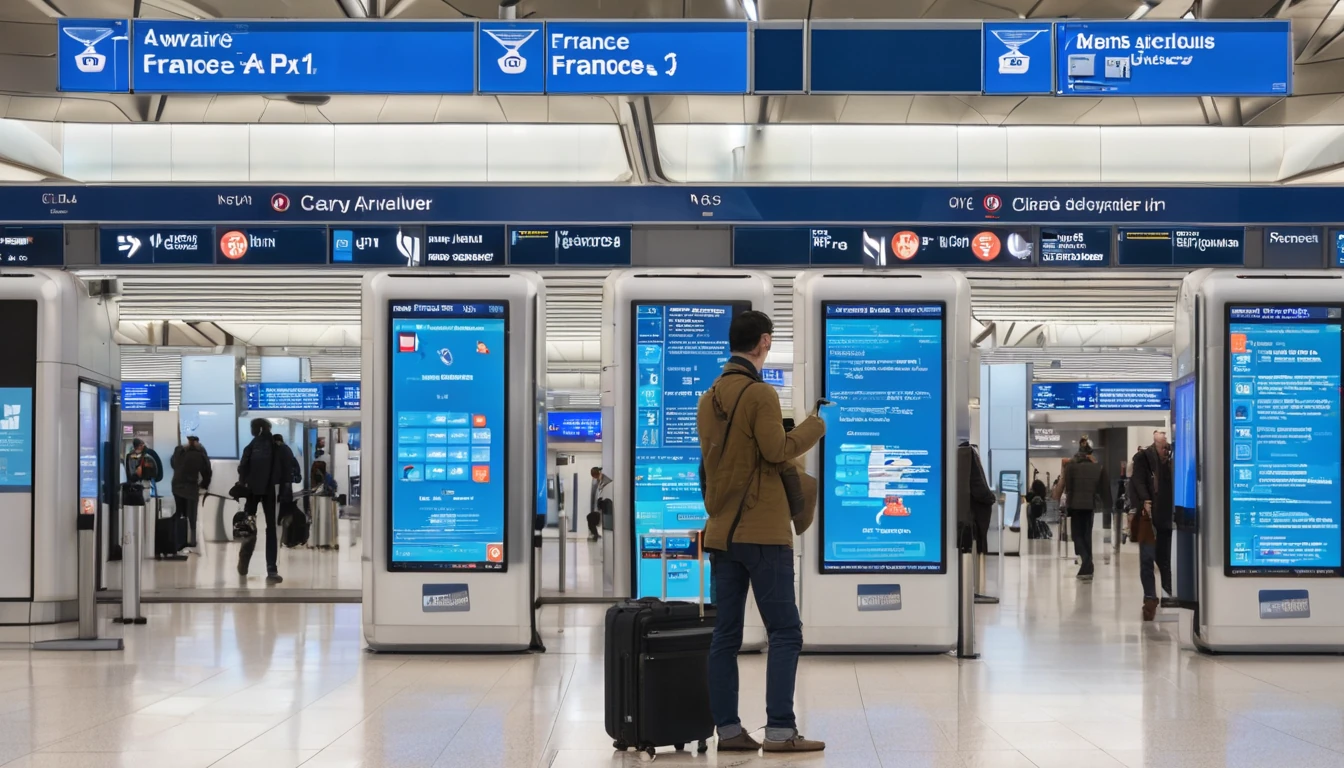
Why France Is One of the Easiest Countries for eSIM Travelers
France consistently ranks among Europe's most eSIM-friendly destinations. The country's three major mobile networks blanket metropolitan France with 4G LTE, and 5G rollout has accelerated rapidly since 2023. According to the GSMA's Mobile Economy Europe 2024 report, 5G connections in Western Europe are projected to represent over 50% of total mobile subscriptions by 2027 — and France is ahead of that curve in urban areas. For travelers, this means reliable connectivity from the moment you land, whether you're navigating the Paris Métro, road-tripping through Provence, or skiing in the Alps.
The bigger win is what eSIM does to your wallet. International roaming from a US, UK, Australian, or Canadian carrier in France can cost anywhere from $10 to $15 per day for a modest data add-on. A travel eSIM for the same trip typically costs a fraction of that — and there are no surprise charges when you get home.
Quotable stat: The European Commission's 2024 roaming regulation review confirmed that while EU roam-like-at-home rules apply to EU-issued SIMs, travelers from outside the EU (US, UK, Australia, Canada) are still fully exposed to retail roaming rates — making a local or travel eSIM the only real cost shield for most international visitors. (European Commission, Digital Single Market)
Is My Phone Compatible with an eSIM in France?
Your phone needs to support eSIM technology, and the vast majority of flagship devices sold since 2020 do. Here's a quick compatibility snapshot for 2026:
- iPhone: XS and newer (iPhone 15/16 series are eSIM-only in the US market)
- Samsung Galaxy: S21 and newer, plus most recent A-series (A54, A55, A56)
- Google Pixel: Pixel 3 and newer
- OnePlus, Motorola, Xiaomi: Selected models from 2022 onward — check your device specs
The critical caveat: your device must be carrier-unlocked. If you bought your phone on a carrier contract in the US (AT&T, Verizon, T-Mobile) or the UK (EE, Vodafone, O2), it may be locked to that network. Contact your carrier to request an unlock before you travel — most will do this for free once your contract is fulfilled.
France's networks operate on standard European LTE bands (B3, B7, B20, B28), which virtually all modern unlocked smartphones support. 5G in France uses n78 (3.5 GHz), which is also widely supported on recent flagship devices.
Dual SIM: Keep Your Home Number Active
One of the most underappreciated benefits of eSIM is that it works alongside your physical SIM. You can keep your home number active for calls and SMS (useful for two-factor authentication codes from your bank) while routing all data through the cheaper French eSIM. Most modern iPhones and Android flagships support this dual-SIM configuration seamlessly.
What Are the Real Mobile Speeds in France in 2026?
France's mobile infrastructure is genuinely fast. Based on Ookla Speedtest Intelligence data, France consistently records median 4G download speeds of 45–65 Mbps in urban areas, with 5G median speeds reaching 200–350 Mbps in Paris, Lyon, Marseille, and Bordeaux.
Here's what to expect by location type:
| Location | Typical Download Speed | Network Generation |
|---|---|---|
| Paris (central arrondissements) | 150–350 Mbps | 5G |
| Major cities (Lyon, Marseille, Toulouse) | 80–250 Mbps | 5G / 4G LTE |
| Regional towns & suburbs | 30–70 Mbps | 4G LTE |
| Rural France / countryside | 10–30 Mbps | 4G / 3G fallback |
| TGV high-speed trains | 15–40 Mbps | 4G LTE (variable) |
| Paris Métro (underground) | 5–20 Mbps | 4G (improving) |
For most travel use cases — maps, streaming, video calls, uploading photos — even 10–15 Mbps is more than adequate. The main speed concern is rural Normandy, the Massif Central, or remote mountain areas, where you might drop to 3G or see patchy coverage. If your itinerary is heavily rural, download offline maps (Google Maps, Maps.me) before leaving your accommodation.
How Do Fair-Use Policies (FUP) Work on French eSIM Plans?
Fair-use policies are the fine print that most travelers overlook — and they matter. A travel eSIM plan advertised as "10 GB" typically means 10 GB at full 4G/5G speeds, after which your connection is throttled (slowed down) rather than cut off entirely. The throttled speed is usually 128–512 Kbps, which is fine for messaging and basic browsing but painful for maps or video.
Here's how FUP typically breaks down:
- Under your data cap: Full 4G/5G speeds (30–350 Mbps depending on location)
- After your data cap: Throttled to 128–512 Kbps (varies by provider)
- Top-up option: Many eSIM providers let you purchase additional high-speed data without changing your SIM
Practical tip: For a one-week trip to France with moderate use (maps, Instagram, occasional video calls), 5–8 GB is usually sufficient. Heavy streamers or remote workers should opt for 15–20 GB plans. If you're planning to work remotely from Paris — video calls all day, large file uploads — consider an unlimited plan or a 20 GB+ option. Check out our Digital Nomad eSIM guide for a deeper breakdown of data needs by work type.
Does the FUP Reset?
Most travel eSIM plans are validity-based, not calendar-month-based. Your 10 GB doesn't reset on the 1st of the month — it simply runs until exhausted or until the plan's validity period (e.g., 7 or 30 days) expires. Some regional plans that cover France as part of a Europe-wide bundle may have slightly different terms, so always check the plan details before purchasing.
How Do I Set Up an eSIM for France at the Airport?
Setting up a France eSIM at Charles de Gaulle (CDG), Orly (ORY), or Nice Côte d'Azur (NCE) is straightforward — and the beauty is you don't need airport Wi-Fi to do it if you've already downloaded the eSIM profile before departure.
The ideal workflow:
- Purchase your eSIM before you fly — do this at home on your regular Wi-Fi connection
- Download the eSIM profile to your device (this is just a file, no physical delivery)
- Keep the eSIM "installed but inactive" until you land in France
- Enable the eSIM in your phone's settings as soon as you land — or even while taxiing
- Set it as your default data SIM and you're online before you reach baggage claim
If you forgot to set it up beforehand, CDG Terminal 2 has decent free Wi-Fi in the arrivals hall that you can use to complete the QR code scan and eSIM installation. Orly's free Wi-Fi is patchier — don't rely on it.
Step-by-Step: Installing an eSIM on iPhone
- Go to Settings → Cellular → Add eSIM
- Tap Use QR Code and scan the code from your provider
- Follow the on-screen prompts to label the plan (e.g., "France 2026")
- Go to Settings → Cellular → Cellular Data and select your new eSIM as the data line
- Set your home SIM to "Voice & SMS only" to avoid accidental roaming charges
Step-by-Step: Installing an eSIM on Android (Samsung/Pixel)
- Go to Settings → Connections → SIM Manager → Add eSIM
- Scan the QR code or enter the activation code manually
- Once installed, go to SIM Manager and set the travel eSIM as your preferred data SIM
- Disable data roaming on your physical SIM to prevent charges
The whole process takes under five minutes. There's no need to visit a store, no ID required, and no French-language forms to fill out.
What eSIM Plans Are Available for France in 2026?
France is well-served by travel eSIM providers, and plan pricing has become more competitive since 2024. Here's a representative look at what's available in 2026:
| Plan Size | Validity | Typical Price (USD) | Best For |
|---|---|---|---|
| 1 GB | 7 days | $5–$8 | Short city breaks, backup data |
| 3 GB | 15 days | $10–$14 | Week-long holidays, light use |
| 5 GB | 30 days | $14–$18 | Standard 1–2 week trip |
| 10 GB | 30 days | $20–$28 | Heavy users, remote workers |
| 20 GB | 30 days | $28–$38 | Digital nomads, long stays |
| Europe regional (10 GB) | 30 days | $22–$32 | Multi-country itinerary |
France-only vs. European regional plans: If France is your only destination, a France-specific plan is usually better value per gigabyte. If you're doing a multi-country trip — say, France, Spain, and Italy — a Western Europe eSIM covering 30–40 countries is often more convenient, even if slightly pricier per GB.
Simology's France eSIM plans are available at simology.io/esim-france/ and cover all major French networks with 4G/5G access. Plans start at competitive rates with transparent pricing and no hidden activation fees.
Does a French eSIM Work in French Overseas Territories?
This is a common point of confusion. Metropolitan France (mainland + Corsica) and France's overseas departments and territories are legally and geographically distinct — and most travel eSIM plans only cover metropolitan France.
Here's the breakdown:
| Territory | Covered by Standard France eSIM? | Notes |
|---|---|---|
| Metropolitan France (mainland) | ✅ Yes | Full coverage |
| Corsica | ✅ Yes | Included in France plans |
| Guadeloupe | ❌ Usually no | Separate plan needed |
| Martinique | ❌ Usually no | Separate plan needed |
| French Guiana | ❌ Usually no | Separate plan needed |
| Réunion | ❌ Usually no | Separate plan needed |
| Monaco | ⚠️ Check plan | Some Europe plans include it |
If you're traveling to Guadeloupe, Martinique, or Réunion, check whether your eSIM plan explicitly lists those territories. Simology offers dedicated plans for Guadeloupe, Martinique, and Réunion separately.
Are There Any Registration Requirements for an eSIM in France?
Unlike some countries — Turkey requires IMEI registration within 30 days, for example (see our Turkey eSIM guide) — France has no mandatory SIM or IMEI registration requirement for tourists. You don't need to show a passport, provide an address, or register with any government authority to use a travel eSIM in France.
French telecom regulation is governed by ARCEP (Autorité de Régulation des Communications Électroniques, des Postes et de la Distribution de la Presse), the national telecom regulator. ARCEP's consumer-facing rules focus on transparency and fair-use disclosure rather than tourist registration. This makes France one of the most frictionless European destinations for eSIM travelers.
How Does France Compare to Other European eSIM Destinations?
France is genuinely one of the better European countries for mobile connectivity as a traveler. Here's how it stacks up against its neighbors on key metrics:
| Country | 4G Population Coverage | 5G Availability | Tourist Registration Required | Avg. eSIM Plan (5 GB/30d) |
|---|---|---|---|---|
| France | ~99% | Major cities | No | $14–$18 |
| Germany | ~97% | Major cities | No | $14–$19 |
| Spain | ~99% | Major cities | No | $13–$17 |
| Italy | ~98% | Major cities | No | $13–$18 |
| Switzerland | ~99% | Nationwide | No | $18–$25 |
| UK | ~99% | Major cities | No | $12–$17 |
France's 4G coverage is among the highest in Europe at approximately 99% of the population, per ARCEP's 2024 annual coverage report. Rural coverage gaps exist but are shrinking year on year.
If your European trip extends beyond France, consider pairing your France eSIM research with our guides for Spain and Germany — or simply pick up a Western Europe regional plan that covers all three.
What About Using eSIM During Peak Travel Seasons in France?
France is Europe's most-visited country, welcoming over 100 million international tourists annually (France Tourism Development Agency, Atout France). Peak seasons — July/August summer holidays, Easter week, and the Christmas/New Year period — mean crowded networks in tourist hotspots.
What this means for your eSIM:
- Paris in August: Network congestion near the Eiffel Tower, Louvre, and Champs-Élysées can slow speeds during peak hours (11am–3pm). This is a congestion issue, not a coverage issue — speeds typically recover in the evening.
- Côte d'Azur (Nice, Cannes) in July: Similar congestion in beach areas and the Promenade des Anglais during the day.
- Mont Blanc / ski resorts in winter: Coverage is generally good in resort villages but can be patchy on ski runs at altitude.
The practical workaround: download your offline content (maps, playlists, podcasts) before heading to high-congestion areas. Your eSIM will still work — it just might be slower during the busiest midday hours.
For Easter travel specifically, our Easter Travel Europe 2026 eSIM guide covers peak-season connectivity strategies in more detail.
Troubleshooting: What If My eSIM Isn't Working in France?
Most eSIM issues in France are solvable in under two minutes. Here are the most common problems and fixes:
No Signal After Landing
- Check your data SIM setting: Go to Settings → Cellular (iPhone) or SIM Manager (Android) and confirm the travel eSIM is set as the data line
- Toggle Airplane Mode: Switch airplane mode on for 10 seconds, then off — this forces a network re-scan
- Check APN settings: Some eSIM providers require a manual APN entry. Check your provider's setup guide for the correct APN string
eSIM Installed But "No Service"
- Confirm the eSIM is enabled: On iPhone, go to Settings → Cellular → [Your eSIM label] → Turn On This Line
- Check plan activation: Some plans require you to "activate" via the provider's app or website before the eSIM goes live
- Restart your phone: A full restart after eSIM installation often resolves stubborn connection issues
Slower Than Expected Speeds
- Check your FUP status: If you've exceeded your high-speed data allowance, you'll be throttled. Log into your provider's app to check remaining data
- Try a different network band: In Settings → Cellular → Voice & Data, try switching from 5G Auto to LTE only — sometimes 4G LTE is faster than a congested 5G signal
- Location matters: Underground (Paris Métro), thick stone buildings, and rural areas will always be slower
FAQ
Does an eSIM work at Charles de Gaulle Airport?
Yes, eSIMs work perfectly at CDG — in fact, the airport is one of the best places to activate one because there's solid 4G/5G signal throughout the terminal buildings. If you've pre-installed your eSIM profile before departure, you can enable it the moment you land and have data before you reach the baggage carousel. CDG also has free Wi-Fi in arrivals if you need to complete the setup process on arrival.
How much data do I need for a week in France?
For a typical week-long trip with moderate use — Google Maps navigation, Instagram, messaging, and occasional video calls — 5 GB is usually comfortable. If you plan to stream Netflix or YouTube regularly, or work remotely with video calls, opt for 10–15 GB. Light users who mainly rely on hotel Wi-Fi can get by with 2–3 GB.
Can I use my eSIM in both France and other European countries?
It depends on the plan. A France-only eSIM will not work in Germany, Spain, or Italy. If you're visiting multiple European countries, choose a Western Europe regional eSIM plan that explicitly lists all the countries you'll visit. These plans are available from Simology and typically cover 30–40 European countries on a single data allowance.
Will my eSIM work on the TGV (high-speed train)?
Yes, though speeds vary. TGV routes between Paris and major cities (Lyon, Marseille, Bordeaux, Lille) have reasonable 4G coverage along most of the route, with typical download speeds of 15–40 Mbps. You may experience brief signal drops in tunnels, particularly in the Alps and Pyrenees. Streaming video is generally possible but may buffer occasionally.
Is there a data registration requirement for tourists in France?
No. France does not require tourists to register their SIM card or eSIM with any government authority. You can purchase and activate a travel eSIM without providing passport details or a French address. This is regulated by ARCEP, France's telecom authority, which does not impose tourist registration requirements.
What happens when I run out of high-speed data on my France eSIM?
When you exhaust your high-speed data allowance, your connection is throttled — typically to 128–512 Kbps — rather than completely cut off. This is sufficient for messaging apps and basic web browsing, but too slow for comfortable map navigation or video streaming. Most eSIM providers allow you to purchase a top-up data package to restore full speeds without changing your SIM.
Can I receive calls and SMS on my home number while using a France eSIM?
Yes, if your phone supports dual SIM (physical SIM + eSIM). Keep your home carrier's SIM active for voice and SMS, and route all data through the France eSIM. Just make sure to disable data roaming on your home SIM to avoid accidental roaming charges. On iPhone, this is managed under Settings → Cellular → [Home SIM] → Data Roaming (toggle off).
Does a France eSIM cover Corsica?
Yes. Corsica is a French territorial collectivity and is included in standard France eSIM plans. Coverage on the island is good in coastal towns and Ajaccio, though it can be patchy in the mountainous interior. French overseas territories like Guadeloupe, Martinique, and Réunion are not included in standard France plans and require separate eSIM coverage.
The Bottom Line: Is an eSIM the Best Choice for France?
For the overwhelming majority of travelers — tourists, business travelers, digital nomads, and first-timers alike — a travel eSIM is unambiguously the best connectivity option for France in 2026. It's cheaper than roaming, faster to set up than a local SIM card, and flexible enough to handle everything from a weekend in Paris to a month-long road trip through the Loire Valley.
The key decisions come down to:
- Plan size: 5 GB for a standard holiday; 10–20 GB for remote workers
- Coverage scope: France-only vs. a Western Europe regional plan if you're country-hopping
- Timing: Install the eSIM profile before you fly so you're online the moment you land
France's excellent mobile infrastructure means you can trust the connection once you're set up. The country's lack of tourist registration requirements removes any bureaucratic friction. And with 5G now live across all major French cities, you'll have access to genuinely fast data wherever your trip takes you.
Ready to get connected? Explore France eSIM plans on Simology and compare options for your trip dates and data needs.