
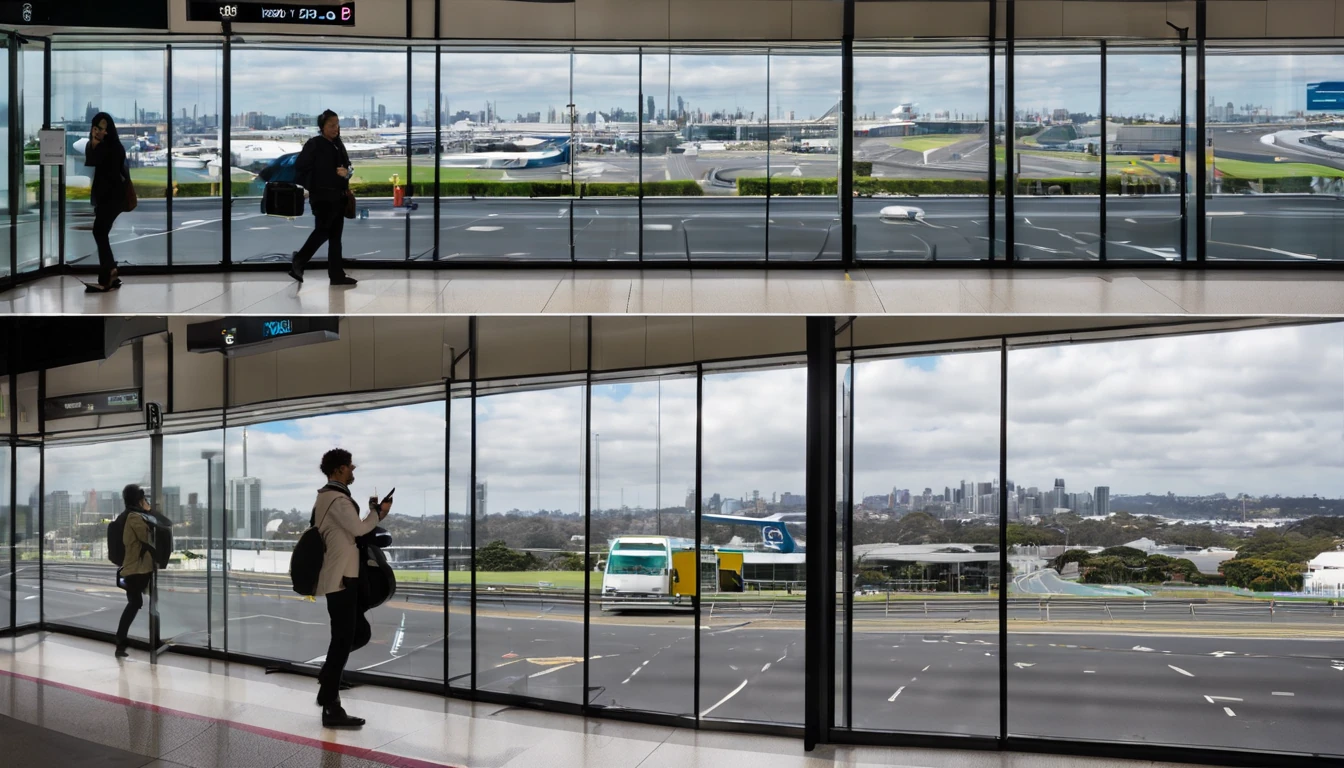
Sydney Speed Test: SYD Airport, CBD, Bondi – 5G Expectations vs Reality

Blog

Sydney Speed Test: SYD Airport, CBD, B...

Sydney Speed Test: SYD Airport, CBD, Bondi – 5G Expectations vs Reality

31 Oct 2025

Sydney Speed Test: SYD Airport, CBD, Bondi – 5G Expectations vs Reality

Sydney is one of the easiest places in Australia to get online fast—if you know where to stand and what your phone is actually connecting to. We spent two days running a structured sydney mobile speed test across three real traveller zones: Sydney Airport (SYD, T1/T2/T3), the CBD (Circular Quay to Town Hall via Martin Place), and Bondi (promenade, Icebergs and backstreets). We measured download, upload and latency on Australia’s big three networks with modern flagship phones, recording whether 5G was Standalone (SA) or Non‑Standalone (NSA), plus band behaviour where visible. The headline: Sydney 5G can be blistering in CBD mmWave pockets, solid but variable at Bondi, and good-enough at SYD—yet uplink and consistency still hinge on NSA 4G anchors in many spots. Below you’ll find results, practical traveller tips, and an open CSV preview you can reproduce. For more field tests in other cities, check our Destinations.

What we tested and how

Locations and times

  • SYD Airport
  • T1 International arrivals hall and kerbside
  • T2/T3 landside check-in zones
  • Airport rail platforms
  • Time windows: 07:30–09:30 and 17:00–19:00 (peak passenger flow)
  • Sydney CBD
  • Circular Quay ferry concourse
  • George St (Town Hall to Wynyard), Martin Place, Pitt St Mall
  • Known mmWave trial/coverage pockets near Martin Place/George St
  • Time windows: 10:00–12:00 and 13:00–15:00 (lunch-time load)
  • Bondi
  • Promenade (central), Bondi Icebergs, Hall St/Campbell Pde backstreets
  • On the sand (middle of the beach) vs against the seawall
  • Time windows: 08:00–10:00 (quiet) and 16:30–18:30 (busy sunset)

Devices, SIMs and apps

  • Handsets: recent flagships supporting 5G n78 mid‑band and n258 mmWave (where available). Mixed iOS and Android to observe stack differences.
  • SIMs: local prepaid eSIMs from each national operator to avoid roaming variability. Dual‑SIM kept idle on secondary line.
  • Measurement: Ookla Speedtest, nPerf and Fast.com, with 3–5 runs per spot; best‑of‑median recorded. Location logged at street precision.
  • Network notes: we recorded SA vs NSA where the device exposed it and noted apparent bands (e.g., n78, n258). Many phones still default to NSA in Sydney even where SA is selectively live.

Results at a glance

  • SYD Airport (landsid e)
  • Typical 5G NSA downlink: 120–300 Mbps; uplink: 10–30 Mbps; latency: 18–28 ms.
  • Peak pockets near T1 kerbside reached ~420 Mbps down. Platforms were more variable due to structure and passenger density.
  • Sydney CBD
  • Mid‑band 5G NSA median: 300–500 Mbps down; uplink: 20–60 Mbps; latency: 12–22 ms.
  • mmWave pockets (where reachable line‑of‑sight): 800–1,400+ Mbps down; uplink: 70–120 Mbps; latency often sub‑12 ms. Coverage is highly directional and sensitive to body blocking.
  • Bondi
  • Promenade (mid‑band): 180–350 Mbps down late morning; often drops to 80–200 Mbps at sunset load.
  • On the sand: speeds typically halve compared to the seawall due to distance, downtilt and body/sea reflections; uplink can dip <10 Mbps on NSA.
  • Backstreets (Hall St/Campbell Pde): often outperform the beach itself (250–400 Mbps) thanks to closer small cells and better geometry.

5G SA vs NSA: SA sessions were sporadically observed in the CBD (low‑band or mid‑band), delivering steadier latency but not always higher throughput. Most high headline speeds still came from NSA with a strong 4G anchor plus wide 5G n78.

Detailed findings

SYD Airport: solid, sometimes spiky

  • Arrivals halls favour coverage over capacity. Expect 5G NSA in most open areas, with frequent handovers around glass and metal structures.
  • Best results were kerbside at T1 where devices saw cleaner sectors: ~350–420 Mbps down, 20–35 Mbps up.
  • Platforms showed the widest variance due to tunnel geometry; we saw 60–250 Mbps down with occasional 4G fall‑backs providing steadier uploads (~15–25 Mbps).
  • SA appeared briefly on one handset on low‑band, with latency improvement (to ~14 ms) but no throughput gain vs solid NSA.

Traveller tip: if your upload matters (video, large files), step outside towards open sky or near terminal windows for a better uplink path.

CBD: mmWave moments, mid‑band muscle

  • Mid‑band n78 carried most sessions, returning consistent 300–500 Mbps down and 25–60 Mbps up at lunchtime.
  • We hit mmWave near Martin Place/George St with line‑of‑sight: 1.1–1.4 Gbps down, 80–120 Mbps up. Move a few metres, turn a corner, or stand behind a bus shelter and mmWave vanishes.
  • SA showed on a subset of devices. It improved jitter and call setup times but didn’t beat top NSA downlink where wide 5G + robust 4G anchor was present.

Traveller tip: to catch mmWave, stand streetside with a clear view of small‑cell nodes, keep the phone unobstructed, and face the likely sector. If speeds seem oddly low, turn 90 degrees—your body can block mmWave.

Bondi: beachfront variance, timing matters

  • Along the seawall, mid‑band 5G posted 180–350 Mbps down late morning with 15–35 Mbps up. At sunset, crowding pushed many sessions to 90–180 Mbps down and single‑digit uploads on NSA.
  • On the sand, even 30–50 metres from the seawall cost ~30–60% throughput due to antenna downtilt and body/hand absorption, especially if seated.
  • Icebergs lookout performed well (clean elevation): 280–420 Mbps down; backstreets off Hall St often matched or beat the promenade, suggesting small‑cell offload.
  • SA sightings were rare at the beach during our windows. NSA dominated, and uplink limits were noticeable for live streaming.

Traveller tip: for a clear video call at sunset, step off the sand to Campbell Parade or a café window seat. You’ll likely gain a stronger uplink.

5G SA vs NSA in Sydney: what it means for you

  • NSA (Non‑Standalone): your 5G piggybacks on a 4G core anchor. Often delivers higher peak speeds today because 4G+5G work together with mature scheduling. Uplink may be constrained by the 4G anchor path.
  • SA (Standalone): true 5G core. Potentially better latency, uplink and reliability for calls and enterprise features (network slicing later). Coverage is still being optimised; some consumer devices don’t hold SA consistently.
  • What we observed: CBD had the best chance of SA on compatible devices; airport and Bondi leaned NSA. Peak downlink wins still came from broad NSA deployments; SA helped with jitter and call stability.

How to check: - iPhone: Settings > Mobile Data > SIM > Voice & Data shows 5G status; deeper field metrics vary by model. - Android: Settings > About Phone > SIM Status, or vendor service menus. Look for “NR SA/NSA.”

Traveller setup checklist for better Sydney speeds

  • Update your device OS and carrier settings before you land.
  • Use a local eSIM for the three networks if you need redundancy. For multi‑city trips, see Destinations.
  • Turn off Low Data/Data Saver while testing; disable VPN for raw measurements.
  • Test outdoors first; then move inside near windows. Re‑run at shoulder height, phone vertical.
  • For uploads, prefer locations with line‑of‑sight to the street and fewer bodies between you and the cell.
  • If speeds jump wildly, toggle airplane mode or 5G off/on to refresh the anchor.
  • Need guaranteed performance for a team? Our For Business team can pre‑provision multiple eSIM profiles and fallback plans.

Pro tips: - mmWave: treat it like light—needs a clean path. A backpack, your hand, or a bus can kill it. - Bondi: early morning beats sunset for both capacity and uplink. - Airport: step outside for uplink; inside favours coverage and stability over raw speed.

Reproduce our test (step‑by‑step)

  1. Activate a local prepaid eSIM on a recent 5G phone. Keep any secondary line idle.
  2. Disable Wi‑Fi and VPN. Confirm 5G is enabled and not in “Auto 4G preferred.”
  3. Install two test apps (e.g., Speedtest and nPerf). Select the same target server where possible.
  4. At each spot, run 3–5 tests per app, 30–60 seconds apart. Log the median result.
  5. Note SA/NSA state if exposed; record time, GPS, and any obvious obstructions (bus shelter, tree, crowds).
  6. Repeat at different times of day to see load effects.
  7. Export to CSV. Compare with our open dataset via the Partner Hub.

Dataset and method (open CSV)

Columns - timestamp (local), location, operator, tech (5G SA/NSA or 4G), anchor (if NSA), down_mbps, up_mbps, latency_ms, notes

CSV preview (10 rows) timestamp,location,operator,tech,anchor,down_mbps,up_mbps,latency_ms,notes
2025-03-12 08:14,SYD T1 kerbside,Operator A,5G NSA,4G+NR n78,418,32,19,Clear LOS to mast
2025-03-12 08:42,SYD T1 arrivals hall,Operator B,5G NSA,4G+NR n78,236,21,23,Busy footfall
2025-03-12 09:08,Airport Rail Platform,Operator C,4G LTE,,92,18,31,Partial 5G fallback
2025-03-12 11:26,Martin Place (LOS),Operator A,5G mmWave NSA,4G+NR n258,1382,106,9,Line-of-sight small cell
2025-03-12 12:04,Pitt St Mall,Operator B,5G NSA,4G+NR n78,354,41,17,Lunch crowd
2025-03-12 13:32,Circular Quay concourse,Operator C,5G NSA,4G+NR n78,287,27,20,Open sky
2025-03-12 08:58,Bondi Promenade (centre),Operator A,5G NSA,4G+NR n78,312,24,18,Morning light load
2025-03-12 17:22,Bondi on the sand,Operator B,5G NSA,4G+NR n78,128,8,24,Sunset crowd; body blocking
2025-03-12 17:56,Icebergs lookout,Operator C,5G NSA,4G+NR n78,402,36,16,Elevated position
2025-03-12 18:18,Hall St backstreet,Operator B,5G SA,,368,52,14,Steady SA session

Full, open CSV and collection notes are available via the Partner Hub. You are free to use and cite with attribution.

Who should care about this

  • Solo travellers and remote workers needing reliable uplink for calls and cloud saves.
  • Teams running live content at Bondi or events in the CBD. Our For Business solutions include pre‑trip planning, eSIM pools and on‑site fallback.
  • Travellers continuing onward: if Sydney is a stopover before North America or Europe, line up your cross‑region eSIMs now:
  • For the US leg: see Esim United States or broader Esim North America.
  • For Europe legs: check Esim Western Europe, plus country options like Esim France, Esim Italy and Esim Spain.

FAQs

  • Is 5G SA widely available in Sydney?
    Selective. We observed SA sessions mainly in the CBD on compatible devices. Most day‑to‑day traffic still runs NSA, which remains very fast with a strong 4G anchor.
  • Why are uploads so much lower than downloads?
    On NSA, uplink can be constrained by the 4G anchor and RF geometry. In busy areas and on the beach, body blocking and sector load hit uplink first.
  • Can I rely on airport 5G for video calls?
    Usually, yes—but step outside or near windows for better uplink. Terminal interiors prioritise coverage; uplink can be inconsistent at peak times.
  • How do I find mmWave in the CBD?
    Look for small cell nodes on streets with clear sightlines (e.g., around Martin Place). Stand in open air, keep the phone unobstructed, and face the node. Small moves matter.
  • Does an eSIM affect speed?
    No—what matters is network, band, coverage, device modem and load. eSIM is just the provisioning method. Local profiles generally beat roaming for latency.
  • I’m visiting Bondi at sunset—any hacks?
    Test at the seawall rather than on the sand, avoid crowds blocking line‑of‑sight, and try a backstreet near Campbell Parade for a stronger sector and better uplink.

Bottom line

Sydney’s 5G delivers excellent real‑world performance where it counts, with mmWave party tricks in the CBD, dependable mid‑band almost everywhere, and predictable beach‑front variance driven by geometry and crowds. SA is emerging and helps with jitter, but NSA still wins peak throughput today. Plan your calls and uploads around line‑of‑sight and time‑of‑day, and you’ll have a smooth trip.

Next step: planning more stops after Sydney? Start with our city playbooks and regional eSIMs on Destinations.

Read more blogs

EU Long Stays: Fair‑Use for Nomads & Students (90/180‑Day Rule)

EU Long Stays: Fair‑Use for Nomads & Students (90/180‑Day Rule)

Planning a long stretch around Europe? Here’s the traveller‑first guide to EU fair use on long stays. Confusion often comes from mixing two different systems: immigration rules (the Schengen 90/180‑day stay limit) and telecom rules (EU roaming fair use). They are not the same. Immigration limits how long you can stay. Telecom fair use limits how long you can roam on an EU plan before surcharges kick in. If you’re a student with local residency, you’re treated differently to a roaming nomad bouncing between countries. And regional eSIMs add a third option that avoids most “home vs abroad” checks altogether. This guide cuts through the jargon with plain‑English explanations, examples you can copy, and practical checklists to keep your connectivity clean and cost‑predictable. If you just want a solution: country eSIMs are best when you settle in one place; regional EU eSIMs shine for multi‑country hops. Keep reading for the details and how to choose.The quick version: Fair‑use vs 90/18090/180 rule: Immigration. Most visa‑exempt visitors can stay in the Schengen Area up to 90 days in any 180‑day period. Nothing to do with mobile plans.EU roaming fair use: Telecom. EU/EEA operators let their customers “roam like at home” across the EU. To stop permanent roaming, they can apply fair‑use checks over a four‑month window and, if triggered, add regulated surcharges after warning you.Regional travel eSIMs: These are made for roaming. They don’t rely on EU “roam like at home” privileges, so the home‑vs‑abroad test usually doesn’t apply. Instead, your limit is the plan’s validity and data allowance.For country coverage quirks (e.g., Switzerland, UK post‑Brexit), see Destinations.What the EU fair‑use policy actually says (for travellers)EU “Roam Like at Home” (RLAH) protects EU/EEA subscribers using their home mobile plan around the bloc. It applies primarily if you hold an EU plan with an EU operator.The home‑presence and usage test (4‑month window)Your EU operator can watch usage over at least four months. If both are true, they may flag permanent roaming:1) You’ve been more time “abroad” than “at home,” and2) You used more data while roaming than you did at home.If they detect this, they must warn you and give at least 14 days to change your pattern (e.g., use the line domestically or reduce roaming). If nothing changes, they can add small, regulated surcharges on roaming usage. Your service isn’t cut off, but costs rise.Data caps on “unlimited” plans while roamingIf your domestic plan is unlimited or very cheap per GB, your operator can set a specific fair‑use roaming data allowance, calculated from your plan price and EU wholesale caps. The allowance and any out‑of‑bundle surcharge must be clearly communicated. Always read the roaming section of your tariff.Residency or “stable links”Operators can ask for proof of residency or stable links (study, work) when you buy or keep a domestic plan. This isn’t immigration control; it’s to ensure domestic plans aren’t used as permanent roaming products.Warnings and surchargesYou’ll receive a warning before any fair‑use surcharge applies.Surcharges are capped by EU rules and reviewed periodically.Paying a surcharge doesn’t fix the root cause. If your lifestyle is long‑term roaming, reconsider your setup (see below).Note: RLAH covers EU/EEA. It does not automatically include Switzerland or the UK. Check Destinations before you go.Residency vs roaming: which bucket are you in?Students with a local contract (resident or stable link)If you study in, say, France and sign up for a French mobile plan using local documentation, France becomes your “home” for that line. Your everyday use in France typically outweighs your time abroad, so your weekend trips to Spain or a fortnight in Italy sit comfortably within fair use. For deeper country fit, see Esim France, Esim Spain and Esim Italy.Digital nomads and long‑stay visitors (non‑resident)If you don’t have EU residency and you rely on a single EU domestic SIM while rarely returning to its home country, you’re likely to trip the fair‑use test after a few months. Two cleaner options:Use country eSIMs in each country you stay in for a month or two; orUse a regional travel eSIM designed for roaming around Europe.How regional eSIMs fit into long staysRegional travel eSIMs are built for cross‑border use. Instead of offering a domestic plan with RLAH, they provide roaming access in multiple countries from day one. This sidesteps the “domestic vs roaming” test entirely.Multi‑country coverage: A single profile that works across much of the EU. See Esim Western Europe for a practical one‑SIM solve when you’re rotating through EU hubs.Validity and data: Plans come with defined validity (e.g., 15–90 days) and data buckets. If you run out, top up or add another plan—no residency checks.Outside the EU: Heading to or from North America? Pair your Europe plan with Esim North America or set up before you fly with Esim United States.When you’re staying a whole term in one country, a local eSIM can be cheaper for heavy data. For multi‑country months, regional usually wins on simplicity.When to choose a country eSIM vs a regional EU eSIMChoose a country eSIM when:You’ll spend 30+ days in one country and use lots of data.You need local rates for domestic calls or long‑term top‑ups.Example pages: Esim France, Esim Italy, Esim Spain.Choose a regional EU eSIM when:You’ll cross borders frequently (e.g., 3–6 countries over 2–4 months).You prefer one number/data plan to manage across the trip.See: Esim Western Europe.Use dual‑SIM: keep your primary line for authentication calls/SMS, and set the travel eSIM as your data line.Step‑by‑step: Students (semester or year abroad)1) Get a local plan in your host country- Sign up with local ID/student proof. Your host country becomes “home” for that plan.2) Read the roaming section of your tariff- Note any roaming data caps and the four‑month fair‑use window.3) Use your host‑country SIM domestically most of the time- Weekend trips are fine. Long multi‑month trips outside your host country might trigger warnings.4) Add a regional eSIM for holiday stretches- If you’ll travel for several weeks, switch your data line to Esim Western Europe to avoid breaching your domestic plan’s fair‑use pattern.5) Keep alerts on- Don’t ignore SMS warnings. You usually get at least 14 days to adjust your usage before surcharges apply.6) Check non‑EU neighbours- UK/Switzerland often sit outside inclusive roaming. Verify on Destinations before you go.Step‑by‑step: Digital nomads (90–180 days across EU)1) Decide your pattern- Many short stays in multiple countries? Start with a regional plan. One or two long stops? Mix in country eSIMs for each stop.2) Set up before you move- Install the eSIM profile while you have reliable Wi‑Fi. Test with a small top‑up.3) Use dual‑SIM smartly- Keep your home SIM active for 2FA/texts. Set the travel eSIM as the default for data.4) Rotate plans, not penalties- Regional eSIMs like Esim Western Europe are priced for roaming and won’t run into EU “permanent roaming” tests. When staying put, switch to the local country plan (e.g., Esim Spain).5) Avoid long‑term reliance on a single EU domestic plan- If you don’t live there, the four‑month fair‑use pattern will likely catch up and add surcharges.6) Leaving or arriving via the US/Canada?- Bridge the gap with Esim North America or sort stateside coverage with Esim United States.Worked examplesStudent in France, 9 months, frequent tripsYou take a French plan as your main line. You spend most days in France, with occasional weekends in Spain/Italy. You remain well within fair use. For a four‑week summer rail trip, you add Esim Western Europe for data and keep the French SIM for calls/SMS.Nomad, 5 months, 5 countriesMonth in Portugal, then Spain, France, Belgium, Netherlands. You use a regional plan for months 1–3. For months 4–5, because you’re stationary and need more data, you add Esim Spain and Esim France during those longer stays. No EU domestic fair‑use checks apply to your regional eSIM; the country eSIMs are priced for local use when you’re settled.US visitor, 2 months in Italy with side tripsYou keep your US number active for banking but avoid pricey long‑term roaming on your domestic US plan. You install Esim Italy for the base month and add a short regional top‑up for a two‑week loop through neighbouring countries.Pro tips to stay compliant and connectedTrack days and data: set a calendar reminder every time you cross a border and use your phone’s data counter per SIM.Respect SMS warnings: they are your early‑warning system before surcharges.Prefer Wi‑Fi calling and messaging apps for cross‑border calls.Use hotspot sparingly if your plan restricts tethering.Check country exceptions on Destinations before visiting microstates or non‑EU neighbours.Business travellers: corporate pools can smooth roaming costs—see For Business or partner with us via the Partner Hub.FAQQ1: Does the Schengen 90/180‑day rule limit my mobile usage?A: No. 90/180 is immigration. EU telecom fair use is separate. You could be within your visa limit yet still trigger a roaming fair‑use surcharge—or vice versa.Q2: How long can I roam on an EU domestic plan before fair‑use kicks in?A: Operators check at least a four‑month window. If, in that period, you spend more time and use more data abroad than at home, they can warn you and later add regulated surcharges.Q3: I have an “unlimited” EU plan. Is roaming unlimited too?A: Not necessarily. Operators can set a specific fair‑use roaming data cap for unlimited/low‑cost plans and must tell you the allowance and any surcharge once you hit it.Q4: Do regional travel eSIMs have fair‑use limits?A: They’re built for roaming, so the EU “home vs abroad” test doesn’t apply. You’re bound by the plan’s validity and data bucket, plus any reasonable‑use terms (e.g., hotspot limits). For multi‑country trips, see Esim Western Europe.Q5: If I buy a French SIM, can I spend the summer in Italy on it?A: Yes, but extended, heavier use outside France could trigger the four‑month fair‑use test. For a long Italy stay, switch to Esim Italy or add a regional eSIM for the travel leg.Q6: I’m a US traveller. Should I rely on my US plan’s roaming?A: For short trips, maybe. For long stays, many US plans throttle or cap roaming after a few weeks. It’s usually better value to keep your US number for SMS and run EU data on a regional or country eSIM. Start here: Esim United States and Esim Western Europe.Next stepPlan your route, pick your coverage: explore country and regional options on Esim Western Europe, then check country specifics via Destinations.

How to Set Up an eSIM on iPhone 15/16: Step-by-Step with Fixes

How to Set Up an eSIM on iPhone 15/16: Step-by-Step with Fixes

Travelling with an iPhone 15 or 16? Good news: Apple’s eSIM experience is now fast, reliable and ideal for travellers who want local data without juggling plastic SIMs. This guide walks you through a clean, repeatable iPhone eSIM setup, including QR code install, manual activation details (SM‑DP+), carrier app installs and Quick Transfer. You’ll also find practical APN tips, a fixes section for the most common errors, and pro traveller settings so data just works the moment you land. If you hit a snag at any point, jump straight to Troubleshooting below.If you’re still shopping for a plan, browse country and regional options on Destinations — from single-country picks like Esim United States, Esim France, Esim Italy or Esim Spain to multi-country passes like Esim Western Europe and Esim North America.Before you start: what you needEstimated time: 5–10 minutesCost: Free to install (plan cost varies)An iPhone 15 or iPhone 16 running current iOS (Settings &gt; General &gt; Software Update).Reliable Wi‑Fi (strongly recommended during activation).Your eSIM details:Either a QR code, orManual activation details: SM‑DP+ address, Activation Code, and (if provided) Confirmation Code.If transferring from another iPhone: both phones on iOS 16+ and signed into iCloud with Bluetooth on.Quick checks: - Remove any old VPN profiles (Settings &gt; General &gt; VPN &amp; Device Management) if they may interfere. - Backup screenshots or a PDF of your QR code so you have it offline on arrival.Compatibility note: - iPhone 15/16 models sold in the United States are eSIM‑only. International variants generally still include a physical SIM tray. All support multiple eSIMs with up to two lines active at the same time.Step-by-step iPhone eSIM setupYou can add an eSIM in four ways. Use the method your provider supports.Tip: If your provider instructs you to activate only after you land, you can still pre‑install the eSIM over Wi‑Fi and toggle it on later.Option 1: Install via QR code (fastest)Connect to Wi‑Fi.On your iPhone: Settings &gt; Mobile Data (Cellular) &gt; Add eSIM.Tap Use QR Code and point the camera at your code.When prompted, tap Continue. If asked, choose to Add eSIM.Wait for “Activating” to complete. This can take 1–3 minutes.Label the line (e.g., “Japan data”).Set as your Mobile Data line if it’s your travel plan. Keep your home line for calls/SMS if needed.Leave Data Roaming off until you arrive, unless your plan requires activation at purchase.If you see “Invalid QR Code” or “Plan Cannot Be Added”, see Troubleshooting.Option 2: Enter details manually (SM‑DP+ and Activation Code)Settings &gt; Mobile Data &gt; Add eSIM &gt; Use QR Code &gt; Enter Details Manually.Enter: - SM‑DP+ Address: e.g., “xyz.smdp.com” (exactly as provided) - Activation Code: long string (case‑sensitive) - Confirmation Code: only if your provider lists oneTap Next and wait for activation.Label and assign the line for data as needed.Tip: Typo‑sensitive. Copy/paste carefully. Double‑check dots and dashes.Option 3: Install via carrier/appInstall your provider’s app from the App Store.Create/log in to your account and purchase/assign the eSIM to your device.In the app, select “Install eSIM” and follow the prompts.When iOS prompts to add the plan, confirm and wait for activation.Option 4: eSIM Quick Transfer (moving from your old iPhone)Put both iPhones side by side with Bluetooth on and signed into iCloud.On your new iPhone: Settings &gt; Mobile Data &gt; Add eSIM &gt; Transfer From Nearby iPhone.On your old iPhone, approve the transfer and choose the line.Wait for activation on the new device and confirm the line is working.Decide whether to keep the eSIM active on the old phone (usually off for travel).After activation: configure for travelThese post‑install settings make the difference between “it works” and “it works every time”.Label lines: Settings &gt; Mobile Data &gt; tap the new plan &gt; Label.Default line:Mobile Data: choose your travel eSIM.Voice: choose your home line if you want your usual number active.iMessage &amp; FaceTime: Settings &gt; Messages/FaceTime &gt; Send &amp; Receive &gt; pick the appropriate number/email.Data Roaming: Toggle on when you land in your destination.Network Selection: If auto fails, try manual. Settings &gt; Mobile Data &gt; Network Selection &gt; turn off Automatic and choose a listed partner network.5G/LTE: Settings &gt; Mobile Data &gt; Mobile Data Options &gt; Voice &amp; Data &gt; try 5G Auto/On or LTE per provider guidance.Low Data Mode: Turn off if speeds seem throttled unnecessarily.APN and data settings (only if needed)Most eSIMs auto‑configure APN. If data connects but webpages won’t load, set APN manually.Go to Settings &gt; Mobile Data &gt; your eSIM plan &gt; Mobile Data Network (Cellular Data Network).Under Mobile Data (Cellular Data):APN: enter the exact APN value provided (e.g., “internet”, “fast.t-mobile.com” — this will vary).Username/Password: leave blank unless specified.MMS/Personal Hotspot APNs: set only if you’ve been given values.Return one level and reboot the iPhone if the change doesn’t apply immediately.Pro tips: - If the APN field is missing or greyed out, your profile is locked by the carrier; contact support to push correct settings. - “Could not activate mobile data network” usually means incorrect APN or temporary network registration delay. Recheck APN and toggle Airplane Mode for 20 seconds.Troubleshooting: top errors and fast fixesIf activation fails, work methodically. Most issues resolve in under 5 minutes.1) “Invalid QR code” / “This code is no longer valid” - Cause: Code already redeemed, expired, or scanned incorrectly. - Fix: - Confirm you’re scanning the most recent QR from your provider. - Try Enter Details Manually (SM‑DP+, Activation Code). - Ask the provider to reissue the eSIM.2) “Activation unsuccessful” / Stuck on “Activating” - Cause: Wi‑Fi glitch or temporary carrier server timeout. - Fix: - Force‑quit Settings, toggle Airplane Mode on for 20 seconds, then off. - Reboot iPhone. - Switch to a different Wi‑Fi or use a known‑good hotspot. - Try again after 10–15 minutes.3) “No Service” after install - Cause: Roaming off, wrong network selected, unsupported band, or not yet in the coverage area. - Fix: - Toggle Data Roaming on (when in destination). - Settings &gt; Mobile Data &gt; Network Selection: try manual selection of a partner network. - Settings &gt; Mobile Data Options &gt; Voice &amp; Data: switch between 5G Auto, 5G On, and LTE. - Restart the iPhone.4) Data doesn’t work; calls/SMS do (or vice‑versa) - Cause: APN not set, wrong default data line, or plan is data‑only. - Fix: - Confirm your eSIM is selected as the Mobile Data line. - Set APN manually as provided by the carrier. - If your plan is data‑only, use OTT apps for calls/messages.5) “Plan cannot be added” / “Unable to complete cellular plan change” - Cause: Region/IMEI/EID mismatch or unsupported device profile. - Fix: - Ensure you’re on the latest iOS. - Provide your device EID to the provider (Settings &gt; General &gt; About). - Ask the provider to reprovision the eSIM.6) “Could not activate mobile data network” - Cause: APN or temporary network block. - Fix: - Reenter APN, then reboot. - Toggle Airplane Mode, then test again. - Try manual network selection.Still stuck? Delete and reinstall the eSIM: - Settings &gt; Mobile Data &gt; tap the plan &gt; Remove eSIM. Re‑add via QR/manual details. Ensure Wi‑Fi is stable during reactivation.Managing multiple eSIMs on iPhone 15/16Store many, use two: iPhone 15/16 can store multiple eSIMs and keep up to two lines active at once.Switch data line quickly: Settings &gt; Mobile Data &gt; Mobile Data &gt; select the plan you need.Pause a line (don’t delete): Toggle “Turn On This Line” off to keep the profile for later.Delete when finished: Remove eSIM to tidy your list. Keep a copy of the QR/manual details in case you need to reinstall.Pro tips for travellersPre‑install on Wi‑Fi before you fly, then toggle the line on when you land.Keep your home line on for SMS codes, but set the travel eSIM as the Mobile Data line.Save the QR code and manual details offline (Files app/Notes) for airport re‑installs.If speed dips in crowds, try manual network selection or switch between 5G and LTE.Hotspot/tethering: Check your plan allows it; if not working, set the APN for Personal Hotspot if provided.Plan your eSIM by destinationChoose a country or a multi‑country pass based on your route: - Single countries: Esim United States, Esim France, Esim Italy, Esim Spain - Multi‑country: Esim Western Europe, Esim North AmericaSee the full list on Destinations.Travelling as a team? Explore pooled and managed plans For Business. Partners and resellers can access assets and tools via the Partner Hub.FAQ1) Can I use two eSIMs at the same time on iPhone 15/16?Yes. You can have multiple eSIMs stored and keep two lines active simultaneously. Assign one for Mobile Data and choose how to handle voice and iMessage/FaceTime.2) Do iPhone 15/16 models support physical SIMs?US‑market iPhone 15/16 models are eSIM‑only. Many international variants also support a physical nano‑SIM alongside eSIM. Regardless, eSIM is supported across the range.3) When should I install my travel eSIM?If allowed by your provider, install over Wi‑Fi before departure, then switch Data Roaming on when you land. If your plan starts counting from activation, install at the airport on arrival.4) How do I move my eSIM to a new iPhone 16?Use Add eSIM &gt; Transfer From Nearby iPhone (Quick Transfer) with both phones on iOS 16+. Some providers require issuing a new eSIM—contact them with your new device’s EID if Quick Transfer isn’t offered.5) My data works but some apps are slow. What can I check?- Disable Low Data Mode.- Try switching 5G Auto ↔ LTE.- Set APN manually if your provider supplies one.- Toggle Private Relay/VPN off temporarily.- Try manual network selection to a different roaming partner.6) What if my QR code has expired?Ask your provider to reissue the eSIM or use the manual SM‑DP+ and Activation Code path if those details are still valid.Next stepPick your plan now and be ready to connect on landing: browse Destinations.

MDM + eSIM at Scale: Jamf, Intune, and Knox Deployment Patterns

MDM + eSIM at Scale: Jamf, Intune, and Knox Deployment Patterns

Enterprises want travel-ready devices that “just work” the moment staff land. The trick is marrying modern eSIM provisioning with your MDM so you can control cost, security, and user effort. This guide shows practical mdm esim deployment patterns that scale across Jamf (Apple), Intune (iOS and Android), and Samsung Knox. We’ll cover enrolment flows that minimise user taps, profile locking to stop accidental deletions, dual‑SIM policies that split work vs personal usage, and roaming presets for fleets moving between regions. You’ll also find checklists and pro tips that reduce support tickets and bill shock.We assume your organisation provides work devices for travel, or supports COPE/CYOD where personal lines coexist with corporate data. Use this as a blueprint to pilot, then operationalise. For region planning, see our coverage library across Destinations, including ready-to-deploy options for Esim United States, Esim France, Esim Italy, Esim Spain, Esim Western Europe, and Esim North America.What you can and can’t automate todayBefore designing flows, acknowledge current platform realities:Silent eSIM install is limited. On iOS and standard Android Enterprise, fully silent eSIM download/activation is generally not available to third‑party MDMs. Users usually scan a QR or paste an activation code (SM‑DP+ address and code).MDM excels at governance. You can lock who can add/remove plans, steer which SIM handles data, and preconfigure roaming behaviours (especially on Samsung via Knox).Multiple eSIM profiles can be stored. Most recent iPhones and Androids can hold several eSIMs, with one active for data at a time. This enables preloading per-region profiles.The right pre-provisioning removes friction. If you deliver the code securely, guide the user at enrolment, and then lock settings, day‑one travel becomes smooth.Core building blocks for mdm esim deploymentActivation methods:QR code scan (most common, fastest for users).SM‑DP+ server and activation code entered manually.Carrier/eSIM app deep-link (opens to a prefilled code; still user-confirmed).Ownership and enrolment models:COBO (corporate-owned, business-only): strongest control, ideal for travel pools.COPE/CYOD: align dual‑SIM policies to separate work data (eSIM) and personal voice (physical SIM).Automated Device Enrolment (Apple) / Zero-touch (Android) for day‑0 governance.Lifecycle states:Download, enable for data, set data roaming, lock modifications, suspend or remove post‑trip.Policy pillars:Profile locking (prevent removal/changes).Dual‑SIM defaults (data on eSIM; personal SIM voice only).Roaming presets (country/region-based switching and controls).Cross‑platform baseline policy pack (start here)Apply these controls in Jamf, Intune, and Knox (where supported):1) Restrictions and lock‑down - iOS/iPadOS: Disable “Modify eSIM/cellular plan” in Restrictions payload (Jamf and Intune support this). This prevents deleting or adding plans after deployment. - Android Enterprise (fully managed): Disallow mobile network configuration changes. Use OEMConfig/Knox to enhance this on Samsung. - Optionally disable hotspot if you fund only device use, not tethering.2) Secure delivery of activation details - Store and distribute SM‑DP+ and activation codes via: - Jamf Self Service item or Intune Company Portal page. - A managed app with AppConfig (codes scoped per user/group). - Conditional access for off-network users via VPN or Microsoft Tunnel.3) Dual‑SIM governance - Communicate the standard: “eSIM = work data; physical SIM = personal voice/text.” - Enforce default data SIM and block data on the personal SIM where the platform allows (Knox can enforce; iOS typically requires user confirmation guided by Self Service).4) Roaming controls - iOS: you cannot programmatically toggle Data Roaming on/off; provide in-app guidance and compliance notifications. - Samsung via Knox: set data roaming per region profile; lock the user toggle if you need strict cost control.5) Observability and support - Use a managed data-usage app or network analytics to alert at thresholds. - Create device groups per destination; push correct eSIM profile and instructions before travel.Pro tip: Pre-provision multiple regional eSIMs (e.g., Esim Western Europe plus Esim United States) on eligible devices; switch the active data line just before travel.Jamf patterns for iOS/iPadOSRecommended enrolment flow (ADE)Use Apple Business Manager with Automated Device Enrolment to drop users into Jamf out of the box.During Setup Assistant, restrict “Cellular Plan” modifications via a configuration profile pushed immediately after enrolment.Day‑0 “self‑serve” eSIM installation1) Scope a Jamf Self Service item named “Activate Work Travel eSIM”. 2) Present country/region options mapped to your travel catalogue (e.g., Esim France, Esim Italy, Esim Spain, or broader Esim North America). 3) On selection, reveal the QR or invoke a deeplink to your eSIM provider’s install URL (still user‑approved). 4) After installation, prompt the user to: - Set the eSIM as “Mobile Data” line. - Keep personal SIM for “Default Voice Line” (if COPE). - Enable Data Roaming if travelling out of their home network.5) Post‑install, Jamf immediately re‑applies the restriction to prevent further eSIM changes.Pro tips: - Use Jamf Smart Groups based on upcoming travel to target the correct instructions and codes. - Embed a 30‑second video or step‑by‑step within Self Service; it reduces support tickets dramatically.Pre‑travel top‑ups and seasonal switchesCreate Self Service policies “Enable EU Data” and “Enable US Data”.Each policy reveals the relevant QR/code and a short checklist for the user to switch the Mobile Data line.Re-lock eSIM modifications after the switch.Dual‑SIM policy on iOSYou cannot currently force default data line via MDM on iOS; instead:Provide a one-screen Self Service guide with screenshots.Use an in-app confirmation (“I’ve set eSIM for data”) to mark the device compliant and suppress reminders.Restrict eSIM modification to keep the work plan intact.Microsoft Intune patterns (iOS and Android)Enrolment and scopingiOS/iPadOS: Enrol through Company Portal or ADE; apply the iOS device restriction to block eSIM modifications post‑install.Android Enterprise:COBO: Fully Managed is best for travel pools.COPE: Work Profile on company‑owned gives balance but fewer network controls; consider Samsung + KSP for more power.Delivering eSIM details securelyUse Intune to publish a Company Portal resource “Install Work eSIM” scoped by Azure AD groups (e.g., “Travel_EU_Q4”).Optionally deliver codes via a managed app using AppConfig so they never appear in email or chat.For high-risk destinations, require VPN before revealing the code.Enforcing dual‑SIM and roaming (Android)With Samsung devices, deploy the Knox Service Plugin (KSP) via Intune’s OEMConfig:Set preferred SIM for mobile data to eSIM.Disable data on physical SIM (voice/text unaffected).Toggle and lock Data Roaming per region profile (e.g., allow in EU, block elsewhere).For non‑Samsung Android, use available Android restrictions to limit user changes; depth varies by OEM.Pro tip: Maintain device groups per region and travel window. When a user is added to “Travel_US_Nov,” Intune auto-publishes the Esim United States resource, applies KSP roaming settings (if Samsung), and sends a single push prompting installation.Samsung Knox deployment patterns (Knox Manage or Intune + KSP)Samsung offers the deepest cellular controls for Android Enterprise:Preferred data SIM: Force eSIM as the data line and keep personal SIM for voice/SMS.Data Roaming control: Allow/block and optionally hide the toggle from users to prevent drift.Mobile networks UI restrictions: Prevent users from adding/removing profiles or altering APNs.APN fine‑tuning: Rarely needed with eSIM, but useful for private APN cases.Typical flow (COBO travel handset): 1) Zero‑touch enrol into Knox Manage or Intune DO. 2) Push KSP with a “Home” profile (roaming off, data on eSIM, tethering off). 3) Before travel, switch to a “Destination” profile (roaming on, data on eSIM, usage alerts). 4) Distribute the eSIM activation QR via Knox E-FOTA notification or Intune Company Portal. 5) Lock network settings post‑install.Pro tip: Pair KSP roaming policies with a data-usage app that shows per‑SIM consumption. Users understand what’s going on, and you stay ahead of overages.Roaming presets for fleetsBuild a small library of policy + plan bundles:Western Europe bundle:eSIM: Esim Western EuropePolicy: Data roaming on; personal SIM data off; hotspot allowed for field teams if needed.Guidance: Remind users to choose eSIM for data on arrival.North America bundle:eSIM: Esim North America or country‑specific Esim United StatesPolicy: Roaming on; push time‑zone and dialling tips; enable Wi‑Fi Assist guidance if required.Country‑specific bundles:France/Italy/Spain with Esim France, Esim Italy, Esim SpainPolicy: Standard dual‑SIM rules; translate quick-start steps for local teams if necessary.Preload multiple profiles (where devices support it) so frequent travellers only switch the active data line in Settings. Reference coverage and plan validity on Destinations when planning trips.Operational playbooksCOBO travel pool devicesDevice state: Fully managed (Jamf ADE / Intune DO / Knox Manage).Install method: QR in a managed portal with a 60‑second guide.Lockdown: Block eSIM modifications; hide roaming toggles (Samsung).Offboarding: Remove or disable the travel profile after return (user‑assisted).COPE (personal SIM + corporate eSIM)Device state: Jamf or Intune with clear Self Service instructions.Policy: eSIM for data; personal SIM voice/SMS. Restrict personal SIM data (Samsung) or provide guidance (iOS).Privacy: Communicate what is and isn’t monitored; keep trust high.Frequent-flyer executivesPreload EU + US eSIMs; give a one‑tap Self Service checklist “Switch Data to EU/US”.Provide a wallet card or offline PDF with steps for when they land without data.Troubleshooting quick checks (field-proven)eSIM not downloading? Confirm device is unlocked, on Wi‑Fi, and date/time is automatic.No data after install? Ensure the eSIM is selected as the Mobile Data line and Data Roaming is on outside the home network.Dual‑SIM confusion? Rename lines (e.g., “Work eSIM” and “Personal SIM”) in Settings to reduce mistakes.Poor performance? Toggle Airplane Mode for 10 seconds; then check network selection is automatic.Stuck policy? Force an MDM sync (Jamf: Self Service “Update Inventory”; Intune: Company Portal “Check status”).FAQsCan MDM silently install an eSIM profile?Generally no on iOS and standard Android. Expect a user‑confirmed QR scan or code entry. Build your flow to make that step quick and clear.How do I stop users deleting the work eSIM?iOS/iPadOS: Disable eSIM/cellular plan modifications via MDM Restrictions.Android: Use Device Owner restrictions; on Samsung, enforce additional SIM/network policies via Knox.Can I enforce that work data uses the eSIM and personal SIM is voice only?Yes on Samsung via Knox (preferred data SIM, disable personal SIM data).On iOS, you’ll guide users to set eSIM as the data line and then lock plan modifications.Can I turn Data Roaming on/off with MDM?Samsung via Knox: yes, including hiding the toggle.iOS: not programmatically; provide clear user prompts at install and arrival.How many eSIMs can a device store?Modern iPhones and Androids can store multiple eSIM profiles, with one active for data. Exact limits vary by model. Preload frequent destinations and switch as needed.What’s the best way to support travellers landing without data?Provide QR codes that work over hotel/airport Wi‑Fi, offline quick-start steps in Self Service, and a short SMS template they can send from their personal SIM to get help.Next stepReady to pilot mdm esim deployment with proper policy controls? Share your route map and device mix with our enterprise team via For Business. We’ll help you design enrolment flows, locking, dual‑SIM policies, and region bundles that scale.