
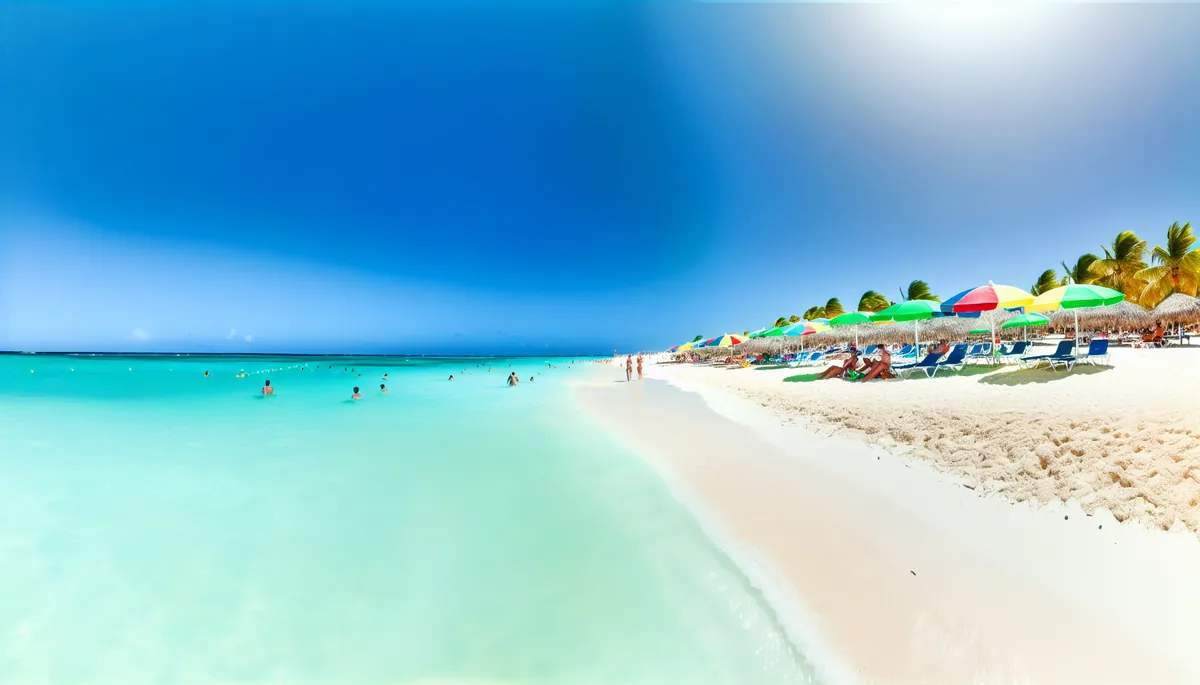
Why Your Phone Plan Matters More Than Ever for Spring Break
Spring Break is supposed to be about sun, sand, and zero stress — but a surprise $300 roaming bill the week you get home has a way of ruining the memory. According to the GSMA's 2025 Mobile Economy report, international roaming remains one of the top unexpected travel expenses for consumers, with travelers regularly underestimating data consumption when abroad. A single day of casual social media scrolling, Google Maps navigation, and a few video calls can burn through 500 MB to 2 GB without you even noticing.
Here's the stat that should stop you in your tracks: American travelers who rely on carrier roaming packages in Mexico and the Caribbean pay an average of $10–$25 per day in international data fees, compared to $3–$8 per day for equivalent travel eSIM plans (based on 2026 plan pricing across major providers). That's a gap of $70–$120 over a typical week-long Spring Break trip — money you'd rather spend on a beachside margarita.
This guide breaks down exactly what you need to know about phone connectivity for the two most popular Spring Break destinations: Mexico (think Cancún, Los Cabos, Puerto Vallarta) and the Caribbean (Bahamas, Jamaica, Dominican Republic, Barbados, and beyond). We'll compare your real options — carrier roaming, local SIMs, and travel eSIMs — so you can make the right call before you pack your bags.
How Does Phone Coverage Actually Work in Mexico Resort Areas?
Mexico's resort corridors have genuinely excellent mobile coverage in 2026. The major tourist zones — Cancún's Hotel Zone, the Riviera Maya, Los Cabos, and Puerto Vallarta — all benefit from robust 4G LTE infrastructure, with 5G now available in parts of Cancún and Playa del Carmen. Coverage does thin out if you venture into cenotes or jungle areas far from main roads, but for the typical Spring Breaker staying close to the beach strip, connectivity is rarely an issue.
What matters more than raw coverage is which plan you're using to access it. Your US home carrier's roaming agreement determines which local network your phone latches onto, and that affects both speed and cost. If you're using a travel eSIM, you'll typically connect to the same major local networks — often getting equivalent or better speeds at a fraction of the price. For a deeper look at what to expect, check out Mexico eSIM options on Simology before you book.
What About Coverage Outside the Resort Zone?
If your Spring Break itinerary includes day trips — Chichén Itzá, Tulum ruins, Isla Mujeres — coverage becomes patchier. 4G LTE is generally available along major highways and in town centers, but rural and jungle areas may drop to 3G or no signal. Download offline Google Maps before you leave your hotel, and don't count on streaming during a cenote tour. A travel eSIM won't magically improve coverage in dead zones, but it will make sure you're not paying roaming rates when you reconnect.
How Does Phone Coverage Work Across the Caribbean?
The Caribbean is a collection of dozens of independent islands and territories, each with its own telecom infrastructure — and that makes connectivity planning significantly more complex than Mexico. Coverage quality ranges from excellent (Bahamas, Jamaica, Dominican Republic, Barbados) to genuinely limited (smaller Eastern Caribbean islands, parts of Haiti).
The good news: the most popular Spring Break Caribbean destinations all have solid 4G LTE coverage in tourist areas. The Bahamas (Nassau and Paradise Island especially), Jamaica's Montego Bay and Negril strips, the Dominican Republic's Punta Cana corridor, and Barbados's west coast are all well-served. Where things get complicated is roaming agreements: your US carrier may not have a direct agreement with every island's network, which can mean slower fallback connections or higher per-MB charges.
A Caribbean eSIM plan that covers multiple islands is often the smartest move if you're island-hopping. Browse Caribbean eSIM plans on Simology to see which regional plans cover your specific islands.
Which Caribbean Islands Have the Best Connectivity?
| Island / Destination | 4G LTE Availability | 5G Available | Notes |
|---|---|---|---|
| Bahamas (Nassau) | Excellent | Limited | Strong coverage on New Providence |
| Jamaica (Montego Bay / Negril) | Good | No | Some rural gaps |
| Dominican Republic (Punta Cana) | Excellent | Limited | Resort zones well-covered |
| Barbados | Excellent | No | Small island, near-total coverage |
| Turks & Caicos | Good | No | Providenciales well-served |
| Cayman Islands | Excellent | No | High-quality infrastructure |
| St. Lucia | Good | No | Some mountain dead zones |
| Anguilla | Fair | No | Limited infrastructure |
What Are Your Real Options: Carrier Roaming, Local SIM, or eSIM?
You have three realistic choices for staying connected, and each has a distinct trade-off between cost, convenience, and flexibility. The right answer depends on your destination, how long you're going, and how much you'll actually use your phone.
Option 1: Your Home Carrier's International Plan
All four major US carriers offer some form of international coverage for Mexico and the Caribbean, but the details vary significantly. As we covered in detail in our T-Mobile vs Verizon vs AT&T international plan cost comparison, T-Mobile's Magenta and Go5G plans include unlimited data in Mexico and Canada at no extra cost — though speeds are throttled to 256 Kbps unless you add a high-speed day pass. For the Caribbean, T-Mobile charges $5/day for high-speed access in select destinations. Verizon's TravelPass runs $10/day in Mexico and $10/day in most Caribbean countries. AT&T's International Day Pass is $12/day.
The math: A 7-night trip using Verizon TravelPass every day costs $70 in Mexico or $70+ in the Caribbean. That's before you factor in days you forget to turn off data roaming.
Option 2: Local SIM Card
Buying a local SIM at your destination is the traditional budget option. In Mexico, you can pick up a prepaid SIM at the airport or at convenience stores in resort areas for around 200–400 MXN ($10–$20 USD) with 5–15 GB of data. In the Caribbean, local SIMs are available on most major islands, though prices and availability vary — and you'll need an unlocked phone.
The catch: You temporarily lose your US number (important if you need two-factor authentication texts), you have to find a store before you have connectivity, and on smaller Caribbean islands, local SIM options may be limited or require a taxi ride off the resort strip.
Option 3: Travel eSIM
A travel eSIM is installed digitally before you leave home — no physical card, no airport queuing. You keep your US number active on your primary SIM while the eSIM handles data. Prices for 2026 travel eSIM plans start around $5–$8 for 1 GB in Mexico and $6–$10 for 1 GB in popular Caribbean destinations, with 5–10 GB plans typically running $15–$30.
The key advantage beyond cost: you activate it before you land, so you have maps, your hotel confirmation, and rideshare apps working the second you step off the plane. No hunting for a SIM vendor in an unfamiliar airport.
Mexico vs Caribbean eSIM Plans: Side-by-Side Comparison
Here's how the connectivity experience and typical eSIM pricing stack up between the two destinations for a typical Spring Break trip in 2026.
| Factor | Mexico | Caribbean |
|---|---|---|
| Coverage quality (resort areas) | Excellent (4G/5G) | Good–Excellent (4G LTE) |
| Coverage outside resorts | Moderate | Varies by island |
| Typical eSIM price (1 GB / 7 days) | ~$5–$8 | ~$6–$12 |
| Typical eSIM price (5 GB / 7 days) | ~$15–$22 | ~$18–$30 |
| Multi-destination plan available? | Yes (North America) | Yes (Caribbean regional) |
| Local SIM availability | Easy | Moderate–Difficult |
| T-Mobile free roaming? | Yes (throttled) | Select islands only |
| eSIM setup complexity | Low | Low–Moderate (check island coverage) |
| Best for data-heavy users | eSIM or local SIM | eSIM (regional plan) |
| Best for light users | T-Mobile free tier | T-Mobile (if covered) or eSIM |
How Much Data Do You Actually Need for Spring Break?
Most Spring Breakers dramatically underestimate their data usage — or overestimate it in the wrong direction. Here's a realistic breakdown based on typical vacation behavior.
Light user (1–2 GB for 7 days): Checking messages, occasional Instagram posts, Google Maps for navigation, no video streaming. Realistic if you're mostly at an all-inclusive resort with WiFi.
Moderate user (3–5 GB for 7 days): Regular social media use, Stories and Reels uploads, video calls home, navigation for day trips. This is the most common profile for Spring Breakers.
Heavy user (6–10 GB for 7 days): Streaming music or video, working remotely, live-streaming, heavy content creation. If you're a content creator documenting your trip, budget for 8–10 GB minimum.
Pro tip: If you're staying at an all-inclusive resort, you'll likely have WiFi in your room and at the pool bar. Use that for heavy tasks (Netflix, video calls) and save your mobile data for when you're out exploring. A 3 GB eSIM plan will cover most resort-based Spring Breakers comfortably. For more on balancing your options, our guide to WiFi vs mobile data while traveling is worth a read before you go.
Does Your Phone Actually Work in Mexico and the Caribbean?
Before any of this matters, your phone needs to be compatible with local networks. This is less of an issue in 2026 than it used to be — most smartphones sold in the US since 2020 support the key frequency bands used in both Mexico and the Caribbean — but there are still edge cases worth checking. Our mobile bands by region guide covers this in detail, but here's the short version.
For eSIM specifically, your phone must support eSIM technology. As of 2026, the following devices are confirmed eSIM-compatible:
- iPhone XS and later (all models)
- Samsung Galaxy S20 and later
- Google Pixel 3a and later
- Most flagship Android devices from 2021 onward
Your phone also needs to be unlocked (or at least carrier-unlocked for international use). If you bought your phone outright or have completed your carrier contract, it's almost certainly unlocked. If you're unsure, contact your carrier — they're legally required to unlock your device upon request under FCC guidelines.
What If My Phone Isn't eSIM Compatible?
If your device doesn't support eSIM, a local SIM card is your next-best option for cost savings. In Mexico, these are widely available at airports and convenience stores. In the Caribbean, availability varies — larger islands like Jamaica and the Dominican Republic have good options, while smaller islands may require more effort to find a vendor.
What's the Cheapest Way to Use Your Phone in the Caribbean?
The cheapest approach in the Caribbean depends heavily on which island you're visiting and how many islands you're covering. For a single-island trip to a major destination like the Dominican Republic, Jamaica, or the Bahamas, a destination-specific eSIM plan typically offers the best value — often $15–$25 for 5 GB over 7 days. If you're island-hopping (say, Barbados to St. Lucia to Antigua), a regional Caribbean eSIM plan avoids the hassle of buying separate plans for each island.
For travelers whose US carrier includes free (throttled) data in their destination, that free tier is worth using for light tasks — but the 256 Kbps speed cap makes it genuinely painful for anything beyond text messages. Uploading a single Instagram Reel on throttled data can take several minutes. Most Spring Breakers find the free tier frustrating enough that they end up buying a day pass anyway — at which point you've already paid more than a standalone eSIM would have cost.
Explore Barbados eSIM plans or Dominican Republic eSIM options to compare specific island pricing before you commit.
Step-by-Step: How to Set Up a Travel eSIM Before Spring Break
Getting set up is simpler than most people expect. Here's the exact process:
Step 1: Check Device Compatibility
Confirm your phone supports eSIM (see the device list above). Also confirm your phone is unlocked — a quick call to your carrier handles this if needed.
Step 2: Choose Your Plan
Decide between a Mexico-specific plan, a Caribbean destination plan, or a regional plan if you're visiting multiple islands. Match the data allowance to your usage profile (see the data calculator section above). For most Spring Breakers, 3–5 GB over 7 days is the sweet spot.
Step 3: Purchase and Download Before You Leave
Buy your eSIM plan at least 24 hours before departure. You'll receive a QR code (or app-based activation link). Scan the QR code in your phone's settings to install the eSIM profile — this requires a WiFi connection, so do it at home, not at the airport.
Step 4: Configure Your Dual SIM Settings
Set your home SIM as the default for calls and SMS. Set the eSIM as the default for mobile data. This way, you keep your US number active for calls and two-factor authentication while the eSIM handles all data traffic.
Step 5: Enable Data Roaming on the eSIM (Not Your Home SIM)
This is the step people miss. In your phone's cellular settings, make sure data roaming is enabled for the eSIM line and disabled for your home SIM line. If data roaming is on for both, your phone may use the wrong line and rack up charges.
Step 6: Land and Connect
Your eSIM will automatically connect to a local network when you land. No airport SIM hunt, no waiting for a store to open. You're connected before you've collected your luggage.
Common Mistakes That Lead to Surprise Phone Bills
Even with the best plan in place, a few common mistakes can still result in unexpected charges. Here's what to watch out for.
Mistake 1: Forgetting to disable data roaming on your home SIM. If your home SIM has data roaming enabled, your phone may switch to it when the eSIM signal is weak — triggering carrier roaming charges. Always disable roaming on your primary SIM when using a travel eSIM.
Mistake 2: iMessage and FaceTime over cellular. These apps use data, and if they're configured to use your home SIM's data connection, you could be charged at roaming rates. Check your iMessage and FaceTime settings to ensure they're using the eSIM line.
Mistake 3: Automatic app updates and iCloud backups. Your phone will try to back up and update apps over cellular if WiFi isn't available. Turn off automatic updates and background app refresh before you travel, or at minimum restrict them to WiFi only.
Mistake 4: Buying a plan for the wrong destination. A Mexico eSIM won't work in the Bahamas. A Caribbean regional plan may or may not cover every island you're visiting. Always verify coverage before purchasing. Our Mexico roaming vs eSIM guide covers Mexico-specific gotchas in detail.
Mistake 5: Waiting until you land to buy a plan. eSIM installation requires WiFi. Airport WiFi is slow, unreliable, and sometimes requires registration. Buy your plan at home, install it before you leave, and avoid the stress entirely.
FAQ
Do I need a separate eSIM for Mexico and the Caribbean if I'm visiting both?
Yes, in most cases. Mexico and the Caribbean are separate coverage zones, and most destination-specific eSIM plans cover only one region. If your Spring Break itinerary includes both — say, a stop in Cancún followed by a cruise with a Caribbean port — you'll typically need either two separate plans or a broader regional plan that covers both areas. Check your eSIM provider's coverage map carefully before purchasing.
Will my eSIM work on a cruise ship in the Caribbean?
No — cruise ship connectivity is a separate system (maritime satellite roaming) that operates completely independently of land-based mobile networks. Your travel eSIM will only connect when you're within range of a land-based cell tower, typically when your ship is docked in port. Use the ship's WiFi package for at-sea connectivity, and rely on your eSIM for data when you're exploring on shore.
Can I keep my US number active while using a Caribbean or Mexico eSIM?
Yes, and this is one of the biggest advantages of eSIM over a local SIM swap. Your physical US SIM stays in your phone and remains active for calls and SMS. The eSIM handles data. Your US number receives calls and texts normally (though incoming calls may incur international charges depending on your carrier plan — check before you go).
How much data do I need for a 7-day Spring Break trip?
For a typical Spring Breaker staying at a resort with WiFi — social media, maps, messaging, occasional video calls — 3 GB is usually sufficient. If you're doing a lot of day trips without WiFi access, content creation, or streaming, budget for 5–7 GB. Heavy users (live streaming, remote work) should consider 10 GB plans.
Is it safe to use public WiFi at resorts instead of buying a data plan?
Resort WiFi is convenient for heavy tasks like video calls and streaming, but it's not a substitute for mobile data when you're out and about. Public WiFi also carries security risks — avoid logging into banking apps or sensitive accounts on unsecured hotel networks. A travel eSIM gives you your own private connection that's both more secure and more reliable when you're away from the resort.
What happens if I run out of data on my eSIM plan?
Most travel eSIM providers allow you to top up your plan digitally — no new QR code required. You can purchase additional data through the provider's app or website, and it's added to your existing plan within minutes. Some plans also offer automatic top-up options. Check your provider's top-up policy before you travel so you know what to do if you run low.
Do I need to unlock my phone before buying a travel eSIM?
Yes — your phone must be carrier-unlocked to use a travel eSIM from a third-party provider. In the US, carriers are required by the FCC to unlock devices upon request once your contract obligations are met. Contact your carrier at least a few days before your trip to request an unlock if needed, as processing can take 24–48 hours.
Are eSIM plans available for the Turks and Caicos or Cayman Islands?
Yes — both the Turks and Caicos Islands and the Cayman Islands are covered by eSIM plans, either as standalone destination plans or as part of broader Caribbean regional plans. Coverage in both territories is solid in the main tourist areas (Providenciales and Grand Cayman respectively).
The Bottom Line: Which Destination Is Easier to Stay Connected In?
For sheer simplicity, Mexico wins. Coverage is excellent in all major resort areas, eSIM plans are affordable and widely available, and the data infrastructure in places like Cancún and Los Cabos rivals what you'd find in a major US city. If you're heading to Mexico for Spring Break 2026, buy a 3–5 GB eSIM plan, install it before you fly, and you'll have zero connectivity stress.
The Caribbean is more variable — but that's not a reason to avoid it. The major destinations (Dominican Republic, Jamaica, Bahamas, Barbados) all have solid connectivity, and a regional eSIM plan handles island-hopping elegantly. The key is doing five minutes of research before you go: check that your specific island is covered, confirm your phone is eSIM-compatible and unlocked, and install your plan before departure.
Either way, the math is clear: a travel eSIM saves you $70–$150 compared to carrier roaming over a typical Spring Break week, with zero trade-off in convenience. That's real money — and it's money you'll enjoy a lot more spent at the beach bar than sent to your carrier.
Whether you're headed to Mexico or exploring the Caribbean, getting your data plan sorted before you leave is the one travel prep task that pays for itself immediately. Set it up, forget about it, and enjoy your break.