
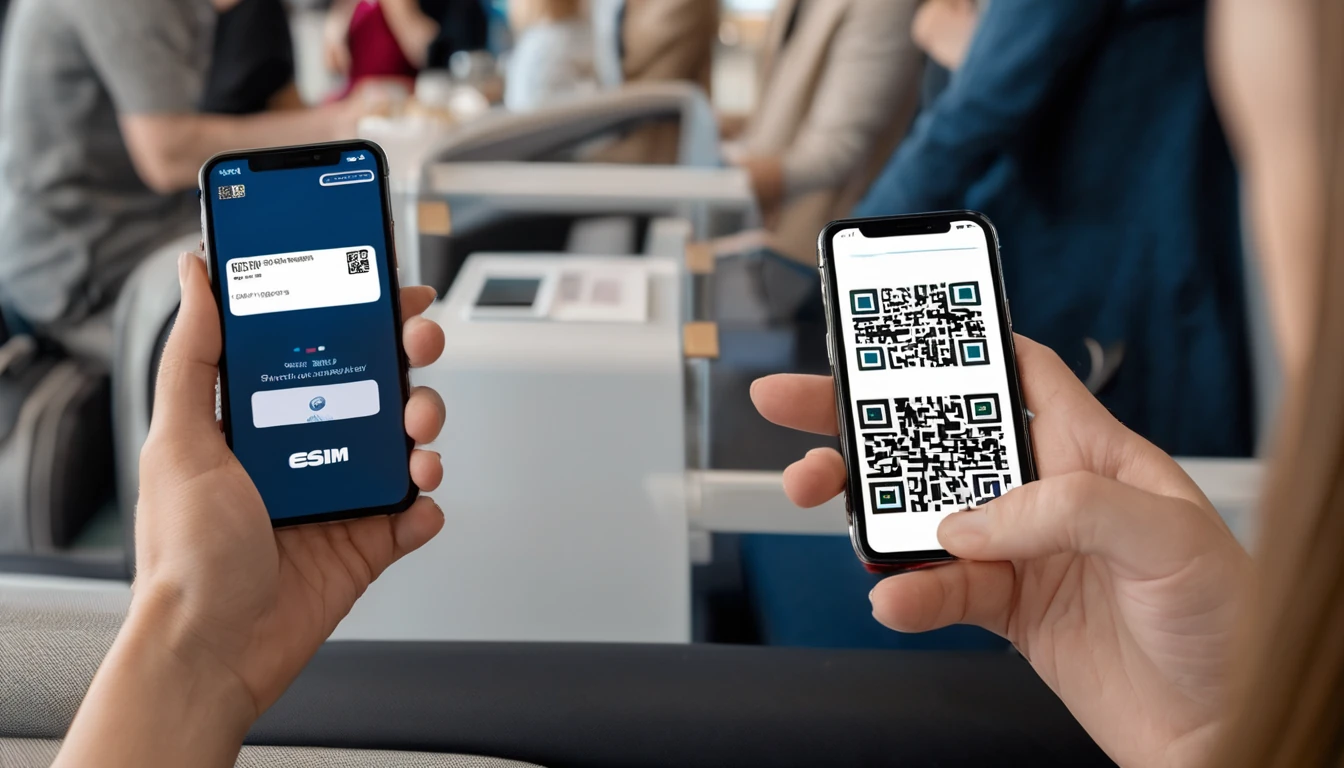
Why eSIM on iPhone 15 and 16 Is Worth Understanding
Every iPhone 15 and iPhone 16 model — including the standard, Plus, Pro, and Pro Max variants — ships with full eSIM support. In the United States, Apple went a step further: all iPhone 15 and 16 units sold domestically are eSIM-only, with no physical SIM card tray at all. That's a significant shift, and according to the GSMA, eSIM adoption across consumer devices has grown to cover more than 2 billion connections globally as of 2025, with smartphones leading the charge.
For travelers, this is genuinely good news. Instead of hunting for a local SIM card shop after a long-haul flight, you can purchase a travel eSIM before you leave home, scan a QR code, and land with data already working. International roaming, by contrast, can cost US carriers anywhere from $5 to $10 per day for a travel pass — costs that stack up fast on a two-week trip.
This guide walks you through every method of adding an eSIM to your iPhone 15 or 16, explains what each setting actually does, and gives you a structured troubleshooting section so you can fix any problem without needing to call your carrier.
Is Your iPhone 15 or 16 eSIM-Compatible?
Every iPhone 15 and iPhone 16 model supports eSIM — there are no exceptions within these two generations. The short answer is yes, your phone is compatible, but a few nuances are worth knowing before you start.
Apple introduced eSIM support back with the iPhone XS (2018), but the iPhone 15 and 16 generations represent the most mature implementation. Here's a quick compatibility snapshot:
| Model | Physical SIM (US) | Physical SIM (International) | eSIM Support | Dual eSIM |
|---|---|---|---|---|
| iPhone 15 / 15 Plus | ❌ No tray | ✅ Nano-SIM | ✅ Yes | ✅ Yes (up to 8 stored) |
| iPhone 15 Pro / Pro Max | ❌ No tray | ✅ Nano-SIM | ✅ Yes | ✅ Yes (up to 8 stored) |
| iPhone 16 / 16 Plus | ❌ No tray | ✅ Nano-SIM | ✅ Yes | ✅ Yes (up to 8 stored) |
| iPhone 16 Pro / Pro Max | ❌ No tray | ✅ Nano-SIM | ✅ Yes | ✅ Yes (up to 8 stored) |
One important caveat: iPhones purchased in mainland China do not support eSIM — they are physical SIM-only models due to local regulations. If you bought your iPhone in China, eSIM will not be available regardless of iOS version. Every other regional variant supports eSIM fully.
You can store up to eight eSIM profiles on an iPhone 15 or 16, though only two can be active simultaneously (one for calls/SMS, one for data — or both for data on a dual-data setup). This makes it practical to keep your home carrier eSIM active while adding a travel eSIM for Europe or any other destination without deleting anything.
How Do You Add an eSIM to an iPhone 15 or 16?
There are four ways to add an eSIM to your iPhone 15 or 16: scanning a QR code, entering activation details manually, using a carrier's app, or transferring an eSIM from another iPhone. For most travelers buying a third-party travel eSIM, the QR code method is the fastest and most reliable.
Method 1: QR Code (Most Common for Travel eSIMs)
This is the method you'll use for virtually every travel eSIM purchase, including Simology plans.
- Purchase your eSIM plan and receive the QR code by email or in-app.
- On your iPhone, open Settings.
- Tap Cellular (or Mobile Data in some regions).
- Tap Add eSIM.
- Select Use QR Code.
- Point your camera at the QR code. Your iPhone will recognize it automatically.
- Tap Continue on the "Cellular Plan Found" screen.
- Tap Add Cellular Plan.
- Choose a label for the plan (e.g., "Travel – Europe") and tap Continue.
- Decide whether this new eSIM should be your Default Line for calls and SMS, or just for data. For travel eSIMs, you typically want to keep your home number as the default line.
- Tap Done.
The eSIM will now appear under Settings → Cellular as a separate line. Activation usually completes within 30–60 seconds, though some carriers take up to a few minutes.
Pro tip: If you're setting up a travel eSIM before your trip, you can install it now and simply toggle it on when you land. No need to wait until you're at the airport.
Method 2: Manual Entry (Activation Code)
Some providers send an activation code instead of a QR code — this is common when you're setting up on the same device that received the email (you can't scan your own screen with your own camera).
- Go to Settings → Cellular → Add eSIM.
- Tap Enter Details Manually.
- Type in the SM-DP+ Address (server address) and Activation Code exactly as provided.
- Tap Next, then follow the on-screen prompts.
The manual method works identically to the QR code method once you've entered the credentials — it just takes a bit longer to type in.
Method 3: Carrier App
Some carriers allow eSIM activation directly through their official app. After downloading the app and logging into your account, look for an "Add eSIM" or "Activate eSIM" option. The app handles the credential exchange in the background. This method is most common for major domestic carriers; most travel eSIM providers use QR codes instead.
Method 4: Transfer eSIM from Another iPhone
If you're upgrading from an older eSIM-compatible iPhone to a 15 or 16, you can transfer your carrier eSIM directly:
- Place both iPhones close together.
- On your new iPhone 16, go to Settings → Cellular → Add eSIM.
- Tap Transfer from Nearby iPhone.
- Follow the on-screen prompts on both devices.
Note: Not all carriers support eSIM transfer. If yours doesn't, you'll need to contact them for a new eSIM activation code.
What Do All the Cellular Settings Actually Mean?
Once your eSIM is installed, the Settings → Cellular screen can look overwhelming. Understanding each option helps you avoid accidentally running up roaming charges or using the wrong line.
The key settings to configure after adding a travel eSIM are Default Line, Data Roaming, and which SIM handles iMessage/FaceTime. Getting these right takes two minutes and prevents most of the "why is my data not working?" problems.
Default Line
This controls which number is used for outgoing calls and SMS. Keep this set to your home carrier number unless you specifically want to make calls through your travel eSIM.
Cellular Data
Under Settings → Cellular → Cellular Data, you choose which line provides your data connection. Switch this to your travel eSIM when you arrive at your destination — this is the most important setting to change.
Data Roaming
Each line has its own Data Roaming toggle under Settings → Cellular → [Line Name]. For your home carrier line, keep Data Roaming OFF while abroad (unless you have a roaming plan). For your travel eSIM, Data Roaming should be ON — travel eSIMs are designed to roam across local networks, and this toggle must be enabled for them to connect.
Allow Cellular Data Switching
This setting lets your iPhone automatically switch data to your secondary line if the primary line has poor coverage. It's useful domestically but can cause unintended roaming charges abroad — consider turning it off when traveling.
iMessage and FaceTime
Go to Settings → Messages → Send & Receive and Settings → FaceTime → Use Cellular to verify which number is associated with each service. Your iMessage and FaceTime should stay linked to your home number so contacts can still reach you normally.
How Do You Switch Between eSIMs on iPhone?
Switching between eSIMs on an iPhone 15 or 16 is a matter of two taps. You don't need to delete one eSIM to activate another — you can store up to eight and flip between them as needed.
To switch the active data line:
- Go to Settings → Cellular.
- Tap Cellular Data.
- Select the eSIM you want to use for data.
To turn a specific eSIM on or off:
- Go to Settings → Cellular.
- Tap the name of the eSIM plan.
- Toggle Turn On This Line on or off.
This is particularly useful for frequent travelers who keep separate eSIM profiles for different regions — for instance, one for Asia travel and another for North America — without needing to repurchase or reinstall.
What Are the Most Common eSIM Setup Problems on iPhone?
Most eSIM setup problems on iPhone 15 and 16 fall into four categories: activation stuck on "Activating," no service after activation, the QR code not scanning, and data not working despite the plan showing as active. Each has a specific fix.
For a deeper dive on the activation-stuck issue specifically, the eSIM stuck on "Activating" on iPhone guide covers 12 targeted fixes. Here's a structured overview of the most common problems and their solutions:
Problem 1: eSIM Stuck on "Activating"
Symptoms: The plan shows "Activating…" under Settings → Cellular for more than 5 minutes.
Fixes (try in order):
- Wait up to 15 minutes — some carrier systems are slow.
- Toggle Airplane Mode on, wait 30 seconds, toggle off.
- Restart your iPhone (hold side button + volume down → slide to power off).
- Check that Data Roaming is enabled for the new eSIM line.
- Ensure you have a Wi-Fi or existing cellular connection — eSIM activation requires internet access.
- Go to Settings → General → Transfer or Reset iPhone → Reset → Reset Network Settings (this clears saved Wi-Fi passwords too, so note them first).
Problem 2: No Service After Activation
Symptoms: The eSIM shows as active but displays "No Service" or "Searching."
Fixes:
- Confirm you've set this eSIM as the Cellular Data line (Settings → Cellular → Cellular Data).
- Enable Data Roaming for the travel eSIM line.
- Check your plan's coverage for the country you're in. Not all plans cover all networks in every country.
- Try manually selecting a network: Settings → Cellular → [eSIM line] → Network Selection → Manual, then pick an available network.
- Restart the iPhone after enabling Data Roaming.
Problem 3: QR Code Won't Scan
Symptoms: Camera opens but doesn't recognize the QR code.
Fixes:
- Ensure there's adequate lighting — QR code scanning is sensitive to glare and shadows.
- Print the QR code or display it on a second device; you cannot scan a QR code on the same screen you're using to scan.
- Use Enter Details Manually as an alternative.
- Check that the QR code hasn't expired — most have a 24–72 hour validity window from purchase.
Problem 4: Data Working But Very Slow
Symptoms: Connected to network, but speeds are noticeably slower than expected.
Fixes:
- Check if your plan has hit its high-speed data cap and throttled to lower speeds.
- Go to Settings → Cellular → [eSIM line] and confirm the network type (5G/LTE/3G).
- Try toggling 5G off: Settings → Cellular → Cellular Data Options → Voice & Data → LTE — in some regions, forcing LTE gives more consistent speeds than 5G Auto.
- Check if Low Data Mode is enabled: Settings → Cellular → [eSIM line] → Low Data Mode.
Problem 5: eSIM Deleted After iOS Update or Reset
Symptoms: eSIM profile has disappeared from Settings → Cellular.
Fixes:
- Contact your eSIM provider — most reputable providers (including Simology) will reissue an activation QR code if the eSIM was accidentally deleted.
- Note: eSIMs are not automatically backed up to iCloud. If you factory reset your iPhone, you'll need a new activation code from your provider.
- Going forward, before any iOS update or reset, export or screenshot your eSIM details.
For a comprehensive look at all eSIM error types across iOS and Android, the eSIM not working guide covering 15 common fixes is a useful companion resource.
How Does eSIM on iPhone 15/16 Compare to a Physical SIM for Travel?
For travelers, eSIM has clear practical advantages over a physical SIM card — but it's worth understanding the trade-offs honestly. The GSMA reports that as of 2025, over 250 mobile network operators worldwide support consumer eSIM, giving travelers broad destination coverage.
| Factor | Travel eSIM | Local Physical SIM |
|---|---|---|
| Setup time | Minutes, before you leave home | 30–60 min at destination (finding shop, queue) |
| Cost | Competitive; varies by provider | Often cheaper for long stays (1+ month) |
| Coverage | Depends on provider's partner networks | Direct local network access |
| Phone unlocked? | Required | Required |
| Keep home number | ✅ Yes (dual SIM) | ❌ No (replaces your SIM) |
| Data-only or voice+data | Usually data-only for travel plans | Voice + data typically included |
| Risk of loss/damage | None (no physical card) | SIM can be lost or damaged |
| Works on arrival | ✅ Instant | Depends on shop hours |
For a short trip (1–14 days), a travel eSIM almost always wins on convenience. For stays longer than a month, a local physical SIM may offer better value — though regional eSIM plans covering multiple countries can close that gap significantly. If you're heading to Japan, for example, a travel eSIM lets you skip the airport SIM vending machines entirely and land with data already running.
Does Your iPhone Need to Be Unlocked for eSIM?
Yes — your iPhone 15 or 16 must be carrier-unlocked to use a third-party travel eSIM. A locked iPhone will only accept eSIM profiles from the carrier it's locked to.
Most iPhones purchased outright (not on a payment plan) are unlocked. iPhones bought through a carrier on a subsidy or installment plan may be locked until the plan is paid off. To check:
- Go to Settings → General → About.
- Scroll to Carrier Lock.
- If it reads "No SIM restrictions," your iPhone is unlocked.
If it shows your carrier's name, contact that carrier to request an unlock — most will do this for free once your contract is complete or the device is paid off. According to Apple's support documentation, carriers are required to unlock eligible devices upon request in many markets.
How Do You Delete or Manage eSIM Profiles on iPhone?
Managing multiple eSIM profiles is straightforward. You can rename, disable, or permanently delete any eSIM profile from Settings.
To rename an eSIM (recommended for organization):
- Settings → Cellular → tap the eSIM plan name.
- Tap the name at the top → type a new label (e.g., "Simology – Japan Trip").
To delete an eSIM:
- Settings → Cellular → tap the eSIM plan name.
- Scroll down → tap Delete eSIM → confirm.
⚠️ Warning: Deleting an eSIM is permanent. Unlike a physical SIM, you cannot re-insert it. If you delete a travel eSIM before your trip is over, you'll need to contact your provider for a new activation code — and not all providers offer this for free. Only delete an eSIM when you're certain you no longer need it.
To temporarily disable an eSIM (without deleting):
- Settings → Cellular → tap the eSIM plan name.
- Toggle Turn On This Line to off.
This is the better option when you're between trips — the profile stays stored and ready to reactivate.
What Should You Do Before Traveling to Set Up Your eSIM?
The best time to install a travel eSIM is 24–48 hours before departure, while you're still on your home Wi-Fi. This gives you time to troubleshoot any issues without the pressure of being at an airport or landing in an unfamiliar country without data.
Here's a pre-travel eSIM checklist for iPhone 15/16 users:
- Confirm your iPhone is unlocked (Settings → General → About → Carrier Lock).
- Update to the latest iOS — eSIM-related bugs are regularly patched. Go to Settings → General → Software Update.
- Purchase your eSIM plan and save the QR code email/screenshot somewhere accessible offline.
- Install the eSIM using the QR code method above.
- Set the label to something descriptive (destination + provider).
- Do NOT set it as the default data line yet — keep your home carrier active until you land.
- Enable Data Roaming on the travel eSIM line now so it's ready to connect on arrival.
- Test that the eSIM appears under Settings → Cellular with a green "active" status.
- Note your plan's data allowance and start date/end date.
When you land, the only step needed is: Settings → Cellular → Cellular Data → select your travel eSIM. That's it — you're online.
If you're heading somewhere with complex connectivity needs, like India or Southeast Asia, reading a destination-specific guide beforehand can help you understand local network quality and what data speeds to expect.
For those curious about how eSIM technology works under the hood before committing to a setup, what is an eSIM and how it works in 2026 is a clear, jargon-free primer.
FAQ
How long does eSIM activation take on iPhone 15 or 16?
Most eSIM activations on iPhone 15 and 16 complete within 30–90 seconds when you have a stable Wi-Fi or cellular connection. Some carriers' systems take up to 5–10 minutes during peak times. If activation hasn't completed after 15 minutes, toggle Airplane Mode off and on, then restart your iPhone.
Can I use two eSIMs at the same time on iPhone 15 or 16?
Yes. iPhone 15 and 16 support Dual SIM functionality, meaning two lines can be active simultaneously — one for calls and SMS, one for data (or both for data). You can store up to eight eSIM profiles on the device, but only two can be active at the same time.
What happens to my eSIM if I factory reset my iPhone?
eSIM profiles are deleted during a factory reset and are not restored from an iCloud backup. Before resetting, contact your eSIM provider to confirm whether they can reissue your activation code. Most reputable travel eSIM providers will reissue a QR code; some may charge a small fee.
Why is my travel eSIM showing "No Service" even though it's activated?
The most common causes are: Data Roaming is turned off for that eSIM line, the eSIM is not set as the active Cellular Data line, or your plan doesn't cover the specific country or network you're on. Go to Settings → Cellular → [your travel eSIM] → enable Data Roaming, then go back and set it as the Cellular Data source.
Can I install a travel eSIM before I leave home?
Absolutely — and it's recommended. Install the eSIM 24–48 hours before departure while on home Wi-Fi. Keep your home carrier as the active data line, and simply switch to the travel eSIM when you land. Most travel eSIM plans don't start counting data until you first use the connection, but confirm this with your provider.
Does using an eSIM drain the iPhone battery faster?
Having two active lines (dual SIM) does use slightly more battery than a single line, because the iPhone maintains two radio connections. In practice, the difference is minimal — typically less than 5–10% additional drain per day. If battery life is a concern on a long travel day, you can temporarily disable your home carrier line to reduce the load.
Will my eSIM work if I update to a new iOS version?
Yes, iOS updates do not delete or deactivate eSIM profiles. Your eSIM plans remain intact through software updates. The exception is a full factory reset or "Erase All Content and Settings," which does remove eSIM profiles — always back up your activation details before performing a reset.
Can I transfer my eSIM from an iPhone 15 to an iPhone 16?
Your home carrier's eSIM can often be transferred using the "Transfer from Nearby iPhone" feature if the carrier supports it. Third-party travel eSIMs generally cannot be transferred device-to-device; you'll need a new activation code from the provider for the new device. Check with your travel eSIM provider before upgrading phones mid-trip.