
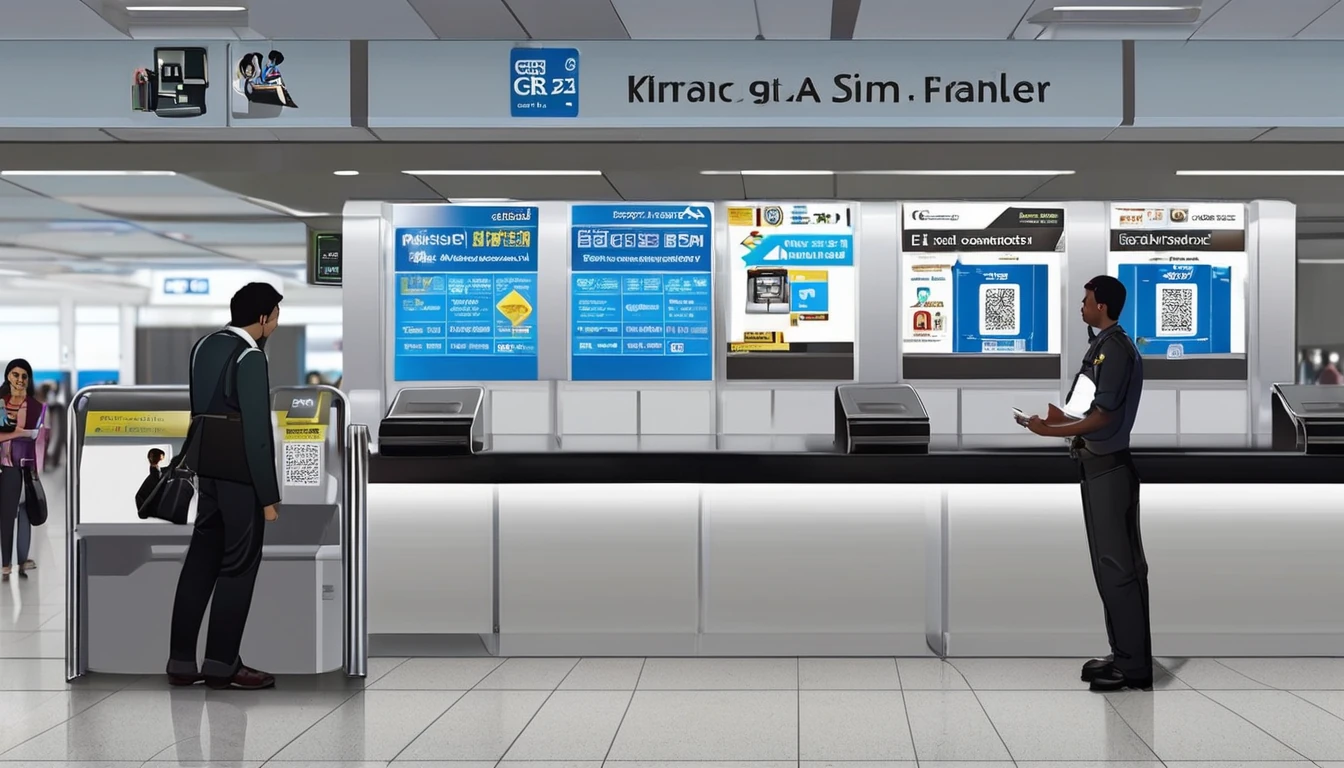
What Is KYC Registration and Why Does India Require It for Tourists?
Every SIM card and eSIM activated in India — whether bought by a local resident or a foreign tourist — must go through a KYC (Know Your Customer) verification process mandated by the Telecom Regulatory Authority of India (TRAI). This is a legal requirement under India's telecom regulations, designed to link every active mobile number to a verified identity. For tourists, this means you cannot simply buy a SIM at a shop and start using it immediately; your documents must be checked and submitted to the carrier before service is activated.
India is one of the world's strictest countries when it comes to SIM registration. According to the GSMA's Mobile Connectivity Index, India had over 1.1 billion mobile connections as of 2025 — making it the second-largest mobile market globally, and one where identity-linked SIM registration has been enforced since 2012. The requirement applies equally to prepaid tourist SIMs and eSIMs purchased through international providers that connect to Indian networks.
The good news is that the process is well-established, and millions of tourists navigate it successfully every year. Understanding exactly what's required before you land will save you significant time and frustration at the airport or in the city.
What Documents Do Tourists Need for SIM Registration in India?
To complete KYC registration for an Indian SIM or eSIM, foreign tourists need two core documents: a valid passport and proof of a valid Indian visa. These are non-negotiable — no other identity document (such as a driver's license or national ID card) is accepted from foreign nationals.
Here's the complete document checklist:
Passport
- Must be valid for the duration of your stay
- The data page (photo, name, passport number, nationality) will be photocopied or scanned
- Some carriers require a physical copy; others accept a digital scan
Indian Visa
- Tourist visa (e-Visa or sticker visa) must be valid
- Your arrival stamp or entry record may also be checked
- e-Visa holders should print their e-Visa approval letter or have it accessible on their phone
Passport-Size Photograph
- One recent passport-size photograph is typically required for physical SIM purchases
- For eSIM registrations done digitally, a selfie or photo upload may substitute
Address Proof in India
- This is the trickiest requirement for tourists
- Accepted documents include: hotel booking confirmation, letter from a hotel, or a local sponsor's address
- Your hotel address is almost universally accepted — print your booking confirmation or have it on your phone
Pro tip: Before you land, screenshot your e-Visa approval, your hotel confirmation, and your passport data page. Having these ready on your phone means you won't need to dig through emails at the airport counter.
How Long Does SIM Activation Take for Foreign Tourists?
SIM activation for foreign tourists in India typically takes between 2 and 24 hours after documents are submitted, though many travelers report activation within 2–4 hours at major airports. The timeline depends on the carrier, the time of day, and whether your documents are complete and clearly legible.
Here's what to realistically expect:
| Activation Scenario | Typical Time |
|---|---|
| Airport carrier counter (daytime, documents ready) | 2–4 hours |
| Airport carrier counter (late night arrival) | Next morning |
| City store / authorized dealer | 4–12 hours |
| eSIM via international provider (pre-registered) | Immediate to 2 hours |
| eSIM via local carrier app (tourist KYC) | 4–24 hours |
Why the delay? India's telecom regulations require a manual or semi-automated verification step for foreign nationals. Unlike domestic customers who can use Aadhaar-based instant e-KYC, tourists go through a separate verification queue that involves a human review of passport and visa documents.
This is why many experienced India travelers — and business travelers who need connectivity from the moment they land — opt for an international travel eSIM like Simology's India eSIM that is pre-activated before departure and doesn't require local KYC. You simply install the eSIM on your phone before you board, and it connects to the network the moment you land.
What Is the Time Limit on Tourist SIMs in India?
Tourist SIMs in India are valid for a maximum of 90 days from the date of activation. This aligns with the standard tourist visa duration, though some shorter validity plans (30 days, 60 days) are also available at lower price points. You cannot extend a tourist SIM beyond 90 days — after expiry, the number is deactivated and the SIM cannot be reused.
Key validity rules to know:
- Validity is counted from activation date, not from the date you enter India
- Unused data does not roll over once the plan expires
- Recharging a tourist SIM with a new data pack is possible within the validity window, but you cannot extend the SIM's overall validity period
- Returning visitors must go through the full KYC process again on a new SIM — previous registrations do not carry over
If you're on a long-term trip or plan to return to India within a few months, this 90-day hard limit is an important planning factor. For trips of 30 days or less, a 30-day tourist plan is usually the most cost-effective option.
Where Can Tourists Buy a SIM Card in India?
Tourists can buy SIM cards from carrier-authorized outlets at major international airports, from official carrier stores in cities, and from select authorized dealers. Unofficial street vendors and small mobile shops are generally not authorized to register foreign tourist SIMs and should be avoided — their registrations may be rejected or flagged.
Airport Counters
The most convenient option for most travelers. Major international airports (Delhi IGI, Mumbai Chhatrapati Shivaji Maharaj, Bengaluru Kempegowda, Chennai, Hyderabad, Kolkata) all have carrier counters in the arrivals hall. Expect queues, especially on busy international flights. The major local networks operate these counters directly.
Official Carrier Stores in Cities
If you miss the airport counter or prefer to wait until you're settled, official carrier stores in city centers can process tourist SIM registrations. Bring all your documents. These stores are often less rushed than airport counters and staff may have more time to assist.
Authorized Dealers
Some authorized resellers can process tourist SIM registrations, but verify they are officially authorized before submitting your documents. Ask to see their authorization certificate.
What to Watch Out For
Avoid anyone offering to "help" you register a SIM outside of official channels. India has strict penalties for fraudulent SIM registration, and using an improperly registered SIM can cause problems if your number is flagged for verification.
Can Tourists Use an eSIM in India Instead of a Physical SIM?
Yes — and for many travelers, an international travel eSIM is the most practical option. India supports eSIM technology on all major networks, and the GSMA confirmed that eSIM adoption in South Asia has been accelerating since 2023. International travel eSIM providers like Simology offer India-specific data plans that can be installed and activated before you leave home — completely bypassing the local KYC queue at the airport.
Here's how international travel eSIMs differ from local tourist SIMs:
| Feature | Local Indian Tourist SIM | International Travel eSIM (e.g. Simology) |
|---|---|---|
| KYC / Document Submission | Required in person | Not required (pre-activated) |
| Activation Time | 2–24 hours | Instant (install before travel) |
| Available Before Departure | No | Yes |
| Works on Arrival | After activation completes | Yes, immediately |
| Keeps Home Number Active | No | Yes (dual SIM) |
| Validity | Up to 90 days | Per plan (typically 7–30 days) |
| Cost | Lower for long stays | Competitive for short trips |
| Voice Calls | Included on some plans | Data-only (most plans) |
The dual SIM advantage is significant: with an eSIM for data, your physical SIM slot stays free for your home SIM card. You can receive calls and texts on your regular number while using the eSIM for data — ideal for business travelers or anyone who needs to stay reachable at their home number. For a deeper look at staying connected across borders, the eSIM setup checklist covers the full activation workflow step by step.
How Does the eSIM KYC Process Work for Local Indian Networks?
If you specifically want a local Indian eSIM from one of the major networks (rather than an international travel eSIM), the KYC process is similar to a physical SIM but conducted digitally. You'll need to submit your passport, visa, and address proof through the carrier's app or website, and a video KYC call may be required.
The steps typically look like this:
- Download the carrier's app and select the tourist eSIM option
- Upload your documents: passport data page, visa, hotel confirmation
- Complete a video KYC call (some carriers require this for foreign nationals; a representative verifies your identity live on camera)
- Receive your eSIM QR code via email or in-app once verification is approved
- Scan the QR code on your phone to install the eSIM profile
- Wait for network activation — typically 2–6 hours after QR code delivery
The video KYC step can be a hurdle if you arrive late at night or on a weekend, as call center availability may be limited. This is another reason many tourists prefer to sort connectivity before departure rather than dealing with the process on the ground.
If you run into issues after installation, the eSIM not working abroad troubleshooting guide covers the most common activation and connectivity problems and how to fix them quickly.
How Much Does a Tourist SIM or eSIM Cost in India in 2026?
Tourist SIM and eSIM prices in India are among the most competitive in Asia. Local prepaid plans offer generous data allowances at low rupee-denominated prices, while international travel eSIMs are priced for convenience and instant activation.
Local Tourist SIM Pricing (2026 Estimates)
These are approximate price ranges — actual prices vary by carrier and plan tier:
| Plan Duration | Typical Data Allowance | Approximate Cost (USD) |
|---|---|---|
| 28–30 days | 1.5 GB/day (45 GB total) | $8–$15 |
| 56–60 days | 1.5 GB/day (90 GB total) | $15–$25 |
| 84–90 days | 1.5 GB/day (126 GB total) | $20–$35 |
Note: Prices above are converted from INR at approximate 2026 exchange rates. Local SIM plans in India are denominated in Indian Rupees (INR) and are subject to change.
International Travel eSIM Pricing
International travel eSIMs for India are typically priced per GB or per day, with plans ranging from around $5 for a 1 GB / 7-day plan to $25–$40 for 10–20 GB over 30 days. The premium over local SIM prices reflects the convenience of instant activation, no KYC hassle, and pre-departure setup.
For most tourists visiting India for 2–4 weeks, the price difference between a local SIM and an international travel eSIM is modest — often just $5–$15 — making the convenience trade-off very worthwhile. Check Simology's India eSIM plans for current pricing.
What Are the Rules Around Roaming and Multiple SIMs for Tourists?
India does not permit foreign tourists to hold more than one active Indian SIM at a time — the KYC rules limit each passport to a single registered Indian mobile number. This is enforced at the carrier level during the registration process.
However, this doesn't prevent you from using an international travel eSIM alongside a local SIM (or instead of one). The restriction applies specifically to registering multiple Indian numbers under the same foreign passport.
Practical implications:
- If you buy a local SIM at Delhi airport and then try to buy another at a Mumbai store, the second registration will likely be rejected
- Using an international travel eSIM doesn't count as an "Indian SIM" registration — it's a foreign number roaming on Indian networks
- You can freely switch between your home SIM, an international eSIM, and a local Indian SIM (as long as you only have one local Indian SIM active at a time)
For travelers visiting multiple countries in South or Southeast Asia — say, India followed by Sri Lanka, Thailand, or Bangladesh — regional eSIM plans covering multiple countries can be more convenient than buying a new local SIM in each country. Explore Asia eSIM plans that cover India alongside neighboring destinations.
What Happens If Your SIM Registration Is Rejected or Delayed?
SIM registration rejections for tourists are uncommon but do happen. The most frequent causes are blurry document scans, an expired or invalid visa, a mismatch between the name on the passport and the name on the hotel booking, or missing documents.
If your registration is delayed:
- Wait the full 24 hours before following up — the verification queue for foreign nationals can be slow
- Contact the carrier's customer support with your registration reference number
- If you're at the airport, return to the carrier counter with your reference number
If your registration is rejected:
- Ask for the specific reason in writing — carriers are required to provide this
- Correct the issue (re-scan documents, provide a clearer photo, update the address proof) and resubmit
- If the issue is with your visa validity, you'll need to resolve that with the immigration authorities first
Backup connectivity while you wait: This is exactly the scenario where having a pre-installed international travel eSIM is invaluable. Even if your local SIM registration takes 24 hours, you're not stranded without data. Many travelers use an international eSIM as their primary connectivity for the first day or two, then switch to a local SIM once it's activated.
If you're also traveling elsewhere in Asia before or after India, having a single eSIM that covers the region eliminates this problem entirely. For tips on avoiding roaming charges across your whole trip, the 7 ways to avoid international roaming charges guide is worth reading before you depart.
Does Your Phone Need to Be Unlocked to Use a SIM or eSIM in India?
Yes — your phone must be unlocked to use any local Indian SIM card. Most phones purchased directly from carriers in the US, UK, Canada, and Australia are sold locked to that carrier's network, and they will not accept a foreign SIM until unlocked. Phones purchased outright (not on a contract) are typically already unlocked.
For physical SIMs: Contact your home carrier before you travel and request an unlock. Most carriers will unlock your phone for free if your contract obligations are met.
For eSIMs: The phone must be unlocked AND eSIM-capable. eSIM support is now standard on iPhones from the iPhone XS onward, most flagship Android phones (Samsung Galaxy S20+, Google Pixel 3a+, and later models), and many mid-range devices launched since 2022. Check your specific model's specs if you're unsure.
eSIM device compatibility quick reference:
| Device Category | eSIM Support |
|---|---|
| iPhone XS / XR and later | Yes |
| iPhone 14 (US model) | eSIM only (no physical SIM) |
| Samsung Galaxy S20 and later | Yes (most markets) |
| Google Pixel 3a and later | Yes |
| Most Android flagships (2022+) | Yes |
| Budget Android phones | Check specs — varies |
India's networks support both 4G LTE and 5G. As of 2026, 5G coverage in India has expanded significantly across major cities including Delhi, Mumbai, Bengaluru, Chennai, Hyderabad, and Pune, with ongoing rollout to Tier 2 cities. If your phone supports 5G, you'll benefit from faster speeds in these urban areas.
FAQ
Do I need to register my SIM card in India as a tourist?
Yes, all foreign tourists must complete a KYC (Know Your Customer) registration to activate any SIM card or eSIM in India. This is a legal requirement under Indian telecom regulations enforced by TRAI. You'll need your passport, a valid Indian visa, and an address proof (your hotel booking confirmation works).
How long does it take to activate a tourist SIM in India?
Activation typically takes between 2 and 24 hours after you submit your documents. At major international airports during daytime hours with complete documents, most travelers see activation within 2–4 hours. Late-night arrivals may need to wait until the next morning for the verification to process.
Can I use an international eSIM in India to avoid the KYC process?
Yes. International travel eSIMs from providers like Simology are pre-activated before you travel and do not require local KYC registration in India. They connect to Indian networks as a roaming service, so you get instant connectivity the moment you land without any document submission at the airport.
How long is a tourist SIM valid in India?
Tourist SIMs in India are valid for a maximum of 90 days from the date of activation. Shorter plans (28 or 56 days) are also available. You cannot extend a tourist SIM beyond its validity period — after expiry, the number is deactivated and a new registration is required for future visits.
What documents do I need to buy a SIM card in India?
You need three things: your original passport (or a clear scan/photocopy), a valid Indian visa (e-Visa printout or sticker visa), and an address proof in India — your hotel booking confirmation is universally accepted. A passport-size photograph may also be required at some counters.
Can I use my tourist SIM for the whole duration of my India visa?
If your tourist visa is for 90 days, a 90-day tourist SIM plan will cover your full stay. However, if your visa allows multiple entries over a longer period (e.g., a 1-year multiple-entry visa), your tourist SIM will still deactivate after 90 days and you'll need to re-register on a new SIM for subsequent visits.
Is my phone compatible with Indian SIM cards and eSIMs?
Your phone must be unlocked to use an Indian SIM. For eSIMs, your phone must also be eSIM-capable — this includes iPhones from XS onward, Samsung Galaxy S20 and later, and Google Pixel 3a and later. India's networks support 4G LTE nationwide and 5G in major cities as of 2026.
What should I do if my SIM registration is rejected in India?
Ask the carrier for the specific reason for rejection in writing. Common causes include blurry document scans, an expired visa, or a name mismatch between documents. Correct the issue and resubmit. In the meantime, use a pre-installed international travel eSIM to stay connected while your registration is processed.
The Bottom Line: Plan Your India Connectivity Before You Land
India's SIM registration requirements are stricter than most countries, but they're entirely manageable once you know what to expect. The core rules are simple: bring your passport, your visa, and your hotel booking confirmation, and be prepared to wait a few hours for activation.
The key takeaways for 2026:
- KYC is mandatory for all tourist SIMs and local eSIMs — no exceptions
- Documents needed: passport, Indian visa, address proof (hotel booking)
- Activation time: 2–24 hours for local SIMs; instant for pre-activated international eSIMs
- Validity limit: 90 days maximum for tourist SIMs
- One SIM per passport: you can only register one Indian number per foreign passport
- Phone must be unlocked for any local SIM; eSIM-capable for eSIM options
For travelers who want zero hassle and instant connectivity from the moment their flight lands, a pre-activated international travel eSIM is the smartest option. You can install it at home, have it ready before boarding, and be online before you've even collected your luggage. Pair it with a local tourist SIM if you need a local number or plan a longer stay — the two work side by side thanks to dual SIM functionality.
India is an incredible destination, and staying connected makes navigating it significantly easier — from booking auto-rickshaws on apps to finding the best street food spots, to staying in touch with family back home. Sort your connectivity before you go, and you'll spend your time exploring, not troubleshooting at an airport counter.