
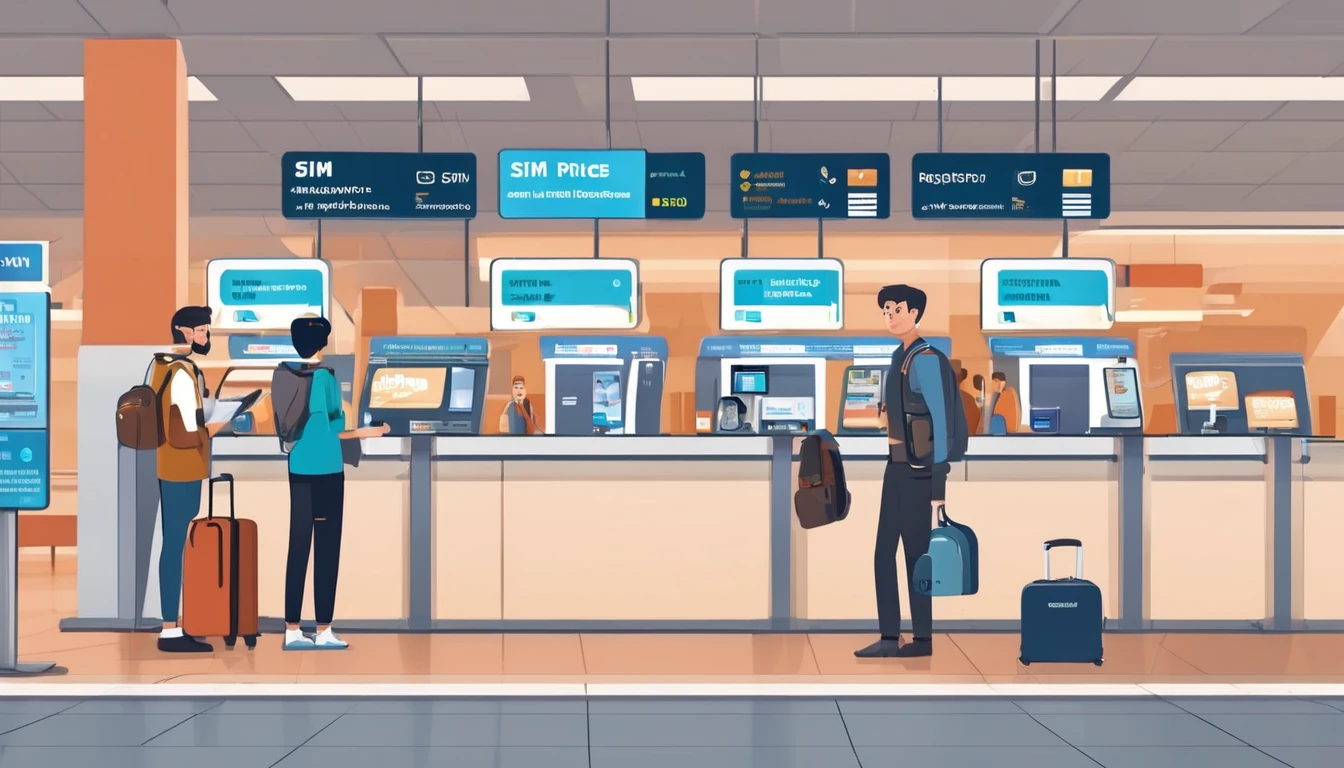
Why Do So Many Countries Require SIM Registration?
Mandatory SIM registration is now the global norm, not the exception. According to the GSMA's mobile policy tracker, more than 155 countries had enacted mandatory SIM registration laws as of early 2026 — up from roughly 100 a decade ago. The stated rationale is almost always the same: reducing fraud, curbing anonymous criminal communications, and giving law enforcement a traceable link between a phone number and a real person.
For travelers, this creates a practical headache. You land after a long flight, you want data immediately, and instead you're standing in a carrier shop filling out forms and waiting for a clerk to photograph your passport. In some countries, the process takes five minutes. In others — particularly where biometric verification is required — it can take 30 minutes or more.
Quotable stat: The GSMA estimates that mandatory SIM registration policies now cover over 5.4 billion mobile connections worldwide, representing more than 60% of all global subscriptions.
Understanding the rules before you arrive saves time, avoids unpleasant surprises, and helps you choose the right connectivity strategy for each trip.
Which Countries Require ID to Buy a SIM Card?
The short answer: most of them. The more useful answer is that requirements vary dramatically in how strict they are — from a quick passport scan to full biometric enrollment. Below is a country-by-country breakdown of the top 30 destinations travelers ask about most.
The Master Table: SIM Registration Rules at a Glance (2026)
| Country | ID Required? | Document Accepted | Biometrics? | Tourist SIM Available? | Notes |
|---|---|---|---|---|---|
| 🇹🇭 Thailand | ✅ Yes | Passport | No | Yes | All SIMs; tourist SIMs sold at airports |
| 🇮🇩 Indonesia | ✅ Yes | Passport | No | Yes | NIK for locals; passport for foreigners |
| 🇮🇳 India | ✅ Yes | Passport + visa | No | Yes (limited) | Strict; some carriers require in-store activation |
| 🇦🇪 UAE | ✅ Yes | Passport | No | Yes | Instant at airport kiosks |
| 🇸🇬 Singapore | ✅ Yes | Passport | No | Yes | Quick process; airport counters efficient |
| 🇲🇾 Malaysia | ✅ Yes | Passport | No | Yes | Very quick; widely available |
| 🇵🇭 Philippines | ✅ Yes | Passport | No | Yes | SIM Registration Act (2022) strictly enforced |
| 🇻🇳 Vietnam | ✅ Yes | Passport | No | Yes | Tourist SIMs at airports; quick |
| 🇰🇭 Cambodia | ✅ Yes | Passport | No | Yes | Registration enforced since 2022 |
| 🇯🇵 Japan | ✅ Yes | Passport | No | Yes | Tourist data SIMs widely available |
| 🇰🇷 South Korea | ✅ Yes | Passport | No | Yes | Airport counters; can pre-order online |
| 🇨🇳 China | ✅ Yes | Passport + facial recognition | Yes | Limited | Strict biometric requirement; VPN restrictions apply |
| 🇹🇷 Turkey | ✅ Yes | Passport | No | Yes | Foreign SIMs face 120-day tax rule; local SIM requires registration |
| 🇪🇬 Egypt | ✅ Yes | Passport | No | Yes | Sold at airports and shops |
| 🇲🇦 Morocco | ✅ Yes | Passport | No | Yes | Standard process |
| 🇿🇦 South Africa | ✅ Yes | Passport | No | Yes | RICA law; quick registration |
| 🇰🇪 Kenya | ✅ Yes | Passport | No | Yes | Quick at airports |
| 🇳🇬 Nigeria | ✅ Yes | Passport or NIN | No | Yes | NIN required for locals; passport for foreigners |
| 🇧🇷 Brazil | ✅ Yes | Passport | No | Yes | CPF needed for locals; passport for tourists |
| 🇲🇽 Mexico | ✅ Yes | Passport | No | Yes | Standard; widely available |
| 🇦🇷 Argentina | ✅ Yes | Passport | No | Yes | Quick process |
| 🇨🇴 Colombia | ✅ Yes | Passport | No | Yes | Standard |
| 🇩🇪 Germany | ✅ Yes | Passport or EU ID | No | Yes | National law; online verification common |
| 🇫🇷 France | ✅ Yes | Passport or EU ID | No | Yes | National law; prepaid widely available |
| 🇬🇧 UK | ✅ Yes | Passport or photo ID | No | Yes | Age verification law (2024); ID required |
| 🇦🇺 Australia | ✅ Yes | Passport or driver's license | No | Yes | Quick; airport and convenience stores |
| 🇨🇦 Canada | ❌ No | — | No | Yes | No federal ID requirement for prepaid |
| 🇺🇸 USA | ❌ No | — | No | Yes | No federal ID requirement for prepaid |
| 🇯🇴 Jordan | ✅ Yes | Passport | No | Yes | Standard |
| 🇸🇦 Saudi Arabia | ✅ Yes | Passport + Iqama for residents | No | Yes | Tourist SIMs at airports |
Which Countries Have the Strictest SIM Registration Rules?
A handful of destinations go well beyond a simple passport check — and travelers need to know about them before they arrive.
China: Biometric Verification Required
China has the most demanding SIM registration process for foreign visitors. Since 2019, carriers have required facial recognition (biometric scan) alongside passport verification. This is done in-store at carrier branches and cannot be completed at most airport kiosks. Additionally, China's internet restrictions mean that a local SIM alone won't give you access to Google, WhatsApp, or most Western apps — a China eSIM or international roaming plan may be a more practical solution for short-stay tourists.
India: Passport Plus Visa Documentation
India requires both your passport and a valid visa for SIM registration. The process has improved significantly since the introduction of e-KYC (electronic Know Your Customer) verification, but some carriers still require in-store activation and a waiting period of up to 24 hours for the SIM to become active. If you're arriving late at night or on a weekend, plan for the possibility of a delay.
Philippines: SIM Registration Act Strictly Enforced
The Philippines' SIM Registration Act (Republic Act 11934), which came into full force in 2023, requires all SIM users — including tourists — to register with their passport. Unregistered SIMs are deactivated. Tourist SIMs are available at major airports and must be registered on the spot.
Saudi Arabia: Biometric-Adjacent Verification
Saudi Arabia requires passport verification and, for tourist SIMs, may require a scan of your tourist visa or entry stamp. The process is generally smooth at King Abdulaziz International Airport and other major airports, but it's slower than in Southeast Asian markets.
Does the EU Require ID for Prepaid SIMs?
There is no EU-wide law requiring ID to buy a prepaid SIM. Access to prepaid SIM cards is not regulated at EU level, so the rules are set country by country. Most EU states do require registration — including Germany, France, Spain and Italy — but several do not, such as the Netherlands, Ireland, the Czech Republic and Romania. Where ID is required, it typically means showing your passport or an EU national identity card.
The practical experience varies by country. In Germany and France, many carriers now offer online ID verification via video call or an app — meaning you can sometimes complete registration without visiting a physical store. In Spain and Italy, airport and convenience-store SIM purchases usually involve a quick passport scan at the point of sale.
This remains a matter of national law rather than EU legislation. As of 2026 there is no harmonised EU requirement, though the EU Council has been discussing a proposal to restrict anonymous prepaid SIMs across the bloc — for now it is a proposal, not law.
One important note for UK travelers post-Brexit: the UK is no longer part of the EU roaming framework. Since January 2021, UK operators are no longer required to cap roaming charges within the EU, though many still offer reasonable roaming add-ons. Buying a local SIM in each EU country — or using a travel eSIM — remains the most cost-effective approach.
What About the USA and Canada — Do They Require ID?
The United States and Canada are among the few major travel destinations that do not require government-issued ID to purchase a prepaid SIM card. There is no federal law in either country mandating SIM registration for prepaid plans.
In the US, prepaid SIMs from major retailers can be purchased with cash and no ID. The FCC's consumer guidance on prepaid phones confirms there is no federal registration requirement. Canada follows a similar approach, with provincial consumer protection laws focused on billing transparency rather than identity verification.
This makes both countries relatively easy for international visitors arriving without a local ID. That said, if you're visiting the US, a USA travel eSIM may still be the smarter choice — you can activate it before you board, so you have maps and ride-share access the moment you land, without hunting for a carrier store.
How Does eSIM Registration Work Compared to Physical SIM Registration?
This is where things get genuinely useful for travelers. When you buy a travel eSIM from a provider like Simology, the "registration" process is entirely different — and far simpler.
Travel eSIMs are data-only plans sold to tourists. Because they operate as data plans rather than local phone number assignments, most countries' SIM registration laws do not apply in the same way. You're not being issued a local number that law enforcement needs to trace; you're purchasing a data service, similar to buying airport WiFi access.
Here's how the two approaches compare:
| Factor | Local Physical SIM | Travel eSIM |
|---|---|---|
| ID required at purchase | Yes (in most countries) | No (purchased online before travel) |
| In-person visit required | Usually yes | No |
| Activation time | 5–30+ minutes in-store | Instant (scan QR code) |
| Works before landing | No | Yes (activate before departure) |
| Keeps your home number active | No | Yes (dual SIM) |
| Best for long stays (1+ month) | Often better value | Check plan pricing |
| Best for short trips (1–14 days) | Convenient if quick | Usually faster and simpler |
For most travelers on trips of two weeks or less, a travel eSIM is the path of least resistance. You activate your eSIM before you travel — ideally 24–48 hours before departure — and it's ready to go the moment your plane lands. No queues, no passport fumbling, no waiting for a clerk.
What ID Documents Are Accepted for SIM Registration Abroad?
Almost universally, your passport is the accepted document for foreign nationals registering a SIM card. A few countries also accept:
- Driver's license (Australia, UK, some EU countries — typically for nationals, not always for foreign visitors)
- National ID card (EU countries accept each other's national IDs; some accept US state IDs)
- Arrival card or visa documentation (India, Vietnam, and some other Asian markets may ask to see your visa alongside your passport)
What's generally not accepted:
- Photocopies of your passport (most countries require the original)
- Digital passport scans on your phone (exceptions exist in some tech-forward markets)
- Expired passports
Practical tip: Always carry your physical passport — not just a photo of it — when buying a local SIM. In countries like Indonesia and Thailand, the clerk will typically photograph the photo page and the visa/entry stamp page.
Do Registration Rules Affect Tourist SIM Cards Differently?
In most countries, tourist SIMs are a specific product category designed for short-stay visitors, and the registration process is streamlined accordingly. Airport kiosks in Thailand, Japan, South Korea, Singapore, and the UAE are set up specifically for tourists — expect a 5–10 minute process with English-speaking staff.
However, "tourist SIM" doesn't mean "no registration." It simply means the product is designed for foreign passport holders rather than local residents. The ID requirement still applies; the difference is that the process is optimized for speed and for accepting foreign documents.
A few countries — notably Japan — also sell data-only tourist SIMs (no voice calls, no local number) that have even lighter registration requirements, since no phone number is being assigned. These are ideal for travelers who just need maps, messaging apps, and email.
What Happens If You Don't Register a SIM Card?
In countries with mandatory registration, using an unregistered SIM can result in:
- SIM deactivation: The most common outcome. Philippines, Indonesia, and several African markets have run mass deactivation campaigns for unregistered SIMs.
- Inability to make calls: Some networks block outgoing calls but allow incoming calls until registration is completed.
- Fines: Rare for tourists, but technically possible in some jurisdictions.
- Confiscation: Extremely rare, but border authorities in a few countries have the legal authority to confiscate unregistered devices.
For tourists, the realistic risk is simply that your SIM stops working mid-trip. This is why buying a travel eSIM before departure — or registering your local SIM properly on arrival — is the right approach.
Regional Breakdown: What to Expect by Region
Southeast Asia
Southeast Asia is one of the most SIM-registration-intensive regions in the world. Thailand, Indonesia, Malaysia, Vietnam, Cambodia, and the Philippines all require passport registration. The good news: tourist SIM infrastructure is excellent. Major airports have dedicated kiosks, and the process is usually fast. Data prices are among the lowest globally — a week of data in Thailand or Vietnam typically costs $5–$10 USD for a local SIM.
If you're island-hopping across multiple Southeast Asian countries, a regional Asia eSIM covering multiple markets can be more convenient than registering a new SIM in each country.
Middle East
The UAE, Saudi Arabia, Jordan, and Egypt all require passport registration. The UAE is notably efficient — airport kiosks at Dubai International are fast and well-staffed. Saudi Arabia has improved its tourist SIM process significantly since the opening of the tourism sector in 2019. For travelers covering multiple Middle Eastern countries, a Middle East and North Africa eSIM is worth considering.
Europe
Most EU countries require ID, but several — the Netherlands, Ireland, the Czech Republic, Romania — do not; there is no EU-wide rule, so it varies by country. Where registration applies the process is generally smooth, and online verification options are increasingly available. The UK, post-Brexit, has its own rules — the Online Safety Act 2023 and subsequent regulations require age/ID verification for prepaid SIM purchases, making the UK one of the stricter European markets for anonymous prepaid access.
Africa
SIM registration is widespread across Africa, driven partly by mobile money regulations (since mobile money accounts are tied to SIM cards). South Africa's RICA (Regulation of Interception of Communications Act) is one of the most established frameworks. Kenya, Nigeria, Ghana, and Tanzania all have active registration requirements.
Americas
The US and Canada stand out as the major markets without mandatory registration. Latin American countries — Brazil, Mexico, Argentina, Colombia — all require passport registration, but the process is generally straightforward for tourists.
Is a Travel eSIM a Better Option Than Buying a Local SIM?
For most international travelers, yes — especially for trips under two weeks. Here's why:
Speed and convenience: You activate your eSIM at home, before you travel. Follow the iPhone eSIM setup guide or your Android device's equivalent, and you're done in minutes. No queues, no paperwork.
Dual SIM capability: A travel eSIM lets you keep your home number active on the same phone. You won't miss calls or texts from your bank, family, or employer while abroad. This is particularly valuable for business travelers. The dual SIM travel guide walks through exactly how to configure this on both iPhone and Android.
No registration hassle: As noted above, travel eSIM data plans don't trigger local SIM registration requirements in most countries. You're buying a data service, not a local phone number.
Cost predictability: Travel eSIM plans have fixed pricing. You know exactly what you're paying before you leave. Local SIM pricing can vary, and in some markets, tourist-facing prices at airport kiosks are inflated compared to street prices.
When a local SIM might be better: If you're staying in one country for a month or more, a local SIM often offers better value — more data for the money, and sometimes better network priority. If you need a local phone number (for two-factor authentication on local apps, for example), a local SIM is the only option.
FAQ
Do I need to show my passport to buy a SIM card abroad?
In the majority of countries — more than 150 worldwide — yes, you will need to show your passport to purchase and register a local SIM card. The US and Canada are among the notable exceptions, with no federal requirement for prepaid SIM registration. Always carry your physical passport (not just a photo) when buying a local SIM abroad.
Does a travel eSIM require the same registration as a local SIM?
Generally, no. Travel eSIMs sold by international providers are data-only plans that don't assign a local phone number, so they typically fall outside the scope of local SIM registration laws. You purchase and activate the eSIM online before traveling, with no in-country registration required.
Which countries have the most complicated SIM registration process?
China is the most demanding, requiring biometric facial recognition alongside passport verification. India requires both a passport and a valid visa, with some carriers imposing a 24-hour activation delay. Saudi Arabia and some African markets can also be slower than the Southeast Asian average.
Can I register a SIM card with a digital copy of my passport?
In most countries, no. The vast majority of carriers require your physical passport — the original document — for SIM registration. A few tech-forward markets (like Singapore and some EU countries) have begun accepting digital ID verification through official government apps, but this is still the exception rather than the rule.
What happens if my SIM isn't registered in a country that requires it?
Your SIM can be deactivated without warning. Countries like the Philippines and Indonesia have conducted mass deactivation campaigns against unregistered SIMs. You may also lose the ability to make outgoing calls before full deactivation. Registering properly on arrival avoids this risk entirely.
How long does SIM registration take at the airport?
At well-organized airport kiosks in destinations like Thailand, Singapore, the UAE, and Japan, the process typically takes 5–10 minutes. Countries with more bureaucratic processes (India, some African markets) can take 20–30 minutes or longer, especially during peak arrival times.
Is it worth buying a local SIM if I'm only visiting a country for a few days?
For short trips (under two weeks), a travel eSIM is usually more convenient — you activate it before you leave, skip the registration queue, and keep your home number active. For longer stays or if you need a local number, a local SIM often offers better data value once you've completed the registration process.
Do EU countries all have the same SIM registration rules?
No. There is no EU-wide rule — prepaid SIM access is regulated at national level, so requirements differ from country to country. Most EU states require ID registration (including Germany, France, Spain and Italy), while several do not (such as the Netherlands, Ireland, the Czech Republic and Romania). Where registration applies, the documents accepted (passport, national ID, driver's license) and whether it can be done online or in-store vary by country and carrier.