
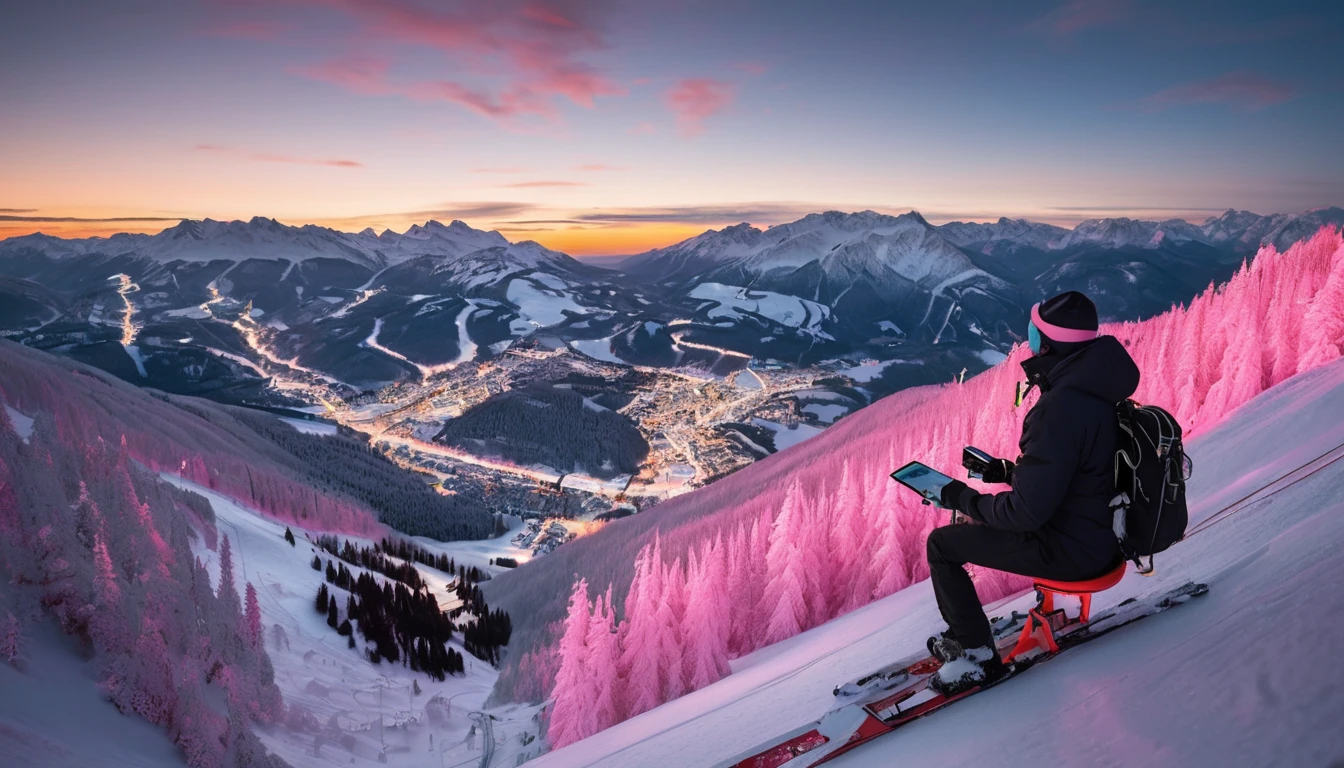
Why Your Phone Data Strategy Can Make or Break a Ski Trip
Picture this: you're at the top of a black diamond in Verbier, Switzerland, and you need to pull up the piste map — but your phone shows "No Service." Or you're in Vail, Colorado, trying to coordinate with your group at the base lodge, and your carrier is charging you $15 per day in international roaming fees. Neither scenario is how you want to spend your ski vacation.
Here's a stat worth knowing before you book: according to GSMA Intelligence, global eSIM connections surpassed 300 million in 2024 and are projected to exceed 500 million by 2026 — meaning the infrastructure supporting travel eSIMs is more robust than ever. Ski resorts across both the Alps and the Rockies have invested heavily in mobile network coverage over the past two seasons, making reliable data more accessible on the mountain than it used to be.
This guide breaks down exactly which data bundle you need for the 2025–2026 ski season, whether you're carving turns in the Alps or the Rockies, and how to avoid the connectivity mistakes that trip up first-time ski travelers.
How Much Data Do You Actually Need on a Ski Trip?
Most skiers need between 3 GB and 10 GB per week, depending on how heavily they use their phone on the mountain. Light users checking maps and messaging will be fine with 3–5 GB; heavy users streaming music, sharing video clips, and working remotely should plan for 8–15 GB.
Here's a practical breakdown of what eats your data on the slopes:
| Activity | Approximate Data Usage |
|---|---|
| Google Maps / navigation (per hour) | ~5–10 MB |
| Trail map apps (e.g., OnTheSnow, Ski Tracks) | ~20–50 MB/day |
| WhatsApp / iMessage (text + photos) | ~50–150 MB/day |
| Instagram Stories upload (1 video) | ~50–80 MB |
| Spotify streaming (per hour, standard quality) | ~40–70 MB |
| Apple Music / Tidal (per hour, high quality) | ~100–150 MB |
| Video call (FaceTime, 30 min) | ~200–400 MB |
| Remote work (email, Slack, light video calls) | ~500 MB–2 GB/day |
The sweet spot for most ski travelers is a 5 GB or 10 GB plan. A 5 GB plan covers a week of navigation, social media, and messaging with room to spare. If you plan to work remotely from the chalet or upload GoPro footage daily, jump to 10 GB or opt for an unlimited plan.
One important nuance: data usage on the mountain itself is often lower than you'd expect, because you're skiing — not scrolling. The heavy usage tends to happen at the lodge, the hotel, and the après-ski bar. If your accommodation has reliable Wi-Fi, you can offset a lot of data consumption there and choose a smaller bundle.
Alps vs. Rockies: Which Destination Needs a Different Plan?
The Alps and the Rockies require different eSIM strategies because they span different countries and network environments. The Alps cover multiple sovereign nations — France, Switzerland, Austria, Italy, and smaller territories like Andorra and Liechtenstein — while the Rockies are entirely within the United States and Canada.
European Alps eSIM Coverage
Skiing the Alps almost always means crossing at least one international border, even if you don't realize it. A ski area like the Portes du Soleil straddles France and Switzerland; Les Trois Vallées is in France but close to the Italian border. A regional European eSIM is almost always the smarter choice over a single-country plan.
Key Alpine ski countries and their eSIM needs:
- Switzerland eSIM: Switzerland is not in the EU, so EU roaming rules don't automatically apply. You'll need a plan that explicitly includes Swiss coverage.
- Austria eSIM: Austria is an EU member, so a broad European regional plan will cover it seamlessly.
- France eSIM: Chamonix, Val d'Isère, Courchevel — all covered under a European regional plan.
- Italy: Cortina d'Ampezzo and the Dolomites are EU-covered.
- Andorra eSIM: Andorra is a special case — it's not an EU member, so confirm your plan covers it if you're skiing Grandvalira.
Pro tip: If your Alps itinerary touches Switzerland, always verify Swiss coverage explicitly. The EU's roaming regulation (European Commission roaming rules) abolished roaming surcharges within EU member states in 2017 and reaffirmed them through 2032 — but Switzerland, as a non-EU country, is outside this protection.
North American Rockies eSIM Coverage
The Rockies are more straightforward from a coverage perspective. If you're skiing entirely in the U.S. — Colorado (Vail, Breckenridge, Aspen, Telluride), Utah (Park City, Deer Valley, Snowbird), Wyoming (Jackson Hole), or Montana (Big Sky) — a North America eSIM or a U.S.-specific plan will serve you well.
If your trip includes Canadian Rockies resorts like Banff (Sunshine Village, Lake Louise) or Whistler Blackcomb in British Columbia, you'll want a plan that explicitly covers both the U.S. and Canada, or a North America regional bundle.
Coverage altitude caveat: Even with excellent network infrastructure, high-altitude terrain creates dead zones. Peaks above 3,000 meters (9,800 feet) can have spotty signal regardless of your plan. This is a hardware and geography issue, not a plan issue — no data bundle can overcome a mountain blocking cell towers.
What Are the Best eSIM Plans for the Alps in 2025–2026?
The best Alps eSIM plans for the 2025–2026 ski season offer regional European coverage, include Switzerland, and provide at least 5 GB for a week-long trip. Look for plans valid for 14–30 days to cover travel days on either side of your ski week.
Recommended Plan Tiers for Alps Skiing
| Plan Size | Best For | Estimated Price Range | Validity |
|---|---|---|---|
| 3 GB / 7 days | Light users, mostly Wi-Fi at lodge | $5–$9 | 7 days |
| 5 GB / 14 days | Average skier, daily navigation + social | $10–$16 | 14 days |
| 10 GB / 30 days | Heavy users, some remote work | $18–$28 | 30 days |
| Unlimited / 30 days | Remote workers, daily video uploads | $30–$50 | 30 days |
Prices are indicative ranges for European regional eSIM plans as of 2026. Actual pricing varies by provider and plan.
What to Look for in an Alps eSIM Plan
- Switzerland inclusion: Non-negotiable if you're skiing Zermatt, Verbier, St. Moritz, or any cross-border resort.
- Multi-country coverage: A plan covering 30+ European countries beats a France-only or Austria-only plan for flexibility.
- Data throttling policy: Some plans throttle to 2G/3G after the high-speed data cap. Check whether throttled speeds are usable for maps (they usually are at 3G).
- Validity window: A 7-day plan is tight if you have travel days. A 14-day or 30-day plan gives you buffer.
What Are the Best eSIM Plans for the Rockies in 2025–2026?
For Rockies skiing in the U.S., the best eSIM plans connect to the major local networks and offer at least 5 GB for a week. If you're combining U.S. and Canadian resorts, a North America regional plan eliminates the need to juggle two separate eSIMs.
Recommended Plan Tiers for Rockies Skiing
| Plan Size | Best For | Estimated Price Range | Validity |
|---|---|---|---|
| 3 GB / 7 days | Casual use, strong lodge Wi-Fi | $5–$8 | 7 days |
| 5 GB / 14 days | Standard ski week with travel days | $9–$15 | 14 days |
| 10 GB / 30 days | Heavy use or U.S. + Canada combo | $16–$25 | 30 days |
| Unlimited / 30 days | Remote workers, streamers | $25–$45 | 30 days |
Prices are indicative ranges for U.S. or North America eSIM plans as of 2026.
U.S. vs. Canada Rockies: Key Differences
- U.S. resorts: Colorado and Utah resorts have strong LTE and 5G coverage in base villages. On-mountain signal degrades above the treeline.
- Canadian resorts: Whistler Blackcomb (BC) and Banff-area resorts have solid coverage in the village but more dead zones on upper lifts. A Canada-specific or North America plan is required.
- Cross-border trips: If you're flying into Denver and then driving to Banff, you'll cross into Canada — make sure your plan covers both without surprise charges.
Does Your Phone Actually Support eSIM for Ski Destinations?
Before you buy any data bundle, confirm your device supports eSIM — not all phones do, and some are carrier-locked. Most flagship smartphones released after 2020 support eSIM, but there are important exceptions.
According to the GSMA's eSIM specification overview, eSIM (embedded SIM) is now a standard feature in devices from Apple, Samsung, Google, and most major Android manufacturers. However, carrier-locked phones — common with U.S. and Canadian carriers — may block eSIM activation for foreign networks even if the hardware supports it.
Quick compatibility checklist:
- iPhone XS and later: eSIM supported ✓
- Samsung Galaxy S20 and later (non-U.S. variants): eSIM supported ✓
- Google Pixel 3a and later: eSIM supported ✓
- Many budget Android phones: eSIM may NOT be supported ✗
- Phones purchased directly from a carrier on a contract: May be locked ✗
If you're unsure, check out our guide on how to check if your phone supports eSIM before buying travel plans — it walks you through the exact steps for every major device.
How Do You Set Up an eSIM Before Your Ski Trip?
Setting up a travel eSIM takes about 5 minutes and should be done at home before you travel — not at the airport or, worse, at the ski resort with cold fingers and no signal.
Step-by-Step eSIM Setup
- Purchase your plan: Choose your Alps or Rockies bundle and complete checkout. You'll receive a QR code via email.
- Go to Settings: On iPhone, go to Settings > Cellular > Add eSIM. On Android, go to Settings > Network & Internet > SIMs > Add eSIM.
- Scan the QR code: Use your phone's camera to scan the QR code from your email. The eSIM profile will download in seconds.
- Label the plan: Give your travel eSIM a memorable name (e.g., "Alps Trip") so you can switch between your home SIM and travel eSIM easily.
- Set data routing: Make sure your travel eSIM is set as the default for cellular data. Keep your home SIM active for calls and texts if needed — dual SIM means both can run simultaneously.
- Test before you leave: Turn off Wi-Fi and confirm the eSIM shows signal. This catches any activation issues while you're still at home.
When Should You Activate It?
Most eSIM plans start their validity countdown from the moment you first use data, not from activation. This means you can install the eSIM profile at home and it won't start "running" until you land and toggle it on. Always confirm this with your specific provider — a few plans start from the purchase date instead.
What Happens If You Lose Signal on the Mountain?
Losing signal on the mountain is normal and expected — it's not a sign that your eSIM plan is failing. High-altitude terrain, dense trees, and distance from cell towers all create natural dead zones that no data plan can solve.
Here's how to handle it gracefully:
Download Offline Resources Before You Ski
- Maps: Download your resort's piste map to your phone via the resort's app or Google Maps offline. This works with zero signal.
- Navigation: Google Maps and Apple Maps both support offline map downloads. Download the regional area the night before.
- Music: Download Spotify or Apple Music playlists for offline listening — streaming at altitude is unreliable anyway.
- Weather: Check the forecast the night before and screenshot it. Mountain weather apps like Mountain-Forecast.com are data-light but still need a connection.
Emergency Communication Without Data
If you lose signal entirely, most phones can still make emergency calls (911 in the U.S., 112 in Europe) even without a data connection. Ski resorts also have physical emergency posts on the mountain — know where they are before you start skiing.
Roaming horror stories are more common than you'd think — we've covered real cases of travelers forgetting to manage data roaming and the recovery steps that actually work.
Alps vs. Rockies: Side-by-Side eSIM Comparison
Choosing between a European regional plan and a North America plan comes down to your destination. Here's a direct comparison to help you decide:
| Factor | European Alps | North American Rockies |
|---|---|---|
| Countries covered | France, Austria, Switzerland, Italy, and more | USA, Canada (check plan specifics) |
| eSIM plan type needed | European regional (multi-country) | USA or North America regional |
| Switzerland coverage | Must verify explicitly (non-EU) | N/A |
| Average 5 GB plan cost | $10–$16 | $9–$15 |
| 5G availability | Major resort towns (Zermatt, Innsbruck) | Major resort towns (Vail, Park City) |
| On-mountain coverage | Good in groomed areas; patchy above treeline | Good in groomed areas; patchy at high altitude |
| Validity recommendation | 14–30 days (covers travel days) | 14–30 days |
| Best for remote workers | Unlimited plan recommended | Unlimited plan recommended |
How Can You Avoid Roaming Charges at Ski Resorts?
The fastest way to rack up a shocking phone bill at a ski resort is to arrive without a data plan and let your home carrier's international roaming kick in automatically. U.S. carriers typically charge $10–$15 per day for international roaming, and some charge per-MB rates that can turn a single Instagram upload into a $50 surprise.
The three rules of ski-trip data management:
- Turn off roaming on your home SIM before you land. On iPhone: Settings > Cellular > [Your Home SIM] > Data Roaming > Off. This prevents accidental charges while your travel eSIM handles data.
- Buy your eSIM plan before you travel. Airport SIM kiosks and resort shops charge a premium. Buying online in advance saves 30–50% in most cases.
- Use lodge Wi-Fi for heavy tasks. Video calls, large uploads, and software updates should happen on Wi-Fi. Reserve your mobile data for on-mountain use.
According to a 2024 survey by the European Consumer Organisation (BEUC), unexpected roaming charges remain one of the top three travel-related financial complaints among European tourists — and the problem is even more acute for non-EU visitors who don't benefit from the EU's roaming abolition rules.
FAQ
How much data do I need for a week of skiing in the Alps?
Most skiers need 5–10 GB for a week in the Alps. A 5 GB plan covers daily navigation, messaging, and light social media use. If you plan to work remotely, stream music constantly, or upload video clips each day, budget for 10 GB or consider an unlimited plan. Remember that lodge Wi-Fi can offset a significant portion of your data consumption.
Does my European Alps eSIM cover Switzerland?
Not automatically. Switzerland is not an EU member, so EU roaming rules don't apply there. When purchasing a European regional eSIM, always check the coverage list explicitly for Switzerland. Simology's European plans include Switzerland coverage — but it's worth double-checking any plan you buy, especially if you're skiing Zermatt, Verbier, St. Moritz, or Davos.
Can I use the same eSIM for both the Alps and the Rockies on one trip?
Only if you purchase a global or worldwide eSIM plan that covers both Europe and North America. A Europe-only plan won't work in Colorado, and a U.S. plan won't work in France. For a trip that spans both regions, either buy a global bundle upfront or purchase two separate regional eSIMs and switch between them on your phone.
Will my eSIM work on the ski lift or at the top of the mountain?
It depends on the resort and the altitude. Most ski resorts have good LTE coverage in the base village and on lower slopes. Coverage degrades significantly above the treeline and on high-altitude peaks. Your eSIM plan isn't the limiting factor here — it's the physical distance from cell towers. Download offline maps and piste maps before heading up the mountain.
When should I activate my ski trip eSIM?
Install the eSIM profile at home before you travel, but most plans only start counting data from your first use. This means you can set everything up in advance and activate it when you land. Always read the activation terms for your specific plan — a small number of plans start the validity window from the purchase date rather than first use.
Is eSIM better than buying a local SIM at the ski resort?
Yes, for most travelers. Local SIM cards at ski resorts are often expensive, require a passport for registration, and take time to set up — not ideal when you want to hit the slopes immediately. An eSIM activates in minutes from your phone, requires no physical swap, and lets you keep your home number active for calls simultaneously. The only advantage of a local SIM is if you need a local phone number, which most tourists don't.
What if I ski across a border, like from France into Switzerland?
This is common in cross-border ski areas like the Portes du Soleil or Chamonix-Courmayeur. If your eSIM plan covers both countries, your phone will switch networks seamlessly without any action required. If your plan only covers one country, you'll lose data connectivity when you cross the border. Always choose a multi-country European plan for Alps skiing to handle these situations automatically.
Do I need to turn off data roaming on my regular SIM when using an eSIM?
Yes — this is an important step. If your home SIM has data roaming enabled and your phone can't find a strong signal on your travel eSIM, it may fall back to your home carrier's roaming network and generate charges. Go into your phone's settings, select your home SIM, and turn off data roaming. Your travel eSIM handles all mobile data; your home SIM stays active only for calls and texts on your home plan.
The Bottom Line: Plan Smart, Ski More
Staying connected on the slopes in 2025–2026 is easier and cheaper than ever — as long as you plan ahead. The key decisions are simple: choose a regional European plan (with Switzerland coverage) for the Alps, a U.S. or North America plan for the Rockies, and size your bundle based on your actual usage habits rather than defaulting to the cheapest option.
A 5 GB plan handles the average ski week comfortably. A 10 GB plan gives you breathing room for remote work and video sharing. And an unlimited plan is the right call if you're a digital nomad treating a ski chalet as your office for the month.
The worst outcome — arriving at your destination with no plan and letting your home carrier's roaming rates run — is entirely avoidable. Set up your eSIM at home, turn off roaming on your primary SIM, download your offline maps, and you're ready to focus on what actually matters: the mountain.