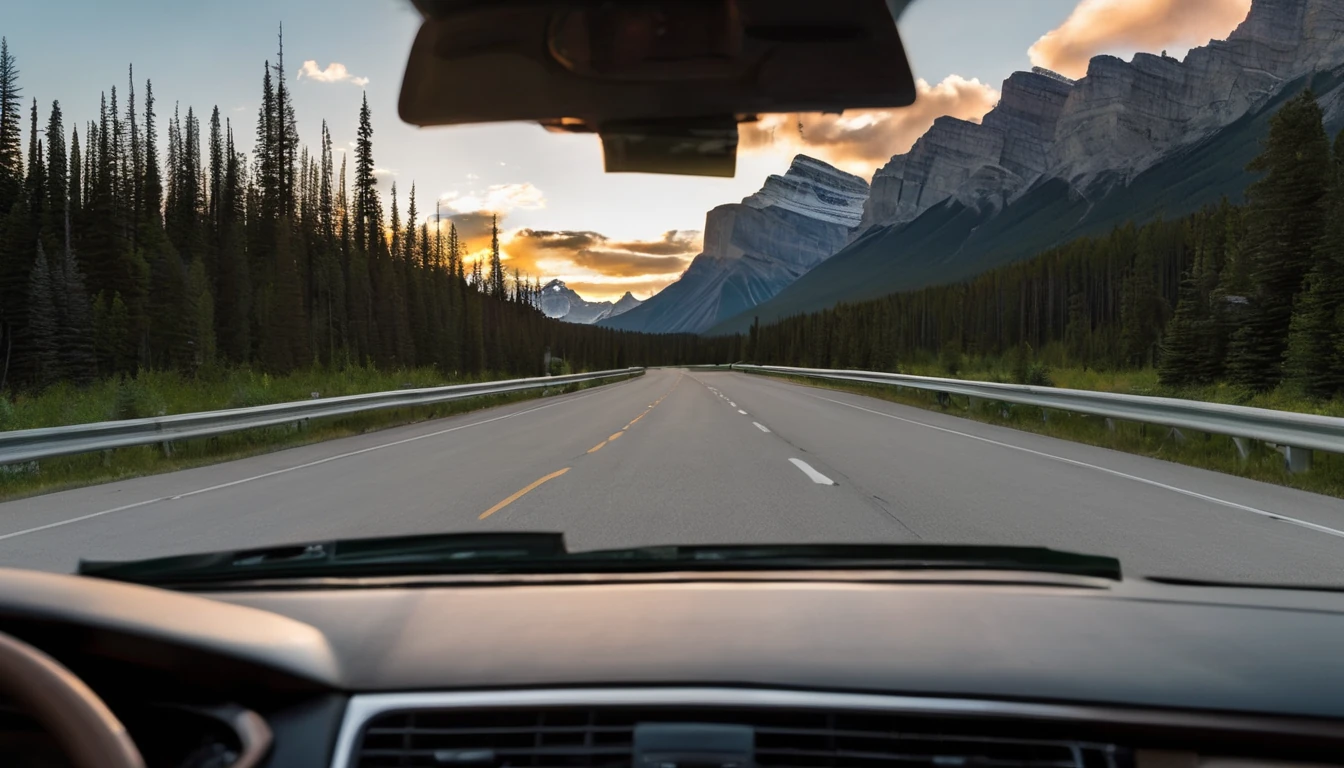
Why Is the Seattle–Vancouver–Banff–Calgary Route So Popular?
This loop is one of North America's most rewarding road trips because it packs world-class cities, dramatic coastline, and jaw-dropping mountain scenery into a single, drivable route. Starting in Seattle, you cross into Canada at one of the continent's busiest land-border crossings, cruise through cosmopolitan Vancouver, then follow the Trans-Canada Highway east into the heart of the Rockies before finishing in Calgary — gateway to the prairies and the airport most travelers fly home from.
According to Statistics Canada, Banff National Park alone welcomed more than 4 million visitors in 2024, making it one of Canada's most-visited protected areas. The route's appeal is obvious: you get urban coffee culture, Pacific Ocean views, turquoise glacial lakes, and grizzly-bear country — all within a two-week window.
Quotable stat: The drive from Seattle to Calgary via Vancouver and Banff covers approximately 1,450 km (900 miles) of paved highway, yet passes through four dramatically different landscapes — coastal rainforest, Fraser Valley farmland, Interior plateau, and the Rocky Mountain spine.
Whether you're an American road-tripper crossing the border for the first time or an international visitor flying into Seattle-Tacoma International Airport, this guide covers every key decision: route planning, border crossing tips, must-see stops, seasonal timing, and how to keep your phone working seamlessly the whole way.
How Long Does the Seattle–Calgary Road Trip Actually Take?
Most travelers need at least 10 days to do this route justice, and 14 days is the sweet spot if you want to hike in Banff without feeling rushed. A bare-minimum sprint can be done in 7 days, but you'll sacrifice either the mountains or the cities.
Here's a realistic day-by-day framework:
| Days | Segment | Highlights |
|---|---|---|
| 1–2 | Seattle | Pike Place Market, Space Needle, Capitol Hill food scene |
| 3–4 | Vancouver | Stanley Park, Granville Island, Gastown, North Shore mountains |
| 5 | Whistler (optional detour) | Sea-to-Sky Highway, Whistler Village |
| 6 | Vancouver → Kamloops | Fraser Canyon, Hell's Gate, Thompson River |
| 7 | Kamloops → Banff | Rogers Pass, Glacier National Park (BC) |
| 8–10 | Banff & Lake Louise | Moraine Lake, Icefields Parkway, Johnston Canyon |
| 11 | Banff → Calgary | Canmore, Bow Valley Parkway scenic stop |
| 12–14 | Buffer / Calgary | Stephen Avenue, Heritage Park, fly home |
If you're short on time, cut the Whistler detour and compress the Vancouver stay to one night. If you have more time, add a night in Jasper at the north end of the Icefields Parkway — it's one of the darkest-sky preserves in the world and absolutely worth the detour.
What Do You Need to Know About the US–Canada Border Crossing?
Crossing from the US into Canada is straightforward for most travelers, but a little preparation goes a long way. US citizens need a valid passport (a passport card works at land crossings), and travelers from most other countries need either a valid passport or an Electronic Travel Authorization (eTA) — check IRCC's official eTA page before you leave.
Practical tips for the border:
- Choose your crossing wisely. The Peace Arch crossing at Blaine, WA (I-5) is the most popular but can have waits of 1–3 hours on summer weekends. The Pacific Highway crossing (BC-15) is often faster for vehicles. Check wait times in real time via the CBSA Border Wait Times tool.
- Declare everything. Alcohol, firearms, and certain foods must be declared. Canada has strict rules on bringing firearms across the border — handguns are generally prohibited for tourists.
- Currency. You'll be spending Canadian dollars (CAD) in Canada. As of mid-2026, the exchange rate hovers around 1 USD = 1.35–1.38 CAD, so your US dollars stretch nicely.
- NEXUS card. If you cross the US–Canada border frequently, a NEXUS card dramatically reduces wait times at dedicated lanes.
Once you're through, your US phone plan almost certainly stops working at its domestic rate. This is the moment most travelers get hit with roaming charges — which brings us to connectivity.
How Do You Stay Connected on a Cross-Border Road Trip?
Here's the thing about driving from Seattle to Calgary: you're in two countries, crossing remote mountain passes, and relying on your phone for navigation, accommodation bookings, and emergency calls. Roaming fees from US carriers can reach $10–$15 per day for international add-ons — and that's before you factor in the stretches of the Trans-Canada Highway where only Canadian networks have coverage.
The cleanest solution is a dedicated Canada eSIM that you activate before you leave Seattle. With an eSIM, there's no physical SIM to swap, your US number stays active on your primary SIM, and you get a Canadian data plan running in the background the moment you cross the border.
Why eSIM works especially well for this route:
- Dual SIM capability: Your US number stays active for calls and texts; the eSIM handles Canadian data. You'll receive navigation alerts, WhatsApp messages, and Google Maps directions without interruption.
- Pre-activation: Set it up on your hotel WiFi in Seattle the night before. When you cross into Canada, it connects automatically.
- No SIM-card hunting: You won't need to find a carrier store in downtown Vancouver to buy a local SIM. Simology's North America eSIM plans cover both the US and Canada on a single plan if you want even simpler management.
- Mountain coverage: The Icefields Parkway between Banff and Jasper is remote. Having a Canadian plan ensures you're on local networks rather than roaming at inflated rates.
Data needs for this trip:
| Activity | Estimated Daily Data |
|---|---|
| Google Maps navigation | 150–300 MB/day |
| Instagram/photo uploads | 200–500 MB/day |
| Accommodation searches | 50–100 MB/day |
| Streaming music (Spotify) | 150–250 MB/day |
| Video calls home | 500 MB–1 GB/call |
| Total (moderate use) | ~1–2 GB/day |
For a 10-day Canadian leg, a 10–15 GB plan is a comfortable buffer for most travelers. Heavy social media users or remote workers should consider a 20 GB plan.
What Are the Must-See Stops Between Seattle and Vancouver?
The Seattle-to-Vancouver leg is only about 140 miles (225 km) — roughly 2.5 hours of driving without stops — but it's worth slowing down.
Seattle: 1–2 Days
Seattle deserves at least a full day before you hit the road. Beyond the obvious Pike Place Market and Space Needle, spend time in the Capitol Hill neighborhood for some of the best coffee and restaurants on the West Coast. The Chihuly Garden and Glass museum near the Space Needle is a genuine surprise — the glass sculpture installations are genuinely stunning.
Practical note: Seattle parking is expensive and scarce. If you're renting a car, pick it up on the morning you leave for Vancouver rather than paying for a downtown parking garage overnight.
Bellingham & Chuckanut Drive
About 90 minutes north of Seattle, Bellingham is a low-key college town worth a coffee stop. More importantly, the Chuckanut Drive (SR-11) is a gorgeous 20-mile coastal detour through old-growth forest with Puget Sound views — a preview of the scenery to come.
Vancouver: 2–3 Days
Vancouver consistently ranks among the world's most livable cities, and it earns that reputation. The key areas for first-time visitors:
- Stanley Park: A 1,000-acre urban rainforest with a seawall perfect for cycling or jogging, totem poles, and views of the North Shore mountains.
- Granville Island: A converted industrial space with a fantastic public market, artisan studios, and waterfront restaurants.
- Gastown: Vancouver's historic district, anchored by the famous steam clock and lined with boutiques and gastropubs.
- North Shore: Take the SeaBus across Burrard Inlet to North Vancouver, then ride the Grouse Mountain gondola for views over the city and Georgia Strait.
What's the Best Route from Vancouver to Banff?
The most popular route from Vancouver to Banff follows the Trans-Canada Highway (Highway 1) through the Fraser Valley, up the Fraser Canyon, and east through Kamloops and Revelstoke. The full drive is about 850 km (530 miles) — plan for two days with an overnight stop in Kamloops or Revelstoke.
The Fraser Canyon
Leaving Vancouver, Highway 1 climbs into the Fraser Canyon — one of the most dramatic river gorges in North America. Stop at Hell's Gate, where the Fraser River squeezes through a 35-meter-wide channel. The airtram ride down to the canyon floor is touristy but genuinely impressive.
Kamloops: Practical Overnight Stop
Kamloops sits at the confluence of the North and South Thompson Rivers and is primarily a logistics stop rather than a destination. That said, it has solid hotels, good restaurants, and a riverside trail system if you want to stretch your legs. It's roughly the halfway point between Vancouver and Banff.
Revelstoke: The Hidden Gem
If your schedule allows, Revelstoke is worth a night. The town sits in a mountain valley and has transformed into a world-class ski and outdoor destination over the past decade. In summer, the Mount Revelstoke National Park offers alpine wildflower meadows accessible by road. The town itself has excellent restaurants and a craft-beer scene that punches well above its size.
Rogers Pass
Between Revelstoke and Golden, Highway 1 crosses Rogers Pass at 1,330 meters (4,364 feet). This is one of the most avalanche-prone corridors in North America — Parks Canada manages it with an elaborate control system, and in winter the pass is sometimes closed. In summer, it's a spectacular drive through Glacier National Park (BC), with views of the Selkirk Mountains and dozens of glaciers visible from the road.
What Should You Do in Banff National Park?
Banff National Park is the crown jewel of this entire route. The park covers 6,641 square kilometers (2,564 square miles) of the Canadian Rockies and is a UNESCO World Heritage Site — part of the Canadian Rocky Mountain Parks designation that has been protected since 1885.
You need a Parks Canada Discovery Pass to enter Banff (and all national parks on this route). A single-vehicle day pass costs CAD $10.50 in 2026; an annual Discovery Pass covering all Canadian national parks costs CAD $75.25 per adult or CAD $145.25 per family/group — excellent value if you're spending more than a week in the parks.
The Non-Negotiable Stops in Banff
Lake Louise: The iconic turquoise lake backed by the Victoria Glacier and the Fairmont Chateau Lake Louise is genuinely as beautiful as the photographs suggest. Arrive before 8 AM or after 5 PM in summer to avoid the worst crowds. The Plain of Six Glaciers hike (14 km round-trip) is one of the best day hikes in Canada.
Moraine Lake: Often considered even more beautiful than Lake Louise, Moraine Lake sits in the Valley of the Ten Peaks. The Road to Moraine Lake is reservation-only in summer 2026 — book your parking spot or shuttle ticket through the Parks Canada reservation system weeks in advance. This is not optional; the road is physically closed to unregistered vehicles.
Johnston Canyon: An easy 5.6 km round-trip walk on elevated catwalk trails through a limestone canyon to two waterfalls. It's accessible to almost everyone and genuinely spectacular, especially in early morning when the light filters through the canyon walls.
Sulphur Mountain Gondola: The gondola ride up to 2,281 meters (7,484 feet) gives you panoramic views of the Bow Valley. At the top, the Cosmic Ray Station National Historic Site explains the early cosmic-ray research conducted here in the 1950s.
The Icefields Parkway: One of Earth's Great Drives
The Icefields Parkway (Highway 93) runs 232 km (144 miles) from Lake Louise north to Jasper. Even if you're not going all the way to Jasper, drive at least as far as the Columbia Icefield — the largest non-polar icefield in North America, covering 325 square kilometers. The Athabasca Glacier is accessible right from the highway; you can walk up to its toe (respect the marked boundaries — the ice can be unstable).
The Parkway passes dozens of turquoise lakes, waterfalls, and wildlife viewing areas. Common sightings include elk, bighorn sheep, black bears, and occasionally grizzly bears and wolves. Keep your speed down and never stop in the middle of the road for wildlife photos.
What Are the Best Things to Do in Calgary Before Flying Home?
Calgary is primarily a logistics hub for most road-trippers on this route, but it deserves more than a quick overnight. The city has genuinely evolved beyond its oil-and-cattle reputation.
Downtown Calgary:
- Stephen Avenue Walk: The pedestrianized historic main street with excellent restaurants, bars, and shops.
- National Music Centre (Studio Bell): A stunning building housing Canada's music history — unexpectedly excellent.
- Calgary Tower: Skip the Space Needle-style observation deck unless you're with kids; the views are decent but the city isn't as photogenic as Seattle or Vancouver from above.
Near Calgary:
- Heritage Park Historical Village: Canada's largest living history museum, set on the banks of Glenmore Reservoir. Genuinely engaging for adults, not just families.
- Kananaskis Country: If you have an extra day, the Kananaskis region just west of Calgary offers world-class hiking and scenery without Banff's crowds or entrance fees.
The Calgary Stampede: If your trip overlaps with the first two weeks of July, the Calgary Stampede — billed as "The Greatest Outdoor Show on Earth" — is worth experiencing at least for an evening. Rodeo events, live music, and an overwhelming amount of deep-fried food.
What Are the Practical Logistics You Need to Plan?
Car Rental Considerations
Most travelers rent a car in Seattle and return it in Calgary (one-way rental). One-way fees vary by company and season — expect to pay CAD $150–400 extra for the cross-border, one-way drop-off fee, depending on the rental company. Book well in advance for summer travel; vehicles sell out.
Important: Confirm with your rental company that cross-border travel into Canada is permitted on your contract. Most major companies allow it, but you'll need documentation (usually a letter from the rental company) at the border.
Fuel and Driving Distances
Canada sells fuel by the liter, not the gallon. As of 2026, expect to pay CAD $1.65–1.90/liter in British Columbia and Alberta (roughly USD $4.50–5.20/gallon equivalent). Fill up before entering mountain passes — gas stations are sparse between Revelstoke and Golden, and between Lake Louise and Jasper.
Accommodation Booking
Book accommodation in Banff and Lake Louise at least 3–4 months in advance for summer travel. The town of Banff has limited hotel inventory, and prices spike dramatically in July and August. Canmore, 20 km east of Banff on Highway 1, offers more affordable options and is a charming town in its own right.
Currency and Payments
Canada is largely cashless — tap-to-pay and credit cards are accepted almost everywhere, including Parks Canada facilities and remote gas stations. Carry a small amount of CAD cash for parking meters and small vendors at farmers' markets.
What's the Best Time of Year for This Road Trip?
The route is accessible year-round, but the experience varies dramatically by season.
| Season | Pros | Cons |
|---|---|---|
| June–August | All roads open, wildflowers, long daylight hours | Peak crowds, highest prices, Moraine Lake reservations required |
| September | Fewer crowds, fall colors begin, wildlife active | Some high passes close late September |
| October–May | Snow scenery, fewer tourists | Rogers Pass and some park roads may close; winter tires required in BC |
| May | Shoulder season prices, snow still on peaks | Moraine Lake road often closed until late May |
Sweet spot: Mid-September is arguably the best time — the summer crowds thin out, the larch trees around Larch Valley (near Moraine Lake) turn gold, and the wildlife is active before hibernation. Temperatures are cooler (50–65°F / 10–18°C) but entirely comfortable for hiking.
FAQ
Do I need a passport to drive from Seattle to Vancouver?
Yes. All travelers — including US citizens — need a valid passport to cross the US–Canada land border. A US passport card is accepted at land crossings but not at airports. Citizens of most other countries also need either a valid passport plus a Canadian eTA (Electronic Travel Authorization), which costs CAD $7 and is approved within minutes online at the official IRCC website.
How much does a Canada eSIM cost for this road trip?
A Canada eSIM for a 10–14 day trip typically costs between $15–$35 USD depending on the data volume (10 GB to 20 GB). Simology offers Canada eSIM plans starting at competitive rates with no hidden fees. Compare that to US carrier international add-ons, which often run $10–$15 per day — a dedicated eSIM saves most travelers $50–$100 on a two-week trip.
Is there cell coverage on the Icefields Parkway?
Coverage on the Icefields Parkway is limited and patchy. There are stretches of 50–80 km with no signal at all, particularly between the Columbia Icefield and Jasper. Download offline Google Maps for the entire route before you leave Banff town. The Columbia Icefield Glacier Discovery Centre has WiFi and is a good place to check in with family. Emergency call boxes are located at intervals along the Parkway.
Do I need a Parks Canada pass for every park on this route?
Yes — you need a Parks Canada pass for Banff, Yoho, Glacier (BC), and Mount Revelstoke national parks. A single-vehicle day pass ($10.50 CAD per park) works if you're only passing through. If you're spending multiple days across multiple parks, the annual Discovery Pass ($145.25 CAD per family) pays for itself quickly. Purchase passes at park gates or in advance at the Parks Canada website.
Can I drive a US rental car into Canada?
Yes, most major rental companies allow cross-border travel into Canada, but you must confirm this when booking and obtain a cross-border permission letter. Not all rental companies permit it, and driving a rental car across the border without authorization can result in the vehicle being impounded. One-way rentals from Seattle to Calgary are available but carry a drop-off surcharge of CAD $150–400.
How do I book the Moraine Lake shuttle or parking reservation?
Parks Canada manages access to Moraine Lake through a reservation system that opens in late winter each year. Visit the Parks Canada reservation portal to book a timed parking spot or a shuttle ticket from the Park & Ride lot in Lake Louise village. Reservations sell out within hours of opening — set a calendar reminder for when they go live (typically in March for the upcoming summer season).
What wildlife might I see on this road trip?
The Canadian Rockies section offers some of the best wildlife viewing in North America. Common sightings include elk (especially around the town of Banff at dawn and dusk), bighorn sheep (often on the road shoulders near Radium Hot Springs), black bears (throughout the mountain parks), and mountain goats (near the Icefields Parkway). Grizzly bears and wolves are present but less commonly seen. Always maintain a minimum 100-meter distance from bears and 30 meters from other wildlife — these are legal requirements in national parks.
Is this road trip suitable for international travelers flying into Seattle?
Absolutely — Seattle-Tacoma International Airport (SEA) is a major international hub with direct flights from Europe, Asia, Australia, and beyond. International travelers should check Canadian eTA requirements before departure (most non-US passport holders need one, and it's applied for online). A North America eSIM plan covering both the US and Canada is particularly convenient for international visitors who need data in both countries without managing separate plans.