
Why Does Tokyo's Mobile Network Feel So Fast?
Tokyo's mobile infrastructure is genuinely world-class. Japan's major networks have invested heavily in dense small-cell deployments across the city, meaning you're rarely more than a few hundred meters from a tower — even underground. According to Ookla's Speedtest Global Index, Japan consistently ranks in the top five countries globally for median mobile download speed, with national 5G median downloads sitting above 250 Mbps as of early 2026. For travelers, that translates to smooth video calls, instant map loads, and zero buffering on transit apps.
Quotable stat: Japan's median 5G download speed of ~300 Mbps in urban cores puts it ahead of the United States, United Kingdom, and most of Western Europe — making Tokyo one of the best cities in the world to rely solely on mobile data.
The GSMA's Mobile Economy Japan report notes that 5G population coverage in Japan surpassed 90% by 2025, with the major networks aggressively expanding their standalone (SA) 5G architecture in metropolitan areas. For visitors, this means your travel eSIM isn't just a backup plan — it's a genuinely capable primary data source.
What Speed Can You Actually Expect at Tokyo's Airports?
Both of Tokyo's main international gateways deliver strong connectivity, but they perform differently depending on which terminal you land in and how quickly you need to get online.
Narita International Airport (NRT)
Narita is roughly 60 km east of central Tokyo, but its mobile coverage is excellent from the moment you step off the plane. In Terminal 1 and Terminal 2, you'll typically see:
- 5G (Sub-6GHz): 180–320 Mbps download, 40–80 Mbps upload
- 4G LTE (fallback): 60–120 Mbps download, 15–35 Mbps upload
- Ping: 15–30 ms on 5G
The arrivals halls and baggage claim areas are well-covered, which matters because this is exactly where you want your eSIM QR code to scan and activate. If you've pre-installed your Japan eSIM before departure (which takes about two minutes), you'll have data active before you even collect your luggage.
One caveat: the Narita Express (N'EX) train corridor between Narita and Shinjuku passes through several rural stretches where signal drops to 4G LTE or briefly to 3G. Expect 30–60 second gaps near Chiba Prefecture tunnels.
Haneda Airport (HND)
Haneda is the more convenient airport for most central Tokyo destinations — just 20 minutes from Hamamatsucho by monorail. Coverage here is outstanding across all three domestic terminals and the international terminal:
- 5G (Sub-6GHz): 200–380 Mbps download, 50–90 Mbps upload
- 4G LTE: 80–140 Mbps download, 20–45 Mbps upload
- Ping: 12–25 ms on 5G
The international terminal's arrivals area is particularly well-served, with consistent 5G signal in the customs hall, baggage claim, and the shopping concourse. The Tokyo Monorail and Keikyu Line platforms inside the terminal also maintain solid 4G LTE coverage throughout.
Bottom line for airport connectivity: Haneda edges out Narita for in-terminal speed, but both airports are more than capable. If you're activating a new eSIM on arrival, either airport gives you the signal strength you need.
How Does 5G Coverage Compare Across Tokyo's Major Districts?
Coverage varies meaningfully across Tokyo's sprawling 23 wards. Central business and tourist districts are saturated with 5G small cells, while some residential outer wards still rely primarily on 4G LTE. Here's a district-by-district breakdown based on crowdsourced speed data from Speedtest and field observations through mid-2026.
Shinjuku
Shinjuku is one of the busiest transportation hubs on earth, and the networks treat it accordingly. Inside Shinjuku Station and the surrounding Kabukicho and Omoide Yokocho areas, 5G signals are dense and fast:
- Typical download: 280–420 Mbps (5G)
- Coverage type: Predominantly 5G Sub-6GHz, with mmWave pockets near the east exit
- Underground (station concourse): 4G LTE at 80–150 Mbps — strong by any standard
The west exit skyscraper district (home to the Tokyo Metropolitan Government Building) also benefits from excellent outdoor 5G, useful if you're working from a park bench or café terrace.
Shibuya
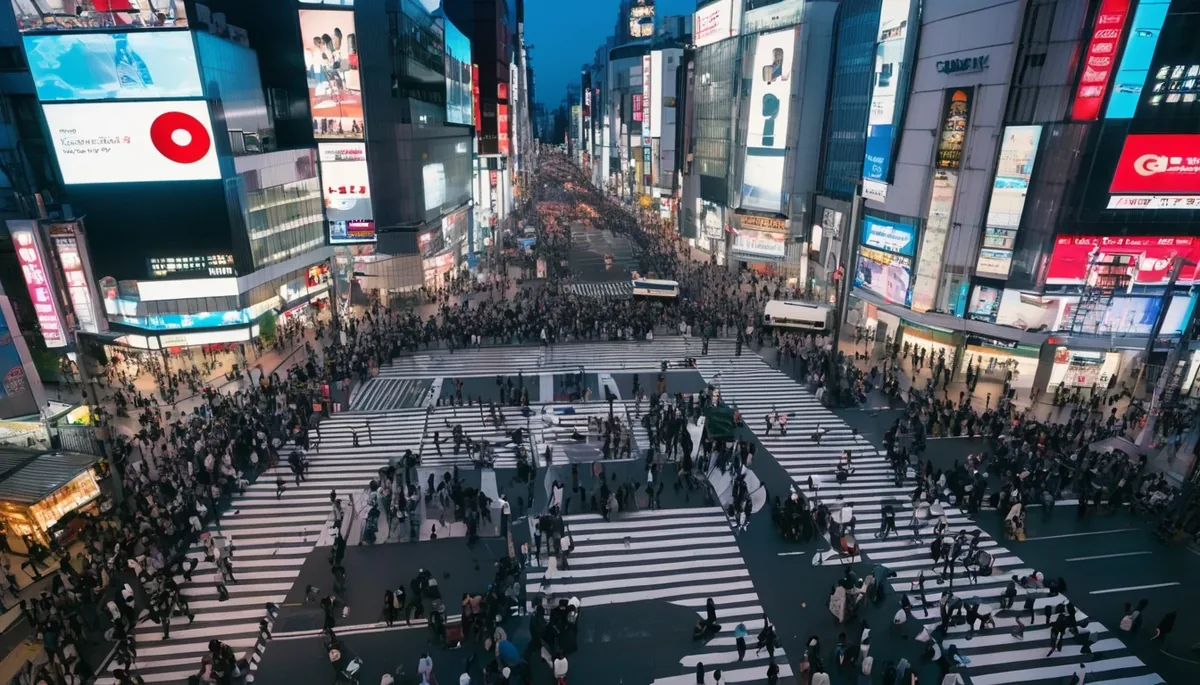
Shibuya's famous scramble crossing is blanketed in 5G. The dense foot traffic here has pushed the networks to install high-capacity small cells on buildings and lamp posts throughout the entertainment district:
- Typical download: 250–390 Mbps (5G)
- Indoor (Shibuya Hikarie, Scramble Square): 150–280 Mbps — excellent for large shopping malls
- Daikanyama/Nakameguro side streets: Drops to 4G LTE at 60–100 Mbps, but still very usable
Akihabara
Fittingly for Tokyo's electronics district, Akihabara has exceptional mobile coverage. The main Chuo-Dori shopping street is 5G end-to-end, and many multi-story electronics stores maintain indoor repeater systems:
- Typical download: 200–350 Mbps (5G outdoors)
- Indoor (multi-story stores): 80–180 Mbps (4G LTE with in-building repeaters)
Asakusa & Ueno
These more traditionally-flavored neighborhoods have slightly lower 5G density than Shibuya or Shinjuku, but coverage remains solid:
- Typical download: 120–250 Mbps (mixed 5G/4G LTE)
- Senso-ji Temple grounds: 4G LTE dominant at 80–140 Mbps
- Ueno Park: Variable — 5G near the park entrances, 4G LTE deeper inside
Odaiba (Waterfront)
Odaiba is an artificial island with a more spread-out layout, which means fewer small cells per square kilometer. Coverage is good but not exceptional:
- Typical download: 100–200 Mbps (4G LTE dominant, 5G near DiverCity)
- TeamLab venues: Indoor signal can dip to 60–80 Mbps due to building construction
Harajuku & Omotesando
The upscale shopping corridor along Omotesando Avenue is well-covered:
- Typical download: 200–320 Mbps (5G)
- Takeshita Street: 4G LTE at 80–130 Mbps (narrow street, denser buildings)
District Speed Comparison Table
| District | Primary Signal | Typical Download | Upload | Best For |
|---|---|---|---|---|
| Shinjuku (central) | 5G Sub-6GHz | 280–420 Mbps | 40–80 Mbps | Video calls, streaming |
| Shibuya | 5G Sub-6GHz | 250–390 Mbps | 35–75 Mbps | Navigation, social media |
| Akihabara | 5G Sub-6GHz | 200–350 Mbps | 30–65 Mbps | Downloads, cloud backup |
| Harajuku/Omotesando | 5G Sub-6GHz | 200–320 Mbps | 30–60 Mbps | Streaming, maps |
| Asakusa/Ueno | Mixed 5G/4G LTE | 120–250 Mbps | 20–50 Mbps | Maps, messaging |
| Odaiba | 4G LTE dominant | 100–200 Mbps | 15–40 Mbps | Messaging, light browsing |
| Narita Airport | 5G Sub-6GHz | 180–320 Mbps | 40–80 Mbps | eSIM activation, streaming |
| Haneda Airport | 5G Sub-6GHz | 200–380 Mbps | 50–90 Mbps | eSIM activation, video |
Does the Tokyo Metro Have Mobile Coverage Underground?
Yes — and it's genuinely impressive. Unlike many major cities where subway coverage is patchy at best, Tokyo's metro and JR underground lines maintain continuous 4G LTE coverage across the vast majority of stations and tunnels. This is one of the most common questions travelers have, and the answer is almost uniformly positive.
Japan's Ministry of Internal Affairs and Communications has mandated underground mobile coverage expansion, and by 2026 the major networks have achieved near-complete station coverage across the Tokyo Metro and Toei Subway lines. Here's what to expect:
Station Platforms & Concourses
Every Tokyo Metro station has at least 4G LTE coverage on the platform and in the ticketing concourse. In many central stations (Ginza, Shinjuku, Shibuya, Ikebukuro), you'll see 5G signals on the platform itself:
- Ginza Line stations (central): 4G LTE at 60–120 Mbps
- Yamanote Line underground sections: 4G LTE at 50–100 Mbps
- Marunouchi Line (central): 4G LTE at 70–130 Mbps, 5G at select stations
In-Tunnel Coverage
This is where Tokyo stands apart. While trains are moving between stations, you'll typically maintain a 4G LTE connection — though speeds drop during transitions:
- Between stations (tunnel): 20–60 Mbps (4G LTE, can drop briefly during handoffs)
- Deep tunnel sections (outer lines): Occasional 2–5 second signal drops
- JR Yamanote Line (above-ground sections): Full 5G at 150–300 Mbps
The Chiyoda, Hibiya, and Ginza lines — the busiest tourist routes — have the most consistent in-tunnel coverage. The outer lines (Tozai Line east of Nishi-Funabashi, for example) have more gaps, but these are largely in residential areas outside central Tokyo.
Shinkansen Coverage
If you're taking the bullet train from Tokyo Station, coverage along the Tokaido Shinkansen toward Kyoto and Osaka is excellent for most of the journey. Tunnels through mountain sections (particularly in Shizuoka Prefecture) cause brief signal drops, but the major networks have installed in-tunnel repeaters on the most-traveled routes. Expect 4G LTE at 50–120 Mbps for most of the Tokyo–Kyoto leg.
How Does Tokyo's Coverage Compare to Other Asian Tech Cities?
Tokyo isn't the only city in Asia with exceptional mobile infrastructure. If you're planning a broader Asia trip — perhaps combining Japan with South Korea or Singapore — it's worth knowing how Tokyo's network stacks up. Our South Korea eSIM guide covers Seoul's equally impressive 5G rollout, while Singapore eSIM options detail one of Southeast Asia's most reliable networks.
| City | Median 5G Download | Subway Coverage | Airport Signal |
|---|---|---|---|
| Tokyo, Japan | ~300 Mbps | Near-complete (4G LTE+) | Excellent (5G) |
| Seoul, South Korea | ~350 Mbps | Near-complete (5G in major stations) | Excellent (5G) |
| Singapore | ~280 Mbps | Complete (4G LTE+) | Excellent (5G) |
| Hong Kong | ~260 Mbps | Complete (4G LTE) | Very good (5G) |
| Shanghai, China | ~320 Mbps | Near-complete | Excellent (5G) |
Speed figures based on Ookla Speedtest Global Index and Opensignal data, Q1 2026.
Tokyo's main competitive advantage isn't raw peak speed — Seoul often edges it there — but consistency. The standard deviation of speeds in Tokyo is notably low, meaning you rarely experience the dramatic drops that can occur in other cities. For a traveler, consistent 100 Mbps is more useful than occasional 500 Mbps with frequent dead zones.
What's the Best Way to Get Connected in Tokyo as a Visitor?
Getting connected before or immediately upon landing is far easier than it used to be, thanks to eSIM technology. You no longer need to queue at an airport SIM vending machine or hunt for a convenience store with stock.
eSIM vs. Physical SIM vs. Pocket WiFi
Each option has its place, but for most travelers in 2026, a travel eSIM is the clear winner:
| Option | Setup | Cost (7 days) | Reliability | Best For |
|---|---|---|---|---|
| Travel eSIM (e.g., Simology) | Pre-trip, 2 min | ~$10–25 | Excellent | Solo/couple travelers |
| Local physical SIM | Airport vending machine | ~$15–30 | Excellent | Travelers without eSIM phones |
| Pocket WiFi rental | Airport counter | ~$40–70 | Good | Groups of 3+ sharing |
| International roaming | Automatic | $5–15/day | Variable | Emergency fallback only |
A Japan eSIM from Simology gives you access to Japan's major local networks with 5G/4G LTE coverage. You install it before you leave home (takes about two minutes via QR code), and it activates automatically when your plane lands. No queuing, no language barriers, no hunting for a SIM tray tool at 6 AM in arrivals.
How Much Data Do You Need in Tokyo?
Tokyo is a navigation-heavy city. You'll use Google Maps or Apple Maps constantly — for train routes, walking directions, and restaurant lookups. Here's a rough data usage guide for a typical Tokyo trip:
- Light use (maps + messaging): 500 MB–1 GB per day
- Moderate use (maps + social media + occasional streaming): 1–2 GB per day
- Heavy use (video calls + streaming + hotspot for laptop): 3–5 GB per day
For a 7-day trip with moderate use, a 10 GB plan gives you comfortable headroom. If you're working remotely or planning to tether a tablet, go for 20 GB or unlimited.
Does 5G Actually Matter for Travelers in Tokyo?
For most travelers, 4G LTE is already faster than you need — and Tokyo's 4G LTE is very fast. So does 5G actually change your experience?
The honest answer: in specific situations, yes. Here's where 5G makes a real difference:
- Downloading offline maps before a day out: A 500 MB offline map area downloads in under 5 seconds on 5G vs. 20–30 seconds on 4G LTE.
- Video calling home: 5G's lower latency (12–20 ms vs. 30–50 ms on 4G LTE) makes video calls noticeably smoother.
- Uploading photos/videos: If you're posting daily travel vlogs or backing up to the cloud, 5G upload speeds (40–80 Mbps vs. 15–30 Mbps on 4G LTE) save meaningful time.
- Crowded venues: In dense crowds like Shibuya Crossing at rush hour, 5G's higher capacity means you're less likely to experience congestion-related slowdowns.
For casual tourists checking maps and messaging, 4G LTE is perfectly fine. For digital nomads or content creators, the 5G upgrade is worth seeking out.
Are There Any Dead Zones or Coverage Gaps to Know About?
Tokyo's coverage is exceptional, but it's not perfect. Knowing the gaps in advance saves frustration.
Known weak spots:
- Outer residential wards (Nerima, Adachi, Katsushika): 4G LTE dominant, 5G sparse. Still very usable for maps and messaging.
- Forested areas near Takao-san (Mt. Takao): Signal weakens on the upper hiking trails. Download offline maps before you go.
- Inside concrete basements and parking structures: Signal can drop to 3G or no service in older buildings with thick walls.
- Narita Express rural stretches: Brief 3G/no-service patches between Chiba and Narita.
- Tokyo DisneySea/Disneyland (Urayasu, Chiba): Coverage is fine outside the parks; inside, signal can be congested during peak hours due to crowd density.
Pro tip: Before heading to any area with potential gaps, download an offline Google Maps section for that district. Tokyo's offline map data is comprehensive and covers walking, transit, and driving routes.
How Does Tokyo Compare to Other Destinations for Travelers Relying on Mobile Data?
Tokyo is in a different league from most travel destinations. If you've struggled with patchy coverage in parts of Southeast Asia or been caught without signal in rural Europe, Tokyo will feel like a revelation.
For context: our London speed test found that London's Tube still has significant underground coverage gaps — a contrast to Tokyo's near-complete subway coverage. And if you're planning a broader Asia trip, our Asia eSIM regional plan guide covers options that work across Japan, South Korea, Singapore, and beyond without needing separate SIMs for each country.
The key takeaway: Tokyo rewards travelers who arrive connected. The infrastructure is there — you just need to make sure your SIM or eSIM is ready to use it.
FAQ
Will my eSIM work on the Tokyo Metro underground?
Yes. Tokyo's subway system has near-complete 4G LTE coverage across station platforms, concourses, and most in-tunnel stretches on the central lines. You may experience brief 2–5 second signal drops during tunnel transitions on outer lines, but for the Ginza, Marunouchi, Chiyoda, and Hibiya lines that tourists use most, connectivity is continuous. Download offline maps as a backup for the few gaps that remain.
Which Tokyo airport is better for getting an eSIM signal on arrival?
Haneda (HND) edges out Narita (NRT) for in-terminal 5G coverage and speed, with typical downloads of 200–380 Mbps vs. 180–320 Mbps at Narita. That said, both airports are excellent for activating a travel eSIM on arrival. The better strategy is to install your eSIM before you leave home so it's already active the moment you land — no signal hunting required.
Does 5G coverage reach Tokyo's tourist attractions?
The major tourist districts — Shinjuku, Shibuya, Akihabara, Harajuku, and Omotesando — are all well-covered by 5G. More traditionally-flavored areas like Asakusa and Ueno have mixed 5G/4G LTE coverage, but speeds remain more than adequate for maps, messaging, and social media. Indoor venues (temples, museums) typically fall back to 4G LTE.
How much data should I buy for a week in Tokyo?
For a typical 7-day trip with moderate use (maps, social media, occasional streaming), a 10 GB plan provides comfortable headroom. Light users who mainly need maps and messaging can get by with 5 GB. If you're working remotely, making frequent video calls, or tethering a laptop, opt for a 20 GB or unlimited plan to avoid throttling mid-trip.
Can I use my eSIM on the Shinkansen bullet train?
Yes. The Tokaido Shinkansen (Tokyo to Kyoto/Osaka) maintains 4G LTE coverage for most of the journey, with brief signal drops in mountain tunnels through Shizuoka Prefecture. The major networks have installed in-tunnel repeaters on the most-traveled Shinkansen routes, so gaps are typically 10–30 seconds rather than minutes. Speeds of 50–120 Mbps are common on the open sections.
Is Tokyo's mobile network faster than other Asian cities?
Tokyo's 5G median download speed of around 300 Mbps in urban cores is world-class, though Seoul slightly edges it at ~350 Mbps in some benchmarks. Tokyo's real advantage is consistency — speed variance is low, meaning you rarely experience dramatic drops. Singapore and Hong Kong are also excellent, but Tokyo's subway coverage depth is unmatched in the region.
Do I need a Japanese phone number to use data in Tokyo?
No. A data-only travel eSIM gives you full internet access — maps, messaging apps (WhatsApp, iMessage over WiFi/data), streaming, and browsing — without a local Japanese phone number. If you need to make local calls (e.g., to book a restaurant), use a VoIP app like WhatsApp or Google Voice over your data connection.
What happens if I run out of data on my Tokyo eSIM?
Most travel eSIM providers, including Simology, allow you to top up your data plan directly through their app or website without needing a new QR code. If your plan includes a data cap with throttling rather than a hard cutoff, you'll drop to slower speeds (typically 128–256 Kbps) rather than losing connectivity entirely — enough for maps and messaging but not streaming.