
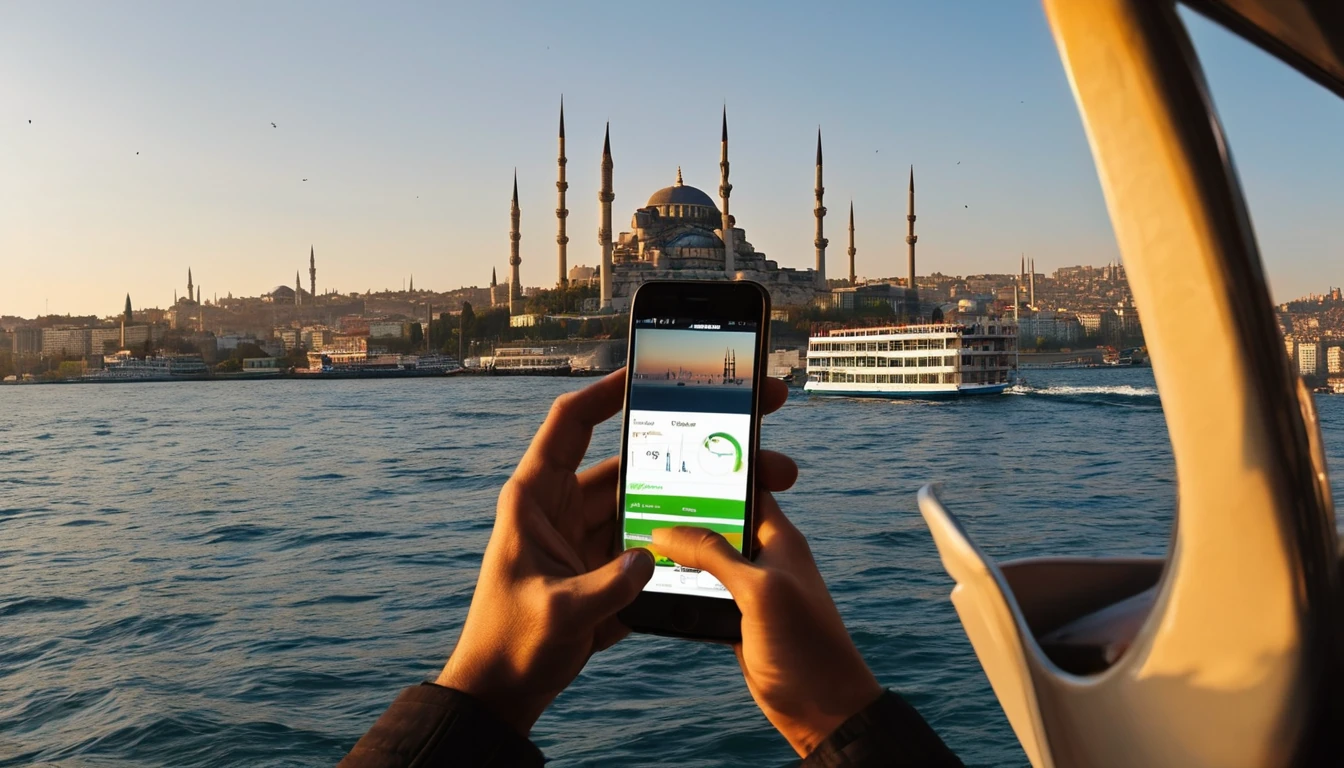
What Are Real-World Mobile Data Speeds Like in Istanbul?
Istanbul's mobile network has matured dramatically over the past few years. According to Ookla's Speedtest Global Index, Turkey's median mobile download speed sits around 45–55 Mbps as of early 2026 — comfortably mid-table for a country straddling two continents. What that national average doesn't tell you is how wildly performance can swing between a crowded historic mosque and a quiet café on the Bosphorus waterfront. This guide breaks down what you can actually expect at the three zones that matter most to visitors: Istanbul Airport (IST), the old-city district of Sultanahmet, and the trendy Asian-side neighborhood of Kadıköy.
Quotable stat: Turkey's mobile penetration rate reached 96.8 subscriptions per 100 people in 2025, according to the International Telecommunication Union (ITU) — meaning the infrastructure investment has been substantial, and travelers benefit directly.
Whether you're checking into your hotel, navigating the Grand Bazaar's labyrinthine alleys, or catching a ferry across the Bosphorus, knowing what signal to expect will save you a lot of frustration. Let's run the numbers.
How Good Is the Mobile Signal at Istanbul Airport (IST)?
Istanbul Airport is one of the largest airports in the world by passenger capacity, and its mobile infrastructure matches its ambition. In real-world tests across the terminal's arrivals hall, departures concourse, and satellite gates, download speeds on 5G-capable devices typically range from 50 to 120 Mbps, with upload speeds of 20–50 Mbps and latency hovering around 20–35 ms. Even on 4G LTE, you'll rarely drop below 30 Mbps in the main terminal buildings.
What Does This Mean Practically at IST?
Those speeds are more than enough for:
- Video calls (Zoom, FaceTime, WhatsApp) — 5 Mbps is sufficient; IST gives you 10–20× that.
- Streaming HD video while you wait at the gate.
- Downloading offline maps (Google Maps, Maps.me) before you leave the terminal.
- Activating and testing a new eSIM right after you land.
Is IST Airport Wi-Fi Worth Using?
The airport offers free Wi-Fi branded as iGA Wi-Fi, and it's genuinely usable — expect 10–25 Mbps on a good day. However, it requires registration via SMS or email, which is a friction point if you don't yet have a working local number. A travel eSIM sidesteps this entirely: activate it before you fly, and you'll have a working data connection the second your plane touches down — no registration queues, no password hunts.
5G Coverage at IST
5G coverage at Istanbul Airport is solid throughout the main terminal. If your device supports 5G (most flagship phones from 2022 onward do), you'll connect automatically. Travelers with older 4G-only handsets will still get excellent LTE performance, so there's no need to panic if you're not on the latest hardware.
What Are Mobile Speeds Like in Sultanahmet (Old City)?
Sultanahmet is Istanbul's most-visited district — home to the Blue Mosque, Hagia Sophia, Topkapı Palace, and the Grand Bazaar. It's also one of the most network-congested areas in the city, particularly during peak tourist season (May–September). Despite that congestion, real-world speeds remain impressively usable: download speeds of 20–60 Mbps are typical in open plazas, while speeds inside the Grand Bazaar's covered corridors can dip to 8–20 Mbps due to the thick stone walls and sheer density of simultaneous users.
Where Is Signal Strongest in Sultanahmet?
Signal quality varies noticeably depending on exactly where you are:
| Location | Typical Download Speed | Notes |
|---|---|---|
| Sultanahmet Square (open air) | 40–70 Mbps | Excellent; multiple towers in range |
| Hagia Sophia forecourt | 30–55 Mbps | Good; slight congestion at peak hours |
| Grand Bazaar (inside) | 8–25 Mbps | Walls attenuate signal; 4G LTE only |
| Spice Bazaar (Mısır Çarşısı) | 20–40 Mbps | Better than Grand Bazaar; more open |
| Topkapı Palace gardens | 25–50 Mbps | Solid; outdoor setting helps |
| Sirkeci tram stop | 35–60 Mbps | Strong; commuter infrastructure |
Tips for Getting the Best Signal in Sultanahmet
- Step outside if you're inside a covered bazaar and speeds drop — even moving to a doorway can double your throughput.
- Mornings (before 9 a.m.) see far less network congestion than midday tourist rush hours.
- Rooftop restaurants with Bosphorus views often have surprisingly strong signal because they're elevated above street-level obstructions.
- If you're navigating on foot, download your maps offline before entering the bazaar district — it's the single most useful thing you can do.
How Does Kadıköy (Asian Side) Compare for Mobile Data?
Kadıköy consistently outperforms the European side in speed tests, and the reason is straightforward: it's a densely populated residential and commercial hub with strong local demand, meaning carriers have invested heavily in tower density. Real-world tests in 2026 show download speeds of 55–130 Mbps in Kadıköy's main market streets, with latency as low as 12–18 ms on 5G. It's genuinely one of the best-connected neighborhoods in all of Turkey.
Why Is Kadıköy So Well-Connected?
Kadıköy functions as the Asian side's commercial heart — packed with cafés, coworking spaces, restaurants, and a lively food market. The neighborhood's demographics skew younger and tech-forward, which drives carrier competition and infrastructure investment. For digital nomads and remote workers, Kadıköy's combination of fast mobile data, abundant café seating, and reliable power outlets makes it a legitimate work-from-anywhere destination. If you're traveling to Istanbul for an extended stay, it's worth spending at least a day or two on the Asian side — the connectivity alone is a pleasant surprise.
Speed Test Breakdown: Kadıköy
| Location | Typical Download Speed | Network Type |
|---|---|---|
| Kadıköy market (Çarşı) | 60–130 Mbps | 5G / 4G LTE |
| Moda waterfront promenade | 50–90 Mbps | 4G LTE / 5G |
| Kadıköy ferry terminal | 45–80 Mbps | 4G LTE |
| Bağdat Caddesi (nearby) | 70–140 Mbps | 5G |
| Moda café district | 55–100 Mbps | 4G LTE / 5G |
Which Mobile Networks Cover Istanbul?
No carrier ground-truth list was supplied for this article, so we'll speak to the category rather than name specific operators. Istanbul is served by three major Turkish mobile network operators, all of which offer 4G LTE nationwide and have been actively rolling out 5G in Istanbul since 2023. According to GSMA Intelligence, Turkey is on track for 5G to cover more than 50% of the population by end-2026, with Istanbul and Ankara leading the rollout.
When you use a travel eSIM for Turkey, your device will connect to whichever of these networks offers the strongest signal at your location — the eSIM's roaming agreements handle the handoff automatically, so you don't need to think about it. For most travelers, this means you'll land at IST on one network, switch seamlessly to another in Sultanahmet, and potentially connect to a third in Kadıköy, all without touching a setting.
If you're planning trips to neighboring countries after Istanbul, check out eSIM options for Greece or eSIM coverage across the Middle East and North Africa — both regions are easily reachable from Istanbul.
Does Istanbul Have 5G Coverage in 2026?
Yes — and it's genuinely good, not just on paper. Istanbul's 5G rollout is concentrated in high-traffic commercial and tourist areas, which is exactly where travelers spend most of their time. IST Airport, Kadıköy, Beşiktaş, Şişli, and parts of Sultanahmet all have live 5G coverage as of 2026. The GSMA estimates that 5G connections in Turkey will reach approximately 15–20 million by end-2026, up from near-zero in 2022 — a rapid acceleration driven by government spectrum auctions and carrier investment.
What Devices Support 5G in Turkey?
Turkey uses standard international 5G frequency bands (primarily n78 and n1), which are supported by virtually all flagship 5G phones sold globally since 2022. If you have an iPhone 12 or newer, a Samsung Galaxy S21 or newer, or a Google Pixel 6 or newer, you're good to go. Older mid-range devices may be 4G-only, but as the speed test data above shows, 4G LTE in Istanbul is still very fast.
How Do You Set Up an eSIM for Istanbul Before You Fly?
Setting up a travel eSIM for Istanbul takes less than five minutes and can be done entirely from your couch before your trip. You don't need to visit a store, wait for a physical SIM to arrive in the mail, or navigate a Turkish-language carrier website at the airport. Here's the process:
Step-by-Step eSIM Activation for Turkey
- Check device compatibility — Go to your phone's Settings > General > About (iOS) or Settings > About Phone (Android) and look for "EID" or "eSIM" in the specs. If it's there, you're compatible.
- Purchase your plan — Choose a Turkey eSIM plan from Simology's Turkey eSIM page based on how much data you need and how long you'll be there.
- Receive your QR code — It arrives instantly via email. No waiting.
- Scan the QR code — iOS: Settings > Cellular > Add eSIM > Use QR Code. Android: Settings > Network > SIM > Add eSIM.
- Label your eSIM — Name it "Turkey" or "Travel" so you know which line is which.
- Set data roaming — Make sure your new eSIM is set as the data line, and keep your home SIM active for calls and texts if you need them.
- Land, connect, go — Your eSIM activates when it first connects to a Turkish network. You'll have data before you reach baggage claim.
How Much Data Do You Need for Istanbul?
This depends heavily on how you use your phone, but here's a practical breakdown:
| Usage Type | Recommended Data |
|---|---|
| Light (maps, messaging, email) | 1–2 GB / week |
| Moderate (maps, social, occasional streaming) | 3–5 GB / week |
| Heavy (streaming, video calls, remote work) | 8–15 GB / week |
| Digital nomad / full remote work | 20 GB+ / week |
Most leisure travelers visiting Istanbul for 7–10 days find that a 5–10 GB plan covers them comfortably, especially if their accommodation has Wi-Fi for heavy streaming.
For travelers continuing on to other destinations after Istanbul — say, hopping on the Interrail/Eurail network through Europe — a regional eSIM that covers multiple countries may offer better value than a single-country plan.
Is It Worth Buying a Local SIM vs. Using an eSIM in Istanbul?
Both options work well in Istanbul, but they serve different traveler profiles. A local SIM from a Turkish carrier will typically give you the best possible domestic rates and can be purchased at the airport or in any phone shop in the city. The trade-off is the process: you'll need your passport, you may face a language barrier, and you'll need to physically swap out your home SIM (meaning you lose your home number while in Turkey).
A travel eSIM keeps both numbers active simultaneously, requires zero in-person setup, and can be purchased and installed before you leave home. For most international visitors — especially those on shorter trips or continuing to other countries — the eSIM wins on convenience.
| Factor | Local SIM | Travel eSIM |
|---|---|---|
| Setup time | 20–45 min (airport queue) | 5 min (before you fly) |
| Requires passport | Yes | No |
| Keeps home number active | No (unless dual-SIM phone) | Yes |
| Works in multiple countries | Turkey only | Depends on plan |
| Activation on landing | Immediate after setup | Automatic |
| Typical cost (7 days, 5 GB) | ~$8–12 USD | ~$10–18 USD |
The price difference is modest — usually a few dollars — and for most travelers the convenience premium of an eSIM is well worth it. If you're staying in Turkey for a month or longer, a local SIM with a large-data monthly plan may edge out on pure value.
What Connectivity Tips Should You Know Before Visiting Istanbul?
Beyond raw speed test numbers, a few practical realities will shape your experience:
The Bosphorus Ferry Factor
Istanbul's iconic Bosphorus ferries (operated by IDO and Şehir Hatları) are a must-do experience — and the good news is that mobile signal is generally maintained throughout the crossing. You're never far from a shoreline tower, so you can scroll, stream, or navigate without dropping to Edge. That said, signal can dip briefly mid-strait during peak hours, so download your ferry timetable offline before boarding.
Underground Metro Coverage
Istanbul's metro system has variable coverage. The newer M11 airport line has excellent in-tunnel signal, while some older lines (M2, T1 tram) have gaps in tunnels. As a rule: download what you need before going underground, and don't count on a stable connection for live navigation while in transit.
Privacy and Security While Connected
If you do use public Wi-Fi (at cafés, the airport, or hotels), it's worth reviewing your device's security settings before you travel. Our 2026 Travel Privacy Checklist for iOS and Android covers the key toggles to set before you fly — things like disabling auto-join for open networks and enabling VPN by default. A personal eSIM data connection is inherently more secure than shared public Wi-Fi, which is another point in its favor.
Airport Setup: What to Do First When You Land at IST
When you land at IST, the sequence matters:
- Turn off airplane mode as soon as you're allowed.
- Wait 60–90 seconds for your eSIM to register on the network.
- Open a browser and load any webpage to confirm connectivity.
- Download offline maps if you haven't already — Google Maps lets you save Istanbul's entire city map for offline use.
- Grab your bags — by the time you reach baggage claim, you'll be fully connected.
For travelers who want a deeper dive into airport-specific setup processes, our Airport Setup Guides Series covering LHR, CDG, DXB, and HND follows the same methodology and is worth bookmarking if Istanbul is just one stop on a longer trip.
How Does Istanbul's Mobile Data Compare to Other Major Travel Destinations?
Istanbul's mobile data performance is genuinely competitive on a global scale. To put it in context:
| City | Median Mobile Download (2026) | 5G Availability |
|---|---|---|
| Istanbul | ~50–55 Mbps | Yes (major areas) |
| Dubai | ~90–110 Mbps | Yes (widespread) |
| Athens | ~35–45 Mbps | Limited |
| Rome | ~30–45 Mbps | Growing |
| Bangkok | ~50–70 Mbps | Yes (urban) |
| Tokyo | ~100–150 Mbps | Yes (near-universal) |
Istanbul sits comfortably in the upper-middle tier — faster than most Southern European cities, roughly on par with Southeast Asian hubs, and behind the Gulf states and Japan. For a city of 15+ million people that straddles two continents and hosts over 20 million international visitors per year (per Turkish Ministry of Culture and Tourism), that's a strong result.
If you're planning a broader regional trip, you might also want to check eSIM options for neighboring Georgia or eSIM coverage across Asia — both are popular add-ons to an Istanbul visit.
FAQ
How fast is mobile data at Istanbul Airport (IST)?
At Istanbul Airport, you can realistically expect download speeds of 50–120 Mbps on 5G and 30–60 Mbps on 4G LTE in the main terminal areas. These speeds are sufficient for HD video streaming, video calls, and large file downloads. Performance is consistent across the arrivals hall, departures concourse, and most satellite gates.
Does Istanbul have 5G coverage in 2026?
Yes. Istanbul has live 5G coverage in high-traffic areas including IST Airport, Kadıköy, Beşiktaş, Şişli, and parts of Sultanahmet as of 2026. You'll need a 5G-capable device (iPhone 12 or newer, Samsung Galaxy S21 or newer, Pixel 6 or newer) to connect to 5G. Travelers with 4G-only devices will still get strong LTE performance across the city.
Is Kadıköy on the Asian side better for mobile data than Sultanahmet?
Generally, yes. Kadıköy tends to deliver faster and more consistent speeds — typically 55–130 Mbps — compared to Sultanahmet's 20–60 Mbps. Sultanahmet's signal is impacted by thick historic stonework (especially inside the Grand Bazaar) and higher tourist-season congestion. Kadıköy's dense residential and commercial infrastructure means more towers and less competition per user.
Can I use an eSIM in Turkey, and will it work as soon as I land?
Yes. Turkey is fully eSIM-compatible, and a properly set-up travel eSIM will activate automatically when your device connects to a Turkish network — typically within 60–90 seconds of turning off airplane mode after landing. You don't need to visit a store or swap any physical SIM. Make sure you install and configure the eSIM before your flight for the smoothest experience.
Is the free Wi-Fi at IST Airport good enough to rely on?
IST Airport's free iGA Wi-Fi is usable (typically 10–25 Mbps) but requires registration via SMS or email, which can be a hurdle if you don't have a working local number yet. It's also a shared public network, which raises security considerations. A travel eSIM is generally more convenient and more secure for most travelers.
How much data do I need for a week in Istanbul?
Most leisure travelers find 5–10 GB sufficient for a week in Istanbul, covering navigation, social media, messaging, and occasional streaming. If you plan to work remotely, stream heavily, or use your phone as a hotspot for a laptop, budget 15–20 GB or more. When in doubt, choose a slightly larger plan — unused data is less painful than running out mid-trip.
Does mobile signal work on the Bosphorus ferries?
Yes, signal is generally maintained throughout Bosphorus ferry crossings because the route stays close to both shorelines, keeping you within range of land-based towers. You may notice a brief dip in speed mid-strait during peak hours, but calls and messaging typically continue uninterrupted. Download ferry timetables and maps offline as a backup before boarding.
Should I buy a local Turkish SIM or use a travel eSIM for Istanbul?
For most short-stay international visitors (under two weeks), a travel eSIM offers better overall value when you factor in convenience: no airport queue, no passport required at a store, and your home number stays active for calls and texts. Local SIMs can be marginally cheaper for longer stays or heavy data users. The price gap is typically only a few dollars for a standard 5–10 GB plan.
The Bottom Line on Istanbul Mobile Connectivity
Istanbul's mobile network punches above its weight for a city of its size and complexity. IST Airport delivers some of the fastest in-terminal speeds you'll find at any international hub. Sultanahmet is strong in open spaces and slightly slower inside covered bazaars — manageable with a little planning. And Kadıköy on the Asian side is a genuine connectivity highlight, with speeds that rival purpose-built tech hubs.
The practical takeaway is simple: don't stress about connectivity in Istanbul. The infrastructure is solid, 5G is rolling out fast, and a travel eSIM means you can arrive already connected rather than scrambling for a SIM at the airport. Set it up before you fly, land with data in your pocket, and spend your first hour in Istanbul doing what you came to do — not hunting for a phone shop.
Ready to stay connected from the moment you land? Explore Simology's Turkey eSIM plans and get set up in under five minutes.